The Compact Chameleon: Tracing the Evolution of the Hyundai ix20
The automotive landscape is a constantly shifting terrain, with manufacturers striving to adapt to evolving consumer needs and market trends. Within this dynamic environment, the Hyundai ix20 carved out a distinct niche for itself as a versatile and stylish compact MPV. Though its production run might be considered modest in the grand scheme of automotive history, the ix20’s journey showcases Hyundai’s commitment to offering practical yet appealing vehicles, demonstrating a thoughtful evolution across its lifecycle.
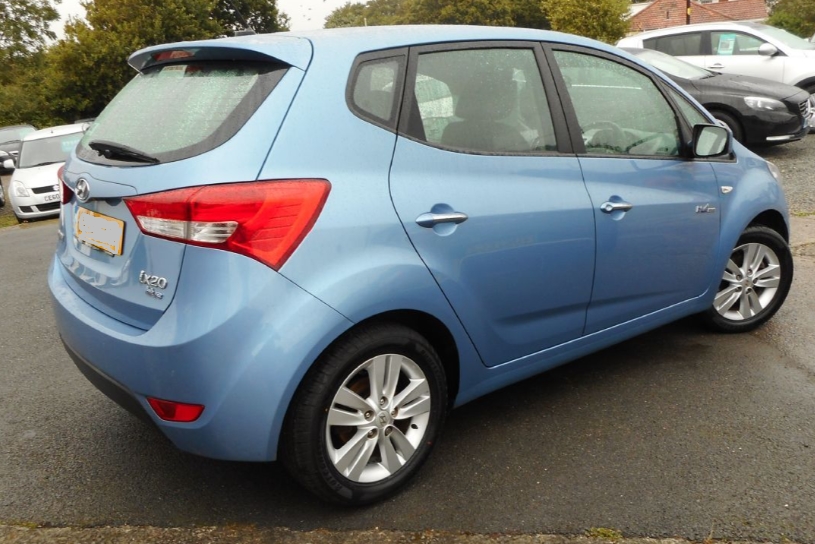
Introduced to the European market in 2010, the Hyundai ix20 was a significant addition to the brand’s burgeoning lineup. It arrived as a replacement for the popular Matrix (also known as the Lavita in some markets), inheriting its predecessor’s focus on practicality and interior space, but injecting it with a more contemporary design and a refined driving experience. The ix20 was developed in Hyundai’s European R&D center in Rüsselsheim, Germany, a testament to the company’s understanding of and commitment to the European consumer. Its “Fluidic Sculpture” design language, a hallmark of Hyundai’s styling at the time, gave the ix20 a sleeker, more aerodynamic profile than many of its boxier MPV rivals. The distinctive swept-back headlights, sculpted body panels, and a bold grille contributed to an appearance that was both modern and approachable.
The Initial Launch and Early Models (2010-2011)
At its inception, the Hyundai ix20 was offered with a well-rounded selection of four-cylinder petrol and diesel engines, catering to a variety of driving needs and preferences. The petrol options typically included a 1.4-litre engine and a more powerful 1.6-litre variant. On the diesel front, buyers could opt for a 1.4-litre CRDi and a 1.6-litre CRDi engine, both renowned for their fuel efficiency and torque.
Trim levels generally reflected Hyundai’s strategy of offering good value for money, with a tiered approach that provided increasing levels of comfort, technology, and safety features. While specific nomenclature could vary slightly by market, the core trim levels often started with a base model, typically named Classic or SE, which offered essential features like power steering, electric windows, central locking, and a basic audio system.
Moving up the ladder, buyers would encounter the Style or Comfort trim. These models typically added niceties such as alloy wheels, air conditioning (often climate control on higher trims), an upgraded audio system with more speakers, and potentially some exterior styling enhancements like fog lights. Safety features were also a strong point from the outset, with standard electronic stability control (ESC), anti-lock brakes (ABS), and multiple airbags usually included across the range.
The top-tier trim, often designated as Premium or Elite, would further embellish the ix20 with features like leather upholstery, heated seats, a panoramic glass sunroof, cruise control, and more advanced infotainment systems, potentially including satellite navigation in later iterations.
.
RepairSurge Online Repair Manuals Replace Bulky Books With Reliable Digital Information!
Faster And Cheaper Than Traditional Printed Manuals, Users Get Instant Access To The Repair Information They Need For Any Car, Truck, Van or SUV:
.
Refinements and the Mid-Life Facelift (2012-2014)
As the automotive industry continued its rapid evolution, Hyundai, ever responsive, introduced a significant facelift for the ix20 in 2011, which began to filter into showrooms and become widely available from 2012. This mid-life refresh was more than just a cosmetic tweak; it represented a thoughtful enhancement of the vehicle’s appeal and capabilities.
The exterior received a noticeable update, with redesigned front and rear bumpers, a revised grille incorporating Hyundai’s signature hexagonal design more prominently, and updated headlight and taillight clusters. These changes gave the ix20 a sharper, more contemporary appearance, helping it to stand out in the competitive compact MPV segment.
Inside, the facelift brought improvements to material quality and interior ergonomics. The dashboard layout was refined, and new interior trim options were introduced to enhance the cabin’s ambiance. Crucially, Hyundai also focused on enhancing the ix20’s already commendable practicality. Subtle improvements were made to storage solutions, and the versatility of the rear seating system, which often featured sliding and reclining capabilities, was further emphasized.
Engine-wise, the facelift often coincided with the introduction or refinement of Hyundai’s ‘Eco’ technologies. This meant that the existing petrol and diesel engines became even more fuel-efficient, with lower CO2 emissions, appealing to environmentally conscious buyers and those seeking to minimize running costs. The introduction of features like the Idle Stop and Go (ISG) system, which automatically switched off the engine when stationary, became more prevalent, particularly on lower emission variants.
The trim levels generally carried over the established hierarchy but were often updated with new standard features. For example, a previously optional feature like Bluetooth connectivity might have become standard on mid-range trims, while higher trims could have gained features like a rearview camera or more sophisticated parking aids. The core models remained similar:
- Classic/SE: Still the entry point, offering good value and essential features.
- Style/Comfort: Gaining more standard equipment and enhanced aesthetics.
- Premium/Elite: Continuing to offer the most luxurious and technologically advanced package available.
The Later Years and Continued Appeal (2015-2019)
The Hyundai ix20 continued its production run with further iterative updates and a consistent commitment to its core values of practicality, comfort, and value. While no drastic redesigns occurred in its later years, Hyundai continued to refine the vehicle, ensuring it remained competitive.
Engine options remained largely consistent, with the focus on efficiency and reliability. Buyers could still choose from a range of efficient petrol and diesel engines, often with the option of manual or automatic transmissions. Some markets might have seen the introduction of smaller, turbocharged petrol engines to meet evolving emissions standards and consumer demand for punchier performance.
Technology saw gradual but important upgrades. Infotainment systems were refined, with improved touchscreen interfaces, enhanced smartphone integration (like Apple CarPlay and Android Auto becoming available on some models/trims in later years), and more robust navigation systems. Safety remained a priority, with the ix20 benefiting from the ongoing development of active and passive safety systems, including advanced driver-assistance systems (ADAS) like autonomous emergency braking and lane departure warning, although these were typically reserved for the highest trim levels or optional packages.
The trim structure generally followed the established pattern, with a focus on offering clear differentiation and value at each level. While specific names might have seen minor variations across different markets and model years, the underlying philosophy remained:
- Base/Entry-Level Trim: Offering the essentials for those prioritizing affordability.
- Mid-Range Trims: Balancing features and cost, often representing the most popular choices, typically including alloys, better climate control, and connectivity features.
- Top-End Trims: Providing the full suite of creature comforts, advanced technology, and premium finishes, often featuring panoramic roofs, advanced safety aids, and more powerful engine options.
The ix20’s appeal in its later years lay in its unwavering practicality. Its tall profile, clever interior packaging, and flexible seating arrangements made it an ideal choice for families, small businesses, or anyone who valued interior space and versatility. The sliding rear bench, for instance, allowed for a perfect balance between passenger legroom and boot space, a feature that set it apart from more conventional hatchbacks. The boot itself was generously sized, and the low loading lip made it easy to stow luggage or shopping.
The End of an Era (2019)
The Hyundai ix20’s production run officially concluded in 2019. While it didn’t receive a direct successor in the same format, its spirit of practicality and versatility lived on in other Hyundai models, particularly the Kona compact SUV, which offered a more contemporary, crossover-styled alternative. The ix20’s departure marked the end of an era for Hyundai in the dedicated compact MPV segment, reflecting a broader automotive trend towards SUVs and crossovers.
Legacy of the ix20
The Hyundai ix20, though no longer in production, leaves behind a legacy as a competent and well-executed compact MPV. It successfully blended Hyundai’s growing reputation for quality and value with a practical and stylish package. Its evolution throughout its nine-year lifespan demonstrated Hyundai’s ability to listen to consumer feedback and adapt its offerings, bringing incremental but meaningful improvements to its range.
From its initial launch with a solid foundation of engines and trim levels, through its mid-life refresh that sharpened its looks and efficiency, to its later years where it embraced technological advancements, the ix20 remained a sensible and attractive choice. Its story is one of refinement and adaptation, a testament to Hyundai’s strategic development and its understanding of the diverse needs of European car buyers. The ix20 may have faded from the new car market, but its impact as a reliable, practical, and surprisingly stylish compact chameleon is a lasting part of Hyundai’s automotive journey.