The Next Chapter: Anticipating the All-New Third-Generation Honda Amaze
In the fiercely competitive landscape of the automotive world, few segments are as challenging and crucial as the compact sedan market in developing nations. It is a battleground where price, efficiency, features, and brand prestige collide. For Honda Cars, a manufacturer renowned for its engineering prowess and premium positioning, the Honda Amaze has been its formidable champion in this arena. Now, with the second generation aging gracefully, all eyes are on the horizon for the arrival of its successor—the third-generation Honda Amaze, a vehicle poised to redefine expectations and challenge the segment leader once again.
This article delves into the past, present, and exciting future of the Honda Amaze, exploring its journey, its various iterations, and what the upcoming model holds in store for eager customers.
A Brief History: The Genesis of a Segment Contender
To understand the upcoming Amaze, one must first appreciate its origins. The Honda Amaze was born out of a strategic necessity. In the early 2010s, the Indian automotive market, one of Honda’s most important, had a unique “sub-4-meter” rule. Cars under four meters in length with specific engine capacities enjoyed significant tax benefits, making them much more affordable. While Honda had the excellent Brio hatchback, it lacked a direct competitor to the dominant Maruti Suzuki Dzire.
The solution was ingenious: develop a compact sedan based on the Brio platform. Launched in April 2013, the first-generation Honda Amaze was not just a Brio with a boot. Honda’s “Man Maximum, Machine Minimum” philosophy was evident in its clever packaging, which resulted in a surprisingly spacious cabin and a generous 400-litre boot, all while staying under the crucial 4-meter mark.
However, its true masterstroke was under the hood. The Amaze debuted Honda’s revolutionary 1.5-litre i-DTEC “Earth Dreams” diesel engine. This all-aluminum engine was a marvel of fuel efficiency, delivering an ARAI-certified figure of 25.8 km/l, making it the most fuel-efficient car in India at the time. This engine, combined with the trusted 1.2-litre i-VTEC petrol motor, gave the Amaze a powerful one-two punch that immediately established it as a serious player.
.
THIS is GOOD stuff if your car is in need:

.
First Generation (2013-2018): The Trailblazer
The first-generation Amaze laid a strong foundation, proving that a compact sedan could be practical, efficient, and enjoyable to drive.
- Years Produced: 2013 – 2018
- Engines:
- 1.2-litre i-VTEC Petrol (88 PS, 109 Nm)
- 1.5-litre i-DTEC Diesel (100 PS, 200 Nm)
- Transmissions: 5-speed Manual (Standard), 5-speed Automatic (Petrol only, later replaced by a CVT in the 2016 facelift).
- Trim Levels (Typical):
- E: The base model, often with manual windows and basic features.
- EX: A step up, adding essentials like a music system.
- S: The popular mid-range variant, adding body-coloured mirrors/handles, keyless entry, and a more comprehensive audio system.
- VX: The top-of-the-line trim, featuring alloy wheels, fog lamps, dual airbags, and ABS with EBD.
A mid-life facelift in 2016 brought a refreshed front grille, a completely redesigned and more premium dashboard borrowed from the Honda BR-V, automatic climate control, and importantly, the introduction of a Continuously Variable Transmission (CVT) for the petrol engine, enhancing its urban appeal.
Second Generation (2018-Present): A Mature Evolution
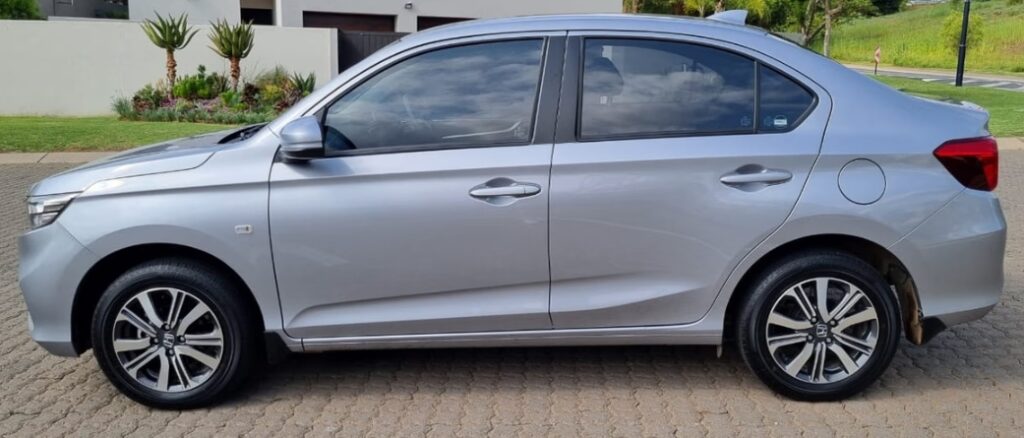
By 2018, the competition had intensified. Honda responded not with an evolution, but a revolution. The second-generation Amaze, launched in May 2018, was a complete departure from its Brio-based predecessor. Built on an all-new platform, it boasted a bold, aggressive design with a distinctive “solid wing face” grille and a more pronounced, notchback-like silhouette. It looked less like a compromised hatchback and more like a scaled-down Honda City, significantly boosting its aspirational value.
The interior was also a massive step up in space, quality, and features. But the biggest innovation was the introduction of a Diesel-CVT powertrain—a first in its segment and a rarity even in higher segments. This combination offered the torque and efficiency of a diesel with the smooth, clutchless convenience of an automatic, a unique selling proposition that carved a niche for the Amaze.
- Years Produced: 2018 – Present
- Engines:
- 1.2-litre i-VTEC Petrol (90 PS, 110 Nm)
- 1.5-litre i-DTEC Diesel (100 PS, 200 Nm with Manual; 80 PS, 160 Nm with CVT) – Discontinued in early 2023 due to stricter emission norms.
- Transmissions: 5-speed Manual, 7-step CVT (Available with both Petrol and Diesel).
- Trim Levels:
- E: Base variant with dual airbags, ABS, and rear parking sensors as standard.
- S: Mid variant adding a 2-DIN audio system, steering-mounted controls, and electrically adjustable/foldable mirrors.
- V: High variant featuring a 7-inch “Digipad” touchscreen infotainment system, push-button start/stop, and automatic climate control.
- VX: The flagship trim, boasting cruise control, paddle shifters (CVT only), and a more advanced infotainment system with Apple CarPlay and Android Auto.
A 2021 facelift introduced subtle yet effective cosmetic updates, including a revised chrome grille, LED projector headlamps with DRLs, and new C-shaped LED tail lamps, keeping it fresh against newer rivals. However, the most significant change during this generation was the discontinuation of the iconic 1.5-litre i-DTEC diesel engine ahead of India’s RDE (Real Driving Emissions) norms in 2023, leaving the Amaze as a petrol-only offering.
The Main Event: The Anticipated Third-Generation Honda Amaze (Expected 2024-2025)
With the second generation having served its term with distinction, the stage is set for the third act. Based on industry reports, spy shots, and logical progression, the all-new Amaze is expected to make its debut in late 2024 or early 2025. Here’s what we can expect from this highly anticipated model.
1. Design Philosophy: A Global Honda Identity
The new Amaze is expected to align closely with Honda’s latest global design language, seen on the new generation Accord and the US-market Civic. Expect a cleaner, more sophisticated, and mature design. The aggressive, angular lines of the current model will likely be replaced by a sleeker, more horizontal theme. Key features will probably include:
- A sleeker, less chunky grille that integrates seamlessly with slim, full-LED headlamps.
- A straight, prominent shoulder line running the length of the car, lending it a more substantial and premium look.
- A redesigned rear-end with wraparound LED tail lamps, giving it the appearance of a larger, more expensive sedan.
2. The Powertrain: Refined and Reliable
The tried-and-tested 1.2-litre, 4-cylinder naturally-aspirated i-VTEC petrol engine will almost certainly be carried over. This engine is renowned for its smoothness, reliability, and free-revving nature. Honda will likely fine-tune it for better efficiency and compliance with future emission standards. The 5-speed manual and CVT gearbox options will also be retained.
The diesel engine will not be making a comeback. The big question is whether Honda will introduce a new powertrain option. A small-capacity turbocharged petrol engine is a possibility to compete with rivals like the Hyundai Aura, but it remains unlikely given Honda’s focus on naturally aspirated and hybrid technologies. A strong-hybrid system is also improbable for the Amaze, as it would push the car’s cost well beyond the segment’s comfort zone.
3. The Cabin and Features: The Tech Leap
This is where the new Amaze is expected to make its biggest leap. The interior will be completely redesigned to feel more modern and tech-centric. Key upgrades will likely include:
- Floating Touchscreen: A larger, free-standing touchscreen infotainment system (likely 8 or 9 inches) with wireless Apple CarPlay and Android Auto.
- Digital Instrument Cluster: A semi-digital or fully digital instrument cluster, replacing the current analog dials.
- Honda Sensing (ADAS): This will be the new Amaze’s trump card. Honda has been democratizing its Advanced Driver Assistance Systems (ADAS) suite, and introducing a version of Honda Sensing to the Amaze would be a segment-first move, offering features like collision mitigation braking, lane-keeping assist, and adaptive cruise control. This would give it a massive safety and technology advantage over its primary rival, the Maruti Suzuki Dzire.
- Enhanced Comfort: Expect improved seat cushioning, connected car technology, a premium sound system on top trims, and possibly a sunroof.
4. Safety: A Top Priority
With safety regulations becoming stricter globally, the new Amaze will be built on a robust new platform. It is expected to come with six airbags as standard, along with Electronic Stability Control (ESC) and Hill Start Assist. Honda will undoubtedly be targeting a high 4 or 5-star safety rating from global crash test agencies like GNCAP.
Future Outlook and Market Position
The third-generation Honda Amaze isn’t just another product launch; it is a critical pillar for Honda’s future in markets like India. With the discontinuation of models like the Brio, WR-V (first-gen), and Jazz, the Amaze serves as the crucial entry point to the Honda brand. It is the vehicle that introduces new families to the Honda ecosystem.
It will go head-to-head with the undisputed segment king, the Maruti Suzuki Dzire, which is also due for a generational update. Its other rivals include the feature-packed Hyundai Aura and the safety-focused Tata Tigor.
The new Amaze’s success will hinge on Honda’s ability to strike the perfect balance. It must offer a premium, “big car” experience with segment-first features like ADAS, while keeping its pricing competitive. If it can deliver on the promise of a sophisticated design, a tech-forward cabin, and uncompromising safety, the third-generation Honda Amaze has the potential to not only reclaim lost ground but to set a new benchmark for what a compact sedan can and should be. It represents the next chapter in a remarkable journey, and the entire industry is watching with bated breath.