The Kia K3: Decoding the Global Compact with a Split Personality
In the complex world of global automotive branding, few names create as much potential for confusion as the Kia K3. For over a decade, the K3 has been the domestic Korean and Chinese market designation for the car known to North Americans as the Forte and to Australians and South Americans as the Cerato. It has been a cornerstone of Kia’s lineup, a dependable and stylish compact sedan and hatchback that played a pivotal role in the brand’s ascent. However, the story of the K3 has recently taken a dramatic and fascinating turn, redefining the nameplate for a new generation and a new market segment. This is the comprehensive story of the Kia K3—its history, its successful run as a compact contender, and its surprising future.
A Brief History: From Spectra to a Global Force
To understand the K3, one must first understand Kia’s transformation. In the early 2000s, Kia’s compact offering was the Spectra. While functional, it was largely an uninspired vehicle that did little to challenge the dominance of Japanese rivals like the Honda Civic and Toyota Corolla.
Everything changed with the arrival of famed German designer Peter Schreyer in 2006. Schreyer instilled a new design-led philosophy at Kia, introducing the signature “Tiger Nose” grille that would soon unify the brand’s entire portfolio. The first vehicle to truly embody this new direction in the compact segment was the 2008 Kia Forte, which replaced the Spectra. It was a monumental leap forward in style, quality, and technology.
When this model’s successor was launched for the 2013 model year in South Korea, Kia introduced its new “K-series” naming convention for its domestic sedan lineup. The compact Forte was christened the K3, the mid-size Optima became the K5, and the full-size Cadenza became the K7. While North America retained the popular “Forte” name and other markets stuck with “Cerato,” the K3 designation became the official identity in its home market, solidifying its place in the global automotive lexicon.
.
THIS is GOOD stuff if your car is in need:

.
The First Generation (YD; 2012-2018): Establishing the Contender
The first-generation Kia K3 officially debuted in South Korea in late 2012 for the 2013 model year. This model, codenamed YD, was a significant evolution of its predecessor. The design was sleeker, more fluid, and distinctly more European, shedding any remaining vestiges of Kia’s budget-brand past. It was offered in three distinct body styles, catering to a wide range of consumers.
Models and Body Styles:
- Four-Door Sedan: The volume seller, the sedan offered a practical and stylish package. Its aerodynamic profile and sophisticated details made it a strong competitor in a crowded field.
- Five-Door Hatchback: Often marketed as the Forte5 in North America, this version offered enhanced versatility with its larger cargo area, appealing to younger buyers and those with active lifestyles.
- Two-Door Coupe (“Koup”): A rare offering in the economy compact segment, the K3 Koup was a sporty and stylish coupe with a rakish roofline and aggressive front fascia. It was aimed directly at buyers who might otherwise consider a Honda Civic Si Coupe.
Trim Levels and Powertrains:
Trim levels varied significantly by market, but they generally followed a tiered structure:
- LX (or similar base trims): The entry-level model, it typically came with a 1.8-liter MPI (Multi-Point Injection) four-cylinder engine producing around 145 horsepower, paired with either a 6-speed manual or 6-speed automatic transmission. Standard features were basic but included essentials like Bluetooth connectivity and power windows.
- EX (or mid-tier trims): The most popular trim, the EX usually featured a more powerful 2.0-liter GDI (Gasoline Direct Injection) four-cylinder engine with approximately 173 horsepower. This trim added creature comforts like Kia’s UVO infotainment system, a rearview camera, larger alloy wheels, and upgraded interior materials.
- SX (or top-tier trims): Reserved for the 5-door and Koup models, the SX was the performance-oriented trim. It boasted a potent 1.6-liter turbocharged GDI (T-GDI) four-cylinder engine, pumping out a healthy 201 horsepower. This engine could be mated to either a 6-speed manual or a 6-speed automatic transmission with paddle shifters, offering an genuinely engaging driving experience. The SX also included a sport-tuned suspension, larger brakes, and more aggressive styling cues.
The first-generation K3 was a resounding success. It proved that Kia could build a compact car that was not only affordable and reliable but also desirable, stylish, and, in SX trim, genuinely fun to drive.
The Second Generation (BD; 2018-2024): Refinement and Aggression
Unveiled at the 2018 North American International Auto Show in Detroit, the second-generation K3/Forte (codename BD) represented another quantum leap. The design drew heavy inspiration from the acclaimed Kia Stinger sports sedan, featuring a long hood, a short deck, and a swept-back, fastback-like roofline. It was a bold and aggressive look that made many of its competitors appear staid by comparison.
The Koup model was discontinued due to dwindling sales in the two-door market, leaving the sedan and the 5-door hatchback to carry the torch.
Models and Trim Levels:
Kia refined the trim walk for this generation, creating a clearer distinction between economy, luxury, and sport. In the North American market (as the Forte), the lineup was particularly well-defined:
- FE: The base model, focused on maximum fuel efficiency. It used a 2.0-liter four-cylinder engine running on the Atkinson cycle, paired with Kia’s new Intelligent Variable Transmission (IVT), a chain-driven CVT designed for better responsiveness and efficiency. It produced 147 horsepower.
- LXS: A step up from the FE, the LXS added more desirable features like alloy wheels and soft-touch interior materials while retaining the efficient 2.0-liter powertrain.
- GT-Line: This immensely popular trim offered the aggressive, sporty appearance of the top-tier GT model but with the economical 2.0-liter engine. It included unique bumpers, a rear spoiler, gloss black accents, sport seats, and a flat-bottom steering wheel.
- EX: This trim focused on comfort and luxury, adding features like dual-zone climate control, heated and ventilated front seats, premium audio systems, and advanced driver-assistance features.
- GT: The true spiritual successor to the old SX trim, the GT was the pinnacle of performance. It brought back the 1.6-liter T-GDI engine, still producing 201 horsepower, but now paired with a quick-shifting 7-speed dual-clutch transmission (DCT) or an optional 6-speed manual. Crucially, the GT also featured a multi-link rear suspension (compared to the standard torsion beam on other trims), providing significantly better handling and ride comfort.
This generation also saw a major upgrade in technology and safety. An 8-inch touchscreen with Apple CarPlay and Android Auto became standard, and Kia’s Drive Wise suite of Advanced Driver-Assistance Systems (ADAS) was made widely available, including features like Forward Collision-Avoidance Assist, Lane Keeping Assist, and Driver Attention Warning.
The Twist in the Tale: The New Kia K3 (BL7; 2024-Present)
Just as the world settled into the K3/Forte’s identity, Kia threw a curveball. In August 2023, the company unveiled an all-new vehicle in Mexico, and it wore the K3 badge. However, this was not the next-generation Forte.
This new K3 (codename BL7) is the global successor to the subcompact Kia Rio.
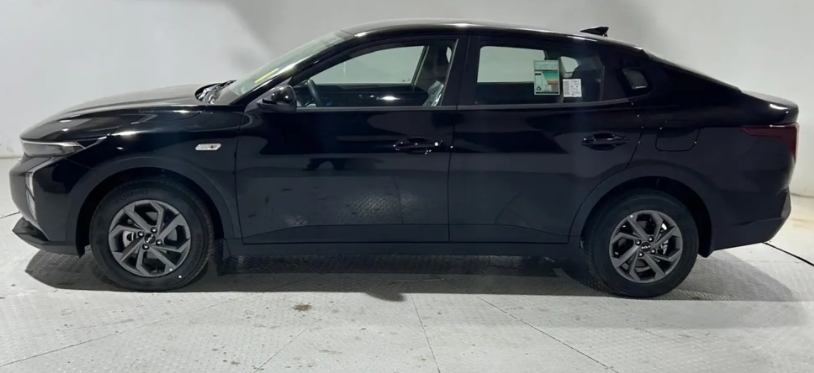
This strategic move is part of Kia’s plan to realign its global sedan lineup. The new K3 is larger and more sophisticated than the outgoing Rio, effectively bridging the gap between the subcompact and compact segments. Its design language is radically different, borrowing sharp, angular cues from the all-electric EV9, including its “Star Map” signature lighting. The body style is a sleek fastback sedan, blurring the lines between a traditional three-box shape and a more practical liftback.
This new K3 is initially being built and sold in Mexico for Latin American markets, with plans for expansion to other regions. Its powertrain options include a standard 1.6-liter four-cylinder engine and, for the sporty GT-Line trim, a 2.0-liter four-cylinder engine.
This decision effectively splits the K3 nameplate into two distinct histories:
- The Original K3 (2012-2024): The compact sedan/hatchback known as the Forte and Cerato in other markets.
- The New K3 (2024-Present): The larger, more premium subcompact successor to the Kia Rio.
Future Outlook: The Rise of the K4
With the K3 name now reassigned to the Rio’s replacement, what is the future of the compact Forte/Cerato? The answer is the upcoming Kia K4.
Spy shots and official teasers have confirmed that Kia is preparing a direct successor to the second-generation Forte, which will be named the K4 globally, simplifying the naming scheme. Mirroring the design language of the new K3 and the EV line, the K4 is expected to feature bold, futuristic styling with vertical headlamps and taillamps and a dramatic fastback profile. It will likely grow in size to better compete with the increasingly large Honda Civic and Hyundai Elantra.
The K4 is expected to carry over the proven powertrains from the outgoing Forte—the efficient 2.0-liter engine for standard models and the punchy 1.6-liter turbo for the GT trim. The interior will see a significant technological upgrade, likely featuring the panoramic curved display screen seen in other new Kia models, integrating the digital instrument cluster and central infotainment screen into one seamless unit.
Conclusion: A Legacy of Transformation
The story of the Kia K3 is a microcosm of Kia’s own journey over the last two decades. It began as a Korean-market name for a vehicle that fundamentally changed perceptions of the brand—a stylish, reliable, and value-packed compact car that could finally stand shoulder-to-shoulder with the world’s best. Through two successful generations, the K3 (in its Forte/Cerato guises) evolved from a mere contender to a segment leader, offering standout design, enthusiast-pleasing performance in its GT trim, and cutting-edge technology.
Today, the K3 nameplate is at a crossroads, embarking on a new life as a larger-than-class subcompact set to elevate Kia’s entry-level offerings. Meanwhile, the spirit and legacy of the original compact K3 are poised to continue under a new name: the K4. The journey of this humble nameplate is a testament to Kia’s ambitious, dynamic, and ever-evolving global strategy, constantly redefining itself to meet the challenges of a changing automotive landscape.