The Camry in Disguise: A Comprehensive History of the Daihatsu Altis
In the intricate world of the Japanese Domestic Market (JDM), the practice of “badge engineering” is a long-standing and fascinating tradition. It’s a strategy where one manufacturer sells a lightly modified version of another’s car under its own brand. This allows automakers to fill gaps in their product lineups without incurring the immense research and development costs of creating a new vehicle from scratch. Perhaps one of the most enduring and straightforward examples of this practice is the Daihatsu Altis, a vehicle that for over two decades served as the flagship sedan for a brand overwhelmingly famous for its small kei cars and compact vehicles. The Altis was, in every substantive way, a Toyota Camry, offering Daihatsu customers a taste of mid-size luxury and reliability, wrapped in a familiar, albeit differently badged, package. This is the story of its evolution.
The Rationale: Why Did the Altis Exist?
Before delving into its chronological history, it’s crucial to understand the “why.” Daihatsu, a subsidiary of Toyota since 1967 and a wholly-owned one since 2016, has always specialized in the smaller end of the automotive spectrum. Their expertise lies in creating efficient, cleverly packaged, and affordable kei cars and subcompacts like the Mira, Tanto, and Taft. However, this specialization left a significant void at the top of their lineup. They lacked a large, prestigious sedan to offer to loyal customers who might be looking to upgrade, or to compete for corporate fleet sales.
The solution was simple and elegant: leverage the power of the Toyota group. By taking the perennially popular and globally respected Toyota Camry and re-badging it as the Daihatsu Altis, Daihatsu could instantly have a credible flagship model. It gave their dealerships a premium product to sell, enhancing the brand’s image and providing a complete product ladder for customers to climb. The name “Altis” itself is derived from the word “altitude,” signifying its position as the top-tier vehicle in the Daihatsu range.
.
NO MORE dead batteries with this:

.
First Generation (SXV20N/SXV25N): 2000–2001
The Daihatsu Altis made its debut in March 2000, entering a market where the mid-size sedan was still a significant player. This inaugural model was a rebadged version of the Japanese-market Toyota Camry Gracia (XV20 platform), which had been on sale since 1996.
Models and Trim Levels: The first-generation Altis was kept remarkably simple, likely to avoid complexity and internal competition with its Toyota twin. It was offered in a single, well-equipped trim level.
- Altis: The standard configuration was front-wheel drive (model code SXV20N).
- Altis 4WD: A permanent four-wheel-drive version was also available (model code SXV25N).
Powertrain and Specifications: The sole engine option was Toyota’s reliable 2.2-liter 5S-FE inline-four engine, producing approximately 140 horsepower. True to its comfortable, executive-sedan mission, the only transmission available was a 4-speed automatic.
Design: Visually, distinguishing the Altis from the Camry Gracia required a keen eye. The changes were minimal, limited to the badging on the trunk, the center caps of the wheels, and a unique grille. The Altis grille featured a simple, clean design with a central Daihatsu “D” logo, eschewing the Toyota emblem. The rest of the body, from the headlights to the bumpers and sheet metal, was identical to its Toyota counterpart. This generation served as a proof of concept, establishing the Altis’s role with minimal investment. It was a short-lived generation, sold for just over a year and a half before its Toyota sibling was replaced.
Second Generation (ACV30N/ACV35N): 2001–2006
In September 2001, just as Toyota launched its all-new global XV30 Camry, Daihatsu followed suit with the second-generation Altis. This model represented a significant step up in terms of size, refinement, and modern design, reflecting the global ambitions of its Camry base.
Models and Trim Levels: The lineup expanded slightly, offering a bit more choice to Daihatsu customers, though it was still far simpler than the extensive Camry range.
- SL: This served as the primary trim level, offering a comprehensive list of standard features including automatic air conditioning, power windows, and high-quality fabric upholstery. It was available in both front-wheel drive (ACV30N) and four-wheel drive (ACV35N).
- S G Package: Positioned as a more luxurious offering, this package added features like wood grain interior trim, upgraded audio systems, and potentially alloy wheels, bringing it closer to the higher-spec Camry models.
Powertrain and Specifications: This generation saw a significant powertrain upgrade. The old 2.2-liter engine was replaced by the more modern and powerful 2.4-liter 2AZ-FE inline-four engine with VVT-i (Variable Valve Timing with intelligence). This engine produced a healthier 159 horsepower, providing better performance and refinement. It was again paired exclusively with a 4-speed automatic transmission for the FWD model, while the 4WD version also utilized an automatic gearbox.
Design: The design philosophy remained the same: minimal differentiation. The Altis wore a unique grille—this time a slightly more prominent design with three horizontal chrome bars and the Daihatsu logo—but was otherwise a carbon copy of the XV30 Camry. The interior was identical, save for the Daihatsu logo on the steering wheel. This generation enjoyed a much longer and more successful production run, cementing the Altis’s place as a quiet but consistent presence in Daihatsu showrooms for nearly five years.
Third Generation (ACV40N/ACV45N): 2006–2010
The third-generation Altis arrived in January 2006, concurrent with the launch of the sleek and more aerodynamic XV40 Toyota Camry. This model continued the trend of offering contemporary design and comfort under the Daihatsu banner.
Models and Trim Levels: Daihatsu once again simplified the trim structure, focusing on a single, well-appointed grade.
- G: This was the sole trim level offered for most of the generation’s life. It came standard with features expected in a modern sedan, such as automatic climate control, keyless entry, and advanced safety features for the era. It was available in front-wheel drive (ACV40N) and four-wheel drive (ACV45N).
- G “Limited Edition”: Occasionally, special editions like this were offered to stimulate sales, typically bundling popular optional features like navigation or upgraded wheels at a value price.
Powertrain and Specifications: The tried-and-true 2.4-liter 2AZ-FE engine was carried over from the previous generation, though with minor refinements. It was now paired with a more advanced 5-speed automatic transmission in the FWD model, which improved both fuel efficiency and acceleration. The 4WD model continued with a 4-speed automatic.
Design: The exterior differentiation was, by now, a predictable formula. The Altis was identical to the Camry except for its unique grille—a clean, slatted design—and the requisite Daihatsu badges. The XV40 platform provided a more spacious and quieter cabin, further enhancing the Altis’s credentials as a comfortable cruiser. Interestingly, Daihatsu discontinued this generation of the Altis in Japan in early 2010, even as Toyota continued to sell the XV40 Camry for another year and a half. This move hinted at the shrinking demand for traditional sedans and Daihatsu’s re-evaluation of its flagship’s market position.
Fourth Generation (AVV50N): 2012–2017
After a two-year hiatus, the Altis returned in May 2012, but it was a fundamentally different car. Reflecting a seismic shift in the Japanese automotive market towards efficiency and environmental consciousness, the fourth-generation Altis was launched as a hybrid-only vehicle. It was based on the XV50 Toyota Camry Hybrid.
Models and Trim Levels: The lineup was streamlined to a single, high-spec model.
- Hybrid G Package: This was the only trim available. Being a hybrid and the flagship, it was generously equipped with features like a push-button start, an advanced infotainment system, and the full suite of safety equipment available at the time.
Powertrain and Specifications: The Altis now featured Toyota’s Hybrid Synergy Drive system. This paired a 2.5-liter 2AR-FXE Atkinson cycle inline-four engine with an electric motor. The combined system output was 205 horsepower, delivering strong, smooth acceleration while achieving outstanding fuel economy—its primary selling point. The powertrain was linked to an electronically controlled continuously variable transmission (e-CVT) and was available only in front-wheel drive.
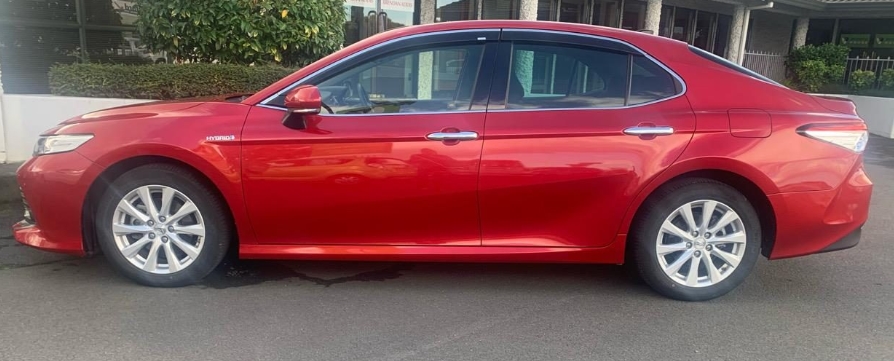
Design: Based on the XV50 Camry, this Altis had a more modern and imposing presence. The hybrid-specific Camry models in Japan often featured blue-tinted emblems and unique styling cues, which the Altis inherited. The only change, as always, was the substitution of the Daihatsu logo on the grille, trunk, steering wheel, and wheel caps. This strategic shift to a hybrid-only model was clever; it differentiated the Altis from many gasoline-powered competitors and aligned Daihatsu with Toyota’s market-leading hybrid technology.
Fifth Generation (AXVH70N): 2017–2023
The fifth and final generation of the Daihatsu Altis launched in July 2017, based on the revolutionary XV70 Toyota Camry. This model was a quantum leap forward, built on the Toyota New Global Architecture (TNGA-K) platform, which endowed it with a lower center of gravity, a more dynamic driving experience, and a strikingly bold design.
Models and Trim Levels: The single-trim strategy continued, reflecting the vehicle’s niche status.
- G: The sole trim level was simply designated “G.” It was comprehensively equipped with the latest technology, including the Toyota Safety Sense P suite of advanced driver-assistance systems as standard. This package included a pre-collision system, lane departure alert, and adaptive cruise control, making it the most technologically advanced vehicle ever to wear a Daihatsu badge.
Powertrain and Specifications: The powertrain was an evolution of the previous generation’s hybrid system. It used the new A25A-FXS 2.5-liter “Dynamic Force” engine, which boasted world-class thermal efficiency. Paired with an improved electric motor and e-CVT, the total system output was 211 horsepower. This system offered an even better balance of power and exceptional fuel economy, solidifying its place as a cutting-edge hybrid sedan. It remained a front-wheel-drive-only proposition.
Design: The XV70 Camry’s sharp, aggressive styling was a departure from the conservative designs of the past, and the Altis inherited this exciting new look wholesale. With its low-slung stance and expressive front fascia, it was by far the most visually dramatic Altis ever sold. The only visible difference remained the Daihatsu emblems, making it a true sleeper car for those not in the know.
The End of the Line
In early 2023, Toyota announced the discontinuation of the Camry in its home market of Japan due to dwindling sales in the sedan segment. Inevitably, this sealed the fate of its Daihatsu twin. After a 23-year run, production of the Daihatsu Altis ceased.
The Altis’s legacy is not one of high sales volumes or groundbreaking innovation. It was never meant to be a trendsetter. Instead, its story is a perfect illustration of pragmatic, intra-company collaboration. For over two decades, it served its purpose flawlessly: it provided Daihatsu with a reliable, respectable, and modern flagship sedan with virtually zero development cost, allowing the company to focus on what it does best. The Altis was the consummate understudy, a quiet chameleon that evolved in lockstep with its famous sibling, offering a compelling choice for the discerning few who walked into a Daihatsu dealership seeking something larger.