The Talbot Samba: History and Overview
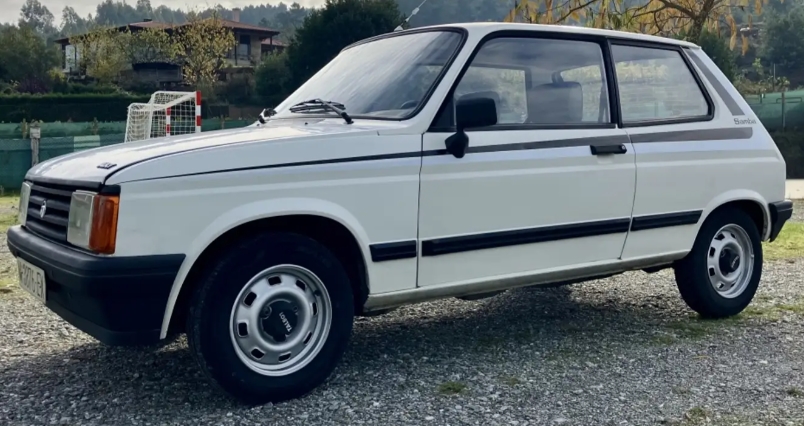
The Talbot Samba was a compact supermini car produced by the French manufacturer Automobiles Talbot (under the ownership of PSA Peugeot Citroën) between 1981 and 1986. Designed to compete in the fast-growing European small car market of the early 1980s, the Samba was effectively the last new passenger car to be launched under the Talbot marque. It was available in several trim levels, body styles, and even a sporty rally homologation special. Although its production run was relatively short, the Talbot Samba left an interesting legacy in the automotive world, both as a product of its time and as a symbol of the final years of Talbot as a mainstream car brand.
Historical Background
To understand the Talbot Samba, it’s important to look at the broader context of the Talbot brand and the automotive industry of the late 1970s and early 1980s. Talbot was originally a British marque dating back to the early 20th century, but by the post-war years, its ownership and branding had shifted multiple times. By the 1970s, Talbot was under the control of Chrysler Europe, which itself was a combination of the UK-based Rootes Group and French manufacturer Simca.
In 1978, Chrysler decided to exit the European market, selling its European operations to PSA Peugeot Citroën. PSA inherited a range of products under the Chrysler, Simca, and Sunbeam names, as well as the Talbot brand, which they decided to revive as the umbrella name for the acquired models.
By the early 1980s, PSA had a need for a small, modern hatchback to replace aging models in the Talbot range, such as the Simca 1000 and the Talbot Sunbeam. Rather than develop an entirely new platform from scratch, PSA decided to base the new car on the recently launched Peugeot 104, a compact and efficient supermini introduced in 1972.
Development and Launch
The Talbot Samba was launched in late 1981, positioned as a stylish and practical small car for urban and suburban use. It shared much of its underpinnings with the Peugeot 104 and, to a lesser extent, the Citroën Visa, but featured unique bodywork and detailing to give it a distinct Talbot identity.
The key difference from the Peugeot 104 was that the Samba was offered in three-door hatchback form as standard, with a longer rear overhang than the short-bodied 104 to improve boot space. Additionally, the Samba was also available as a two-door cabriolet — a relatively rare offering in the supermini segment at the time.
.

.
Production Years
The Talbot Samba was produced from 1981 to 1986 in Talbot’s Poissy plant in France. While it was never a top seller compared to PSA’s own Peugeot and Citroën equivalents, it carved out a niche for itself in certain markets, particularly in France, the UK, and some southern European countries.
Body Styles
The Samba came in two primary body configurations:
- Three-door hatchback – The mainstay of the range, practical and compact.
- Two-door cabriolet – Introduced in 1982, this version was styled by the famous Italian design house Pininfarina and was one of the smallest convertibles on the market at the time.
Models and Trim Levels
Over its production run, the Talbot Samba was offered in a variety of trim levels and special editions. The lineup evolved slightly over the years, but the most notable variants were:
Standard Hatchback Range
- Samba LS – The entry-level model, typically fitted with a small 954 cc engine. Basic equipment, aimed at budget-conscious buyers.
- Samba GL – Mid-range trim with additional comfort and convenience features such as better interior trim, improved upholstery, and more exterior brightwork.
- Samba GLS – Higher specification model with more powerful engines (ranging up to 1.2 liters), improved instrumentation, and additional features such as a rear wiper and higher-quality interior materials.
- Samba Sympa – A special edition in some markets, offering unique color schemes and trim details, often based on mid-level specifications.
- Samba Style – Another special edition variant with cosmetic enhancements and sometimes upgraded equipment packs.
Cabriolet Range
- Samba Cabriolet LS – The base convertible, sharing mechanicals with the lower-spec hatchbacks.
- Samba Cabriolet GL – Better-equipped convertible version.
- Samba Cabriolet GLS – The top-spec cabriolet with the most powerful engines and luxury touches.
- Samba Cabriolet Style – Special edition convertible with unique trim and colors.
The Samba Cabriolet was notable for being one of the few open-top cars in its size category, competing mainly with the Volkswagen Golf Cabriolet (though in a smaller segment) and, later, the Ford Escort Cabriolet.
Performance Model
Samba Rallye – Perhaps the most famous Samba variant, the Rallye was introduced in 1983 as a homologation model for Group B rallying. It featured a tuned 1.2-litre four-cylinder engine producing around 90 horsepower (in Rallye 1) and a later 1.3-litre version (Rallye 2) with approximately 80–90 horsepower, depending on market and specification. The Rallye was stripped-down for weight savings, with minimal soundproofing and basic interior trim, and came with distinctive graphics and sporty suspension tuning. These cars were relatively quick for their size and era, and they competed successfully in various rally events.
Engines and Mechanical Details
The Samba’s engines were mostly carried over from the Peugeot 104 and Citroën Visa ranges. Common displacements included:
- 954 cc inline-four (entry-level)
- 1124 cc inline-four (mid-range)
- 1219 cc inline-four (higher trims)
- 1294 cc inline-four (Rallye and higher-performance variants)
Transmissions were typically 4-speed manual gearboxes in the lower models, with 5-speed manuals available in some higher trims and performance models.
The Samba’s suspension was conventional for the time: MacPherson struts at the front and a trailing arm torsion bar setup at the rear. Brakes were front discs and rear drums across most of the range, with the Rallye models benefiting from uprated components.
Market Position and Competition
The early 1980s European small car market was highly competitive, with rivals including the Ford Fiesta Mk1, Renault 5, Austin Metro, Fiat 127, and later, the Volkswagen Polo. PSA’s own Peugeot 104 and Citroën Visa also competed for similar buyers. The Samba’s unique selling points were its slightly more upmarket trim in higher models, its cabriolet option, and the sporty Rallye variant.
However, the Samba was introduced at a time when PSA was rationalising its product lineup. The company was increasingly focused on Peugeot and Citroën as its primary brands, while Talbot was gradually being phased out.
Sales Performance
Sales of the Talbot Samba were modest. The model performed adequately in France and certain export markets but never achieved the volumes of its Peugeot and Citroën siblings. The cabriolet found a niche audience, particularly among younger buyers and those seeking an affordable open-top car.
The Rallye was popular among motorsport enthusiasts and amateur rally drivers, giving the Samba a degree of sporting credibility.
Motorsport
The Talbot Samba Rallye was designed in part to satisfy homologation requirements for Group B rallying. In competition, the Samba proved agile and capable in its class, competing in events such as the Monte Carlo Rally and various national championships. Though it never achieved the fame of the Group B giants like the Audi Quattro or Lancia 037, the Samba Rallye was respected for its handling and durability in smaller engine categories.
End of Production and Discontinuation
By 1986, PSA had decided to discontinue the Talbot Samba. The decision was part of a wider strategy to phase out the Talbot marque entirely in passenger cars, with the last Talbot-badged cars (the Tagora and Horizon) also being removed from production by the mid-to-late 1980s.
The Samba’s role in PSA’s lineup was effectively replaced by the introduction of new-generation Peugeot and Citroën small cars, such as the Peugeot 205, which debuted in 1983 and quickly became a massive commercial success.
Legacy
Although it had a relatively short life, the Talbot Samba remains an interesting footnote in automotive history for several reasons:
- Last new Talbot model – It holds the distinction of being the final new passenger car launched under the Talbot name.
- Cabriolet niche – Its open-top variant was one of the smallest and most affordable convertibles of the time.
- Rally heritage – The Rallye versions gave the Samba a motorsport pedigree, and surviving examples are still appreciated by enthusiasts.
- PSA platform sharing – The Samba is a clear example of early 1980s platform rationalisation within PSA, using proven mechanicals from Peugeot and Citroën while creating a distinct brand identity.
Collectibility and Enthusiast Scene
Today, the Talbot Samba is a rare sight on the road. Survivors tend to be in the hands of collectors, especially Rallye models and cabriolets, which are the most sought-after. Parts availability can be challenging due to the car’s age and relatively low production numbers, but some mechanical components are interchangeable with the Peugeot 104 and Citroën Visa.
Specialist clubs in France and the UK cater to Talbot enthusiasts, and the Samba enjoys a modest but loyal following among fans of classic European superminis.
Future Outlook
As a classic car, the Talbot Samba’s future is likely to be shaped by its rarity and its place in the story of Talbot’s final years. Values for standard models have remained modest, but the Rallye and cabriolet versions have been increasing in desirability, especially for well-preserved, original examples.
Given its shared components with other PSA models, long-term maintenance is feasible for dedicated owners, though body panels and trim pieces are increasingly scarce. As 1980s cars continue to gain classic status, the Samba may attract more attention from collectors seeking something different from the mainstream.
The Talbot Samba was a small car that represented both the promise and the challenges of its era. Launched in 1981 as a practical, stylish supermini, it offered buyers a choice of hatchback and cabriolet body styles, a range of trims from basic to sporty, and even a rally-bred homologation special. While it never achieved huge sales success, it filled a niche in the market and became a memorable swan song for the Talbot brand.
Today, the Samba is remembered fondly by enthusiasts as a quirky, charming representative of early 1980s European motoring — a car that blended French style, Italian design flair (in cabriolet form), and rallying spirit into a distinctive package. As time goes on, its scarcity will only add to its appeal among collectors and lovers of automotive history.