The Simca Aronde: A Comprehensive History and Model Overview
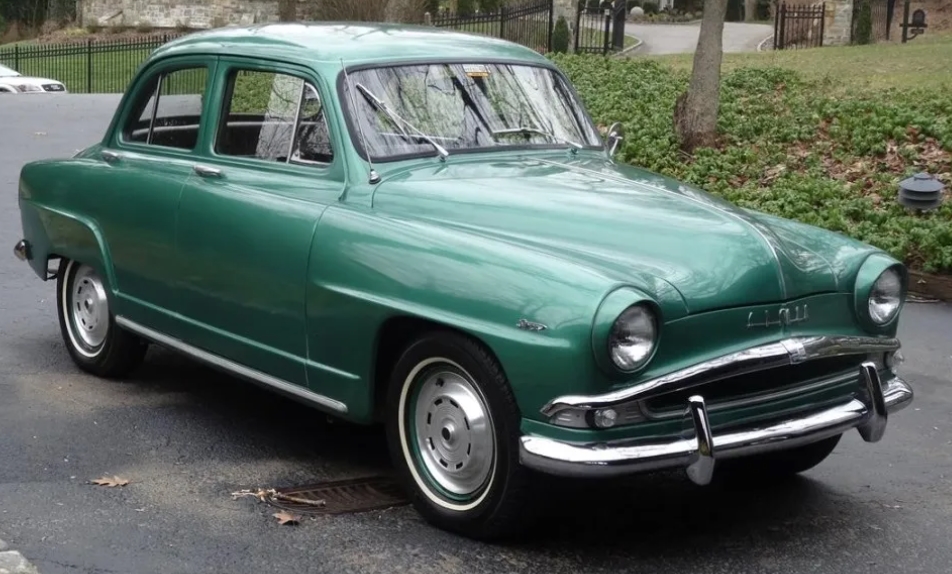
The Simca Aronde occupies a significant place in French automotive history. Produced by Simca (Société Industrielle de Mécanique et Carrosserie Automobile) between 1951 and 1964, the Aronde was the company’s first model to be entirely of Simca’s own design, rather than a derivative of Fiat designs, and it helped establish Simca as a major contender in the European car market of the mid‑20th century. Over its lifespan, the Aronde went through several generations and numerous trim levels, with production exceeding a million units—a major milestone for a French car manufacturer at the time.
Background and Origins
Simca was founded in 1934 by Fiat to build Fiat-based cars in France. In its early years, Simca produced vehicles closely related to Fiat’s models, but by the late 1940s, under the guidance of company president Henri Pigozzi, Simca sought to develop a wholly original vehicle. The French auto industry after World War II was rebuilding, and consumer demand was shifting toward more modern, family-friendly vehicles with better performance and style.
The Aronde—French for “swallow” (a bird)—was introduced in 1951 as Simca’s bold step toward brand independence. It was aimed at the burgeoning middle-class market, offering a combination of reliability, reasonable performance, and contemporary styling.
.

.
Production Timeline and Generations
The Simca Aronde was produced from 1951 to 1964 in three primary generations:
1. Aronde 9 (1951–1955)
The first generation, officially called the Simca 9 Aronde, marked a complete break from Fiat-based architecture. It featured a unibody construction, which was relatively advanced for the time, and a modern three-box sedan shape.
- Engine: 1,221 cc “Flash” inline-four, producing around 45 hp.
- Transmission: 4-speed manual.
- Body Styles: Four-door saloon, two-door coach, station wagon (Commerciale), and light van versions.
The 9 Aronde was praised for its roomy cabin, durability, and contemporary looks. The model was also exported to various markets, including Australia, where it met with modest success.
2. Aronde 90A (1955–1958)
The second generation was referred to as the Aronde 90A. It was essentially an updated version of the original, with cosmetic changes and mechanical refinements.
- Design Updates: Revised front grille, improved interior trim, and more chrome detailing.
- Engine Options:
- 1,221 cc “Flash” engine (improved to around 48–50 hp).
- Later, a “Flash Spécial” version with higher compression delivering about 57 hp was offered for sportier variants.
- Models and Trims:
- Élysée: Well-equipped saloon.
- Montlhéry: A sportier saloon variant named after the famous French racing circuit, with the Flash Spécial engine.
- Châtelaine: Estate/wagon version.
- Commerciale: Light commercial van.
- Grand Large: Two-door hardtop.
- Océane: Two-door cabriolet with a sporty appeal.
- Plein Ciel: Stylish two-door coupé, often with two-tone paint.
This generation expanded the Aronde’s appeal across demographics—from families needing a practical estate to younger buyers seeking stylish coupés.
3. Aronde P60 (1958–1964)
The final and most extensively developed generation was the P60 series, launched in late 1958. The “P” stood for “Project” and “60” suggested modernity for the 1960s.
- Styling: More angular and modern bodywork with pronounced tailfins (influenced by American trends), larger glass areas, and a more spacious interior.
- Engine Range:
- 1,221 cc “Flash” engine.
- 1,290 cc “Rush” engine introduced later, producing up to 70 hp in sportier trims.
- Transmission: 4-speed manual, with synchromesh on upper gears.
- Models and Trims:
- Élysée: Standard saloon, well-appointed.
- Montlhéry: Performance-oriented saloon with higher output engine, sportier trim.
- Monaco: Luxury-oriented model with more chrome, better upholstery, and premium features.
- Châtelaine: Estate version, practical for families and tradespeople.
- Commerciale: Utility van variant.
- Grand Large: Two-door pillarless hardtop, stylish and airy.
- Plein Ciel: Elegant coupé with refined interior.
- Océane: Convertible version, aimed at the leisure market.
- Elysée Spéciale: Special edition with upgraded trim and performance tweaks.
The P60 series was a commercial success and was exported widely, including to Australia, the UK, and parts of Africa and Asia. Styling differences and trim variations were sometimes adapted for local markets.
Mechanical and Technical Characteristics
Throughout its production run, the Aronde was known for:
- Unibody Construction: Strong and relatively light, enhancing handling and economy.
- Suspension: Independent front suspension with coil springs, rear live axle with leaf springs—providing a balance between comfort and durability.
- Brakes: Drum brakes all around, typical of the era.
- Engines: Inline-four petrol engines ranging from 1.2 to 1.3 litres, progressively improved for power and efficiency.
The Aronde was not considered a high-performance car, but it was robust, economical, and well-suited to the road conditions of the 1950s and early 1960s.
Market Position and Reception
In France, the Aronde competed directly with models such as the Peugeot 203/403, Renault Frégate (although slightly larger class), and later the Renault Dauphine in the lower segment. The Aronde’s fresh styling, variety of body styles, and competitive pricing allowed Simca to capture a significant share of the domestic market. By the mid‑1950s, Simca was the second-largest car manufacturer in France after Renault.
Export markets appreciated the Aronde’s European charm and practicality. In Australia, for instance, the Aronde was assembled locally from CKD (completely knocked down) kits, and its reliability in rugged conditions was a selling point.
Motorsport and Endurance Achievements
While not primarily a racing car, the Aronde did participate in endurance and rally events. Montlhéry versions set endurance records at the Autodrome de Linas-Montlhéry, with some cars running for tens of thousands of kilometers at high average speeds to demonstrate durability. Such feats were used extensively in Simca’s advertising.
Special Variants
Some particularly notable variants include:
- Aronde Plein Ciel: A two-door coupé with sleek lines, often finished in attractive two-tone paint, offered mainly in the mid‑1950s to early 1960s.
- Aronde Océane: An open-top cabriolet with a sporting character, rare today and prized by collectors.
- Utility Versions: The Châtelaine estate and Commerciale van offered flexibility for professional use.
End of Production and Legacy
By the early 1960s, the Aronde was beginning to show its age. Competitors were offering more modern designs and features, and Simca was preparing its next generation of models. Production of the Aronde wound down in 1964, replaced by the Simca 1300/1500 series, which carried the brand forward into the mid‑1960s.
The Aronde’s total production exceeded 1.4 million units, making it the first Simca model to surpass the million-unit mark. This was a major achievement for a postwar French automaker and demonstrated that Simca could compete successfully in both domestic and export markets.
Future Outlook and Collector Interest
As of today, the Simca Aronde has become a classic car enthusiast’s gem, particularly in France and Australia. While it never achieved the global fame of certain contemporaries, the Aronde’s charm lies in its period styling, variety of body styles, and its role in establishing Simca as a household name in the 1950s.
Restoration projects are common among collectors, though sourcing parts can be challenging outside France. Coupé and cabriolet versions such as the Plein Ciel and Océane attract the highest interest due to their rarity and aesthetic appeal. Well-preserved sedans and estates also have a loyal following.
The future of the Aronde in the collector market is likely to remain stable, with rising interest in mid‑century European cars boosting its profile. Its historical significance as Simca’s first wholly original design ensures it will be remembered as a milestone vehicle in French automotive history.
Key Facts Summary
- Manufacturer: Simca (France)
- Production Years: 1951–1964
- Generations:
- Simca 9 Aronde (1951–1955)
- Aronde 90A (1955–1958)
- Aronde P60 (1958–1964)
- Body Styles:
- 4-door saloon (Élysée, Montlhéry, Monaco, etc.)
- 2-door pillarless hardtop (Grand Large)
- 2-door coupé (Plein Ciel)
- 2-door cabriolet (Océane)
- Estate/wagon (Châtelaine)
- Commercial van (Commerciale)
- Engines: 1.2–1.3 litre inline-four petrol engines (“Flash” and “Rush” series)
- Production Volume: Over 1.4 million units
- Significance: First Simca wholly original design; major export success; endurance record-setter.
The Simca Aronde’s story is one of ambition, innovation, and adaptation in a rapidly changing postwar auto industry. From its debut in 1951 as Simca’s first ground-up design to its final P60 iteration in 1964, the Aronde demonstrated versatility through its wide range of body styles and trims, appealing to diverse customers at home and abroad. Beyond its mechanical details, the Aronde represents a turning point for Simca, propelling the brand from a Fiat subsidiary to a major French automaker in its own right. Today, the Aronde remains a cherished classic, a symbol of 1950s optimism, and a landmark in mid‑century French motoring.