Evolution of The Simca 1307 / 1308: A Pioneering European Hatchback
The Simca 1307 / 1308 was one of the most important European family cars of the 1970s, both for its manufacturer and for the automotive industry in general. Launched in 1975, it represented a bold departure from previous models, introducing a modern hatchback body style to a segment that had traditionally been dominated by sedans. Developed under Chrysler Europe, the 1307 / 1308 gained recognition not only for its advanced design but also for its role in bridging the gap between Simca’s earlier models and the later Talbot era.
Origins and Historical Context
By the early 1970s, Simca — at that time part of Chrysler Europe — was looking to replace its long-serving 1501 range. The European car market was undergoing a transformation: buyers were beginning to appreciate the versatility of hatchbacks, a body style that combined the practicality of an estate car with the compact footprint of a saloon. Companies like Renault and Volkswagen were already experimenting with this format, and Chrysler Europe wanted to be competitive in the mid-size family segment.
The 1307 / 1308 project was internally known as Project C6 and was developed at Simca’s Poissy plant in France. The design leaned heavily on contemporary European trends but also reflected Chrysler’s desire for a unified product range across its continental operations.
Launch and Production Years
The Simca 1307 and 1308 were officially launched in July 1975. Production ran from 1975 to 1979 in their original form, with later evolutions continuing under different names into the early 1980s. The cars were built primarily at the Poissy plant, but also assembled in other locations under license, including the UK (as the Chrysler Alpine) and Spain.
When introduced, the Simca 1307 / 1308 was considered highly advanced for its class. It was crowned the 1976 European Car of the Year, an accolade that underscored its innovation and appeal.
.

.
Design and Layout
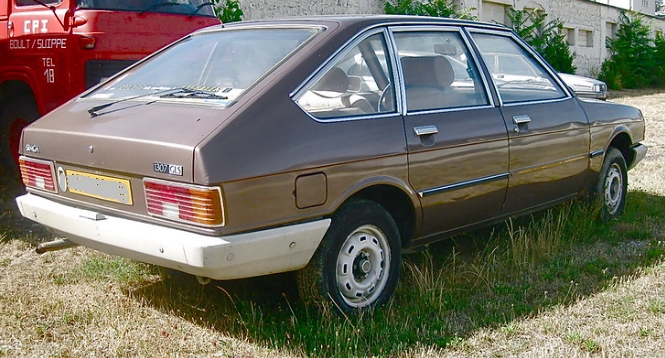
The 1307 / 1308 departed from the traditional three-box saloon design of the 1501. Instead, it featured a five-door hatchback body with a steeply raked rear window and a practical tailgate. This gave the car excellent versatility — the rear seats could be folded to increase cargo space, making it a practical family vehicle in an era when such flexibility was rare in the mid-size segment.
Underneath, the 1307 / 1308 used a front-engine, front-wheel-drive layout. It was powered by the proven Simca overhead-valve four-cylinder engines, available in different displacements depending on the model. The suspension was independent all around, with MacPherson struts at the front and trailing arms at the rear, tuned to balance comfort and handling.
Stylistically, the car reflected a blend of French and American influences. The aerodynamic nose, large glass area, and clean sides were thoroughly modern, while some trim details hinted at Chrysler’s transatlantic connections.
Models and Trim Levels
The Simca 1307 / 1308 range comprised several models distinguished mainly by engine size, equipment level, and trim. The naming convention was numerical, with the first two digits indicating the engine displacement and the final digit sometimes denoting a higher trim level.
Main versions included:
- Simca 1307 – The entry-level model, equipped with a 1.3-litre engine (1294 cc). This was aimed at budget-conscious buyers who still wanted the practicality of the hatchback format. It came with a relatively modest equipment list, manual gearbox, and simpler interior trim.
- Simca 1308 – A higher-specification version fitted with a 1.4-litre or 1.6-litre engine, depending on the market and year. The 1308 was positioned as the more comfortable and better-equipped choice, often featuring improved upholstery, additional instrumentation, higher-grade interior materials, and more exterior brightwork.
- Simca 1308 GT – A sportier variant introduced to appeal to drivers seeking more performance. The GT generally featured the 1.6-litre engine and was distinguished by sportier trim, unique wheel designs, and sometimes additional exterior striping or badging.
- Simca 1307 S – A slightly upgraded version of the base 1307, with minor equipment improvements.
The range evolved over its production life, with minor facelifts and equipment changes. In some export markets — notably the United Kingdom — the cars were marketed under the Chrysler Alpine name, with trim levels such as LS, GL, and later GLS, which roughly corresponded to the French market hierarchy.
Engines and Performance
The Simca 1307 / 1308 was powered by the long-serving “Type 315” and “Type 180” four-cylinder engines, derived from Simca’s earlier designs:
- 1.3 L (1294 cc) – Producing around 68 horsepower, this engine was frugal and adequate for urban and light touring duties.
- 1.4 L (1442 cc) – Offering approximately 82 horsepower, it provided a good balance of performance and economy for family use.
- 1.6 L (1592 cc) – Delivering around 90–95 horsepower in GT form, this unit gave the car more relaxed cruising ability and stronger acceleration.
All versions used a four-speed manual gearbox, though some markets offered an optional three-speed automatic, which was relatively uncommon for the segment at the time.
Performance was competitive for the era: the 1.6-litre models could reach around 170 km/h (106 mph), while the smaller-engined versions were more modest but still capable of comfortable motorway travel.
Market Reception
The Simca 1307 / 1308 was well received at launch. Critics praised its roomy interior, excellent visibility, comfortable ride, and the practicality of its hatchback configuration. The styling was considered fresh, and the car’s European Car of the Year win in 1976 boosted its profile considerably.
In France, it competed directly with the Renault 16 and later the Renault 20, while in the UK it went up against the Ford Cortina, Vauxhall Cavalier, and emerging hatchbacks like the Volkswagen Passat. While it did not achieve the same long-term sales dominance as some rivals, it carved out a respectable niche.
One area of criticism was build quality, which could be inconsistent, especially in later years as Chrysler Europe faced financial difficulties. Rust protection was also a concern, with many surviving cars succumbing to corrosion.
Production Changes and Transition to Talbot
By the late 1970s, Chrysler Europe was in trouble financially. In 1978, Chrysler sold its European operations — including Simca — to PSA Peugeot Citroën. As part of the takeover, the Simca name was gradually phased out in favor of the revived Talbot brand.
From 1979 onwards, the Simca 1307 / 1308 was rebadged in many markets as the Talbot 1510 (with slightly revised styling and trim) and continued in production until 1985 in that form. The core mechanical package remained largely unchanged, but equipment and trim were updated to keep pace with rivals.
Variants and Related Models
The Simca 1307 / 1308 had several related derivatives:
- Chrysler Alpine – The name used in the UK and some export markets for the same car, launched in parallel with the French Simca versions.
- Talbot 1510 – The direct successor, introduced after PSA’s takeover.
- Talbot Solara – A saloon (booted) version of the hatchback, launched in 1980, aimed at more traditional buyers.
Technical Specifications (Representative, 1976 1308 GT)
- Body style: 5-door hatchback
- Layout: Front-engine, front-wheel-drive
- Engine: 1.6 L inline-four, OHV
- Power: ~90 hp
- Transmission: 4-speed manual (optional 3-speed auto)
- Top speed: ~170 km/h (106 mph)
- Length: ~4,340 mm
- Width: ~1,680 mm
- Height: ~1,420 mm
- Wheelbase: ~2,680 mm
- Kerb weight: ~1,050 kg
Legacy
The Simca 1307 / 1308 was a forward-looking car that helped popularize the five-door hatchback format in the mid-size segment. Its combination of space, comfort, and practicality set a template that would be followed by many manufacturers in the 1980s and beyond.
While its long-term survival rate has been low due to rust and limited collectability, the model remains fondly remembered by enthusiasts of French cars and those who appreciate 1970s automotive innovation. The European Car of the Year award cemented its place in automotive history.
Future Outlook
Today, the Simca 1307 / 1308 is a rare sight on the road. Surviving examples are mostly in the hands of collectors and marque clubs. Interest in 1970s classics has been growing, and the 1307 / 1308’s distinctive styling, historical significance, and innovative hatchback layout make it an appealing restoration project for enthusiasts seeking something different from the more common classics of the era.
Parts availability can be challenging, especially for trim and body components, but mechanical parts are often shared with other Simca and Talbot models, making maintenance manageable for dedicated owners. Events organized by Simca and Talbot clubs in France, the UK, and other European countries provide a support network for restoration and preservation.
As the appreciation for “Radical Seventies” design grows, the Simca 1307 / 1308 may gain more recognition as a pioneering model that helped define the modern family car. While it may never achieve the mainstream classic status of icons like the Volkswagen Golf or Ford Escort, its innovative approach and place in the Chrysler–PSA transition story ensure it will always have a niche following.
In Summary: The Simca 1307 / 1308 was more than just a replacement for the aging 1501 — it was a bold step into the future of European family motoring. Produced from 1975 to 1979, offered in a range of trims from practical 1307 to higher-spec 1308 GT, and crowned European Car of the Year in 1976, it remains an important chapter in Simca’s history. Its hatchback design, comfortable ride, and versatility influenced the market and foreshadowed the dominance of the five-door family car in the decades to come.