Evolution of The SEAT 600: Spain’s Beloved People’s Car
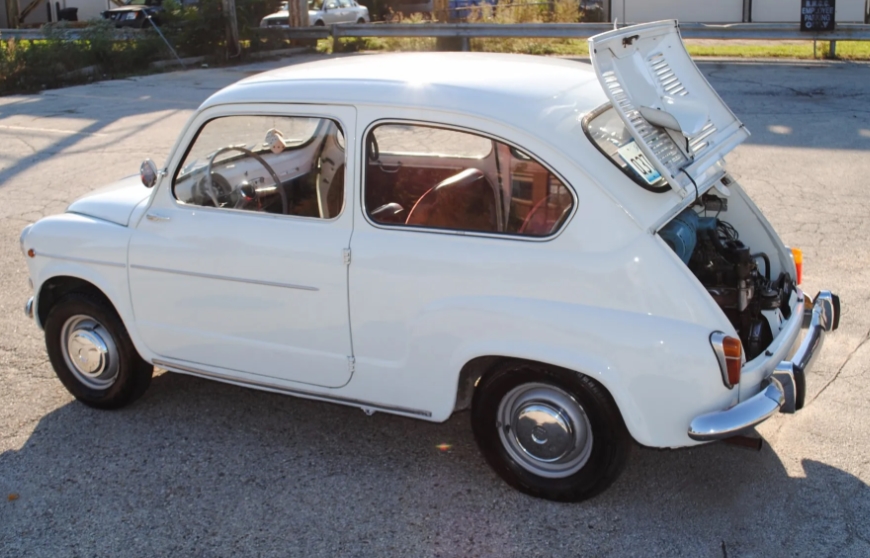
The SEAT 600 is one of the most iconic vehicles in Spanish automotive history. Produced between 1957 and 1973, it became a cultural symbol of Spain’s economic growth and modernization in the mid-20th century. Based on the Italian Fiat 600, the SEAT 600 was adapted and manufactured by SEAT (Sociedad Española de Automóviles de Turismo, S.A.), under license from Fiat, to suit the needs of the Spanish market. Over its 16-year production run, the SEAT 600 transformed from a modest, affordable city car into a national phenomenon, enabling many Spaniards to own their first automobile.
Historical Context
In the aftermath of the Spanish Civil War (1936–1939) and during the economically autarkic 1940s, Spain’s motor industry was underdeveloped, and car ownership was a luxury reserved for the wealthy. By the early 1950s, however, Spain began to open up economically, and the government encouraged industrial growth. SEAT was founded in 1950 as a state-supported company, with Fiat providing technical expertise and designs.
By 1957, Spain was ready for an affordable, mass-market car. The Fiat 600, which had debuted in Italy in 1955, was chosen as the basis for SEAT’s new model. The SEAT 600 was unveiled in June 1957 at the Barcelona Trade Fair. It was slightly adapted for Spanish manufacturing capabilities but retained the fundamental design and engineering of its Italian counterpart.
.
THIS could come in handy for your auto garage (and everywhere else!):

.
Production Timeline and Volumes
Years Produced:
- 1957 – 1973 (16 years)
Total Units Produced:
- Approximately 794,406 units
The SEAT 600 was built in SEAT’s Zona Franca factory in Barcelona. Early production was slow, with just a few hundred vehicles produced in 1957. However, as demand surged and production capacity increased, annual output grew rapidly. In the 1960s, waiting lists for a SEAT 600 could extend for months or even years, a testament to its popularity.
Design and Engineering
The SEAT 600 was a rear-engined, rear-wheel-drive compact city car with a two-door saloon body style. Its small size, measuring just over 3.2 meters in length, made it ideal for narrow urban streets. The car featured a monocoque body, an innovative approach for the time, which helped keep weight low.
Key Technical Specifications (varied slightly by model):
- Engine: Inline 4-cylinder, water-cooled
- Displacement: Initially 633 cc, later increased in some models
- Power Output: Around 18–32 horsepower depending on version
- Transmission: 4-speed manual
- Top Speed: Approximately 95–120 km/h (59–75 mph) depending on model
- Fuel Consumption: Around 6–7 L/100 km (39–34 mpg US)
Models and Trim Levels
Over its long production run, the SEAT 600 underwent various updates and spawned multiple versions. Below is an overview of the main variants:
1. SEAT 600 (1957–1963)
- The original model closely mirrored the Fiat 600.
- Powered by a 633 cc, 18 hp engine.
- Featured suicide doors (rear-hinged) in early years.
- Basic interior with minimal instrumentation.
- Top speed: Around 95 km/h.
2. SEAT 600 D (1963–1970)
- Introduced in 1963 with notable improvements.
- Engine enlarged to 767 cc, producing around 25 hp.
- Top speed increased to about 108 km/h.
- Retained suicide doors until 1970.
- Improved interior materials and slightly revised trim.
- Became the most popular version, forming the bulk of 600 production.
3. SEAT 600 E (1970–1973)
- Launched in 1970 as a more modernized variant.
- Maintained the 767 cc engine with slight refinements.
- Suicide doors replaced with front-hinged doors for improved safety.
- Updated lighting, bumpers, and interior features.
- This was the final main production model before discontinuation.
4. SEAT 600 L Especial (1972–1973)
- A special, more luxurious variant introduced toward the end of production.
- Featured upgraded trim, more chrome details, and improved upholstery.
- Offered slightly more powerful tuning (around 32 hp).
- Designed to appeal to customers seeking a more refined small car.
Special Versions and Derivatives
The SEAT 600 also served as the basis for several special variants and derivatives:
- SEAT 800 (1964–1967): A stretched, four-door version of the 600, unique to the Spanish market. It was 180 mm longer and offered more cabin space.
- Commercial vans: Some 600s were converted into small delivery vans by coachbuilders, replacing the rear seats and adding cargo areas.
- Convertible and beach cars: Custom coachbuilders and SEAT themselves occasionally produced open-top variants for promotional or leisure purposes.
- Racing versions: The SEAT 600 was a popular base for amateur motorsport, with tuned engines and lightweight modifications.
Cultural Impact in Spain
The SEAT 600 was more than just a car — it was a social phenomenon. In the late 1950s and throughout the 1960s, Spain experienced rapid economic growth known as the “Spanish Miracle.” The 600 was perfectly positioned to serve a growing middle class eager for personal mobility.
For many families, the SEAT 600 was their first car. It enabled greater travel freedom, family holidays to the coast, and a newfound sense of modernity. The sight of overloaded 600s heading to Spanish beaches in summer became a cultural cliché. The car’s affordability, reliability, and friendly appearance made it a national favorite.
Pricing and Market Position
When introduced in 1957, the SEAT 600 was priced at around 65,000 pesetas, a significant sum at the time, but far more attainable than larger sedans. By the late 1960s, the price had risen but still remained competitive. Government policies and SEAT’s production efficiency ensured that the 600 remained within reach of the average working family.
Decline and End of Production
By the early 1970s, the SEAT 600’s basic design was becoming outdated. Competitors, including newer SEAT models like the SEAT 127, offered more space, modern styling, and front-wheel drive. Safety and comfort expectations were rising, and the 600’s compact size and modest performance were increasingly seen as limitations.
Production ended in August 1973, marking the close of an era. The SEAT 127, introduced in 1972, effectively replaced the 600 as SEAT’s entry-level model.
Legacy and Collectibility
Today, the SEAT 600 is celebrated as a beloved classic car. Enthusiast clubs across Spain and abroad preserve and restore these vehicles. Annual gatherings and road rallies honor the model’s history. Its simplicity and mechanical robustness make it relatively easy to maintain, and spare parts remain available through specialist suppliers.
The 600’s collectibility has been rising steadily since the 1990s. Well-restored examples, especially special versions like the SEAT 800 or 600 L Especial, can command significant prices among collectors.
Technical Evolution Summary
| Model | Years | Engine (cc) | Power (hp) | Doors | Top Speed (km/h) |
|---|---|---|---|---|---|
| SEAT 600 | 1957–1963 | 633 | 18 | Suicide | ~95 |
| SEAT 600 D | 1963–1970 | 767 | 25 | Suicide | ~108 |
| SEAT 600 E | 1970–1973 | 767 | 25 | Front-hinged | ~108 |
| SEAT 600 L Especial | 1972–1973 | 767 | 32 | Front-hinged | ~120 |
| SEAT 800 | 1964–1967 | 767 | 25 | Four doors | ~105 |
The SEAT 600 in Popular Culture
The 600 has been featured in numerous Spanish films, television series, and advertisements, often symbolizing the optimism of the 1960s. It frequently appears in nostalgic media as a visual shorthand for that period. Its rounded, friendly styling gives it an enduring charm that resonates even with those who never owned one.
Restoration and Modern Use
Restoring a SEAT 600 is a relatively straightforward process due to its simple mechanics. Many owners choose to keep their cars as original as possible, while others modify them with modern touches for everyday usability. In some Spanish cities, you can even find SEAT 600s used for tourist rides, offering visitors a taste of mid-20th-century motoring.
Future Outlook
While the SEAT 600 will never return as a production car, SEAT (now part of the Volkswagen Group) occasionally references its heritage in marketing. There is periodic speculation about retro-inspired electric city cars from SEAT or its urban mobility brand, CUPRA, though none have been directly tied to the 600’s revival.
The classic car market for the SEAT 600 is expected to remain strong in Spain, where nostalgia and cultural significance keep demand high. International interest may grow as collectors look for distinctive European classics beyond the more common Fiat, Mini, or Volkswagen Beetle.
Conclusion
The SEAT 600 was far more than a licensed Fiat: it was a vehicle that mobilized a nation. From 1957 to 1973, it carried millions of Spaniards through a period of transformation, becoming a symbol of progress and accessibility. Its compact size, cheerful design, and affordable price made it a household name, and its enduring legacy is evident in the passion of today’s collectors and enthusiasts.
As an automotive icon, the SEAT 600 occupies a special place not only in the history of SEAT, but in the story of modern Spain itself — a story of mobility, opportunity, and a little car that changed everything.