The Hillman Hunter: A Comprehensive History and Model Guide
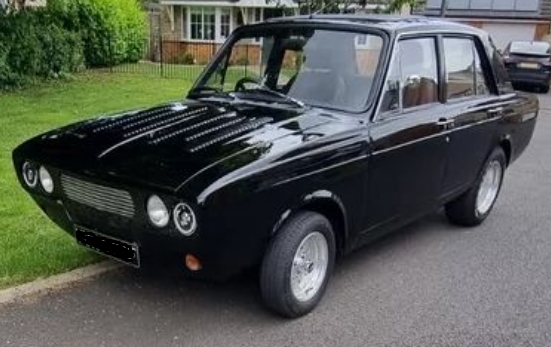
The Hillman Hunter was a mid-sized family car produced by the Rootes Group and later Chrysler UK between 1966 and 1979. Revered in its home market for its practicality and durability, the Hunter was also influential internationally, being exported widely and even manufactured under license in other countries. Its story reflects both the strengths and struggles of the British automotive industry during a period of great change.
Origins and Development
By the mid-1960s, the Rootes Group needed a new model to replace the Hillman Super Minx and other older designs in its range. The British family car market was competitive, with rivals such as the Ford Cortina and Vauxhall Victor attracting buyers with modern styling, improved performance, and better comfort.
The result of Rootes’ development efforts was the Arrow range, a family of cars that shared a common platform but were marketed under different marques and body styles. The Hillman Hunter was the core model of this range. It debuted in October 1966 at the Earls Court Motor Show in London.
The Arrow range, including the Hunter, was designed with straightforward engineering, solid construction, and a focus on reliability. The styling was clean and conservative, with influences from American design trends but tailored to European tastes. The Hunter featured a longitudinally mounted engine driving the rear wheels through a four-speed manual transmission, with an optional automatic on some models.
Production Years
The Hillman Hunter was produced in the United Kingdom from 1966 until 1979, though production under license in Iran (as the Paykan) continued until 2005, making it one of the longest-lived derivatives of a British car design.
.
NO MORE dead batteries with this:

.
Body Styles and Layout
The Hunter was primarily offered as a four-door saloon (sedan). Estate (station wagon) versions were also made, marketed as the Hillman Hunter Estate or under other Arrow-range names. All Hunters used a front-engine, rear-wheel-drive layout, with suspension consisting of MacPherson struts at the front and a live rear axle with leaf springs at the rear.
Engines and Performance
Over its production run, the Hillman Hunter was offered with several engine sizes, primarily inline-four petrol units from the Rootes “four” family:
- 1.5-litre (1496 cc)
- 1.6-litre (1592 cc)
- 1.7-litre (1725 cc)
The 1725 cc engine became the most common, available in various states of tune. Depending on the trim level and market, carburettor configurations and compression ratios varied, affecting power output.
Transmission was usually a 4-speed manual, with optional overdrive on higher trims and a Borg-Warner 35 3-speed automatic available on some models.
Trim Levels and Variants
The Hillman Hunter was part of a larger marketing strategy in which the same basic car was sold under different names: Hillman, Humber, Singer, and Sunbeam. Within the Hillman Hunter line itself, several trims and special editions were offered over the years.
Main Hillman Hunter Trims
- Hunter De Luxe – The standard well-equipped model, with better interior trim and chrome accents compared to base fleet models.
- Hunter Super – An upgraded version with additional comfort features and improved upholstery.
- Hunter GL (Grand Luxe) – A higher-spec variant with more luxurious fittings, higher-grade seats, and often a rev counter.
- Hunter GT – A sportier version introduced in the early 1970s, with twin carburettors on the 1725cc engine, improved suspension, and sportier trim. The GT was marketed towards younger buyers who wanted performance without sacrificing practicality.
- Hunter GLS – The range-topping luxury variant, introduced later in the model’s life, featuring the most powerful tuning of the 1725cc engine, wood-effect dashboard trim, upgraded seats, and more chrome detailing.
- Hunter DL (De Luxe) – Sometimes used interchangeably with “De Luxe” depending on the market and year.
- Hunter Estate – The station wagon variant, available in various trims from base to De Luxe.
- Hunter Super Minx-derived fleet/base versions – Some stripped-down variants were aimed at fleet buyers, with minimal trim and equipment.
Related Models in the Arrow Range
While the Hillman Hunter was the central model, the Arrow range also included:
- Hillman Minx – A slightly lower-priced, less well-equipped version of the Hunter.
- Hillman Super Minx – Early Arrow range cars carried over this name before being phased out.
- Humber Sceptre (Mk III & Mk IV) – A more upmarket version with higher trim and performance, sold under the Humber badge.
- Singer Gazelle and Singer Vogue – Higher-spec cars with distinctive grilles and trim, before the Singer brand was discontinued in 1970.
- Sunbeam Vogue – Some export markets used the Sunbeam branding for upmarket variants.
- Sunbeam Arrow – Canadian and some export market variant of the Hunter.
This badge engineering allowed Rootes to target different market segments with essentially the same body and mechanical package.
Notable Achievements
One of the Hunter’s most famous moments came in 1968 when a Hillman Hunter won the London–Sydney Marathon, a grueling 10,000-mile endurance rally. The victory cemented the Hunter’s reputation for toughness and reliability, particularly in challenging conditions.
Changes Over the Years
From 1966 to the early 1970s, changes to the Hunter were evolutionary rather than radical. Styling updates included revised grilles, headlamp arrangements, and interior trim alterations. Mechanically, improvements were made to braking systems, gearboxes, and engine tuning.
In 1970, Chrysler Corporation, which had acquired a controlling stake in Rootes, began phasing out the Rootes brand identities in favor of Chrysler branding. By 1977, the Hillman name was dropped in the UK, and the Hunter was sold as the Chrysler Hunter until UK production ended in 1979.
International Production: The Paykan Story
Perhaps the most enduring legacy of the Hillman Hunter was its production in Iran. In 1967, the Iranian company Iran Khodro began assembling the Hunter under license as the Paykan. Initially, kits were supplied from the UK, but local production increased over time.
The Paykan became Iran’s national car, hugely popular for its robustness and ease of maintenance. It remained in production, with only modest updates, until 2005, making it a familiar sight on Iranian roads for decades.
Market Position and Competitors
At launch, the Hillman Hunter competed directly with cars like:
- Ford Cortina Mk II and later Mk III
- Vauxhall Victor FD/FE
- Morris Oxford and later Princess
- Austin/Morris Marina
While it never outsold the Ford Cortina, the Hunter maintained steady sales thanks to its reputation for reliability, comfortable ride, and straightforward engineering. It appealed particularly to conservative buyers who valued substance over flash.
Decline and End of Production
By the late 1970s, the Hunter’s basic design was showing its age. Rivals offered more modern styling, front-wheel drive layouts, and improved fuel efficiency. Chrysler UK was in financial trouble and unable to invest significantly in new models. The introduction of the Chrysler Alpine in 1975 was intended to replace the Hunter, but the two sold alongside each other for several years.
UK production of the Hunter ended in 1979, after which Chrysler UK’s operations were taken over by PSA Peugeot-Citroën, becoming Talbot. The Hunter name disappeared from showrooms, though the Paykan continued abroad.
Collectability and Legacy
Today, the Hillman Hunter is a rare sight on British roads. Surviving examples are often cherished by classic car enthusiasts who appreciate the model’s simplicity and charm. Parts availability can be challenging for some trim-specific items, but mechanical components are relatively straightforward to source or adapt.
The Hunter’s international legacy, particularly through the Paykan, has given it a unique place in automotive history. Few cars of its era can claim such a long production life in another country.
Future Outlook
As a classic car, the Hillman Hunter is gradually gaining recognition among collectors, particularly those interested in the British family cars of the 1960s and 1970s. While it may never reach the high values of sports cars from the era, its rarity and historical significance make it an appealing choice for enthusiasts.
Interest in the Paykan variant has also risen in recent years, especially among the Iranian diaspora, for whom the car holds nostalgic value. This crossover of cultural and automotive history ensures that the Hunter’s story will continue to be appreciated well into the future.
Summary of Key Facts
- Produced (UK): 1966–1979
- Produced (Iran as Paykan): 1967–2005
- Body styles: 4-door saloon, 5-door estate
- Layout: Front engine, rear-wheel drive
- Engines: 1.5L, 1.6L, 1.7L inline-fours
- Transmissions: 4-speed manual (with optional overdrive), 3-speed automatic
- Notable trims: De Luxe, Super, GL, GT, GLS, Estate
- Related models: Hillman Minx, Humber Sceptre, Singer Vogue, Sunbeam Arrow/Vogue
- Famous achievement: Winner of the 1968 London–Sydney Marathon
- Legacy: Durable, practical British family car with a long international production life.
Conclusion
The Hillman Hunter stands as a testament to British mid-century automotive design: sensible, durable, and adaptable. While it never achieved the same sales dominance as some competitors, its design underpinned a wide range of related models and found a second life that lasted decades longer than its UK production run. Whether remembered as the family saloon of the late 1960s, the rally-winning marathon car of 1968, or Iran’s ubiquitous Paykan, the Hunter’s place in motoring history is secure.