The Evolution of the Porsche 924
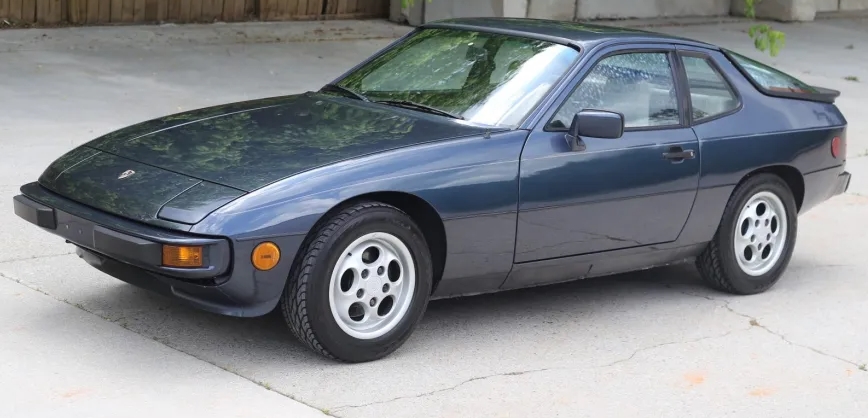
Of all the names etched into the storied history of Porsche, the 924 holds a unique and often misunderstood position. It was the car that Porsche needed, but not necessarily the one its purist fanbase wanted at the time. An unassuming front-engined coupe with a water-cooled engine and a badge that controversially wore the word “Volkswagen,” the 924 was a departure from everything that defined the brand: the air-cooled, rear-engine sports cars of Zuffenhausen. Yet, time has been a kind and revealing historian. Today, the Porsche 924 is appreciated not as a compromise, but as a pivotal and brilliant car that saved a company, pioneered a chassis layout, and offered a pure, accessible driving experience that remains compelling decades later.
The Genesis of a Necessary Car: Project VP
To understand the 924, one must first understand the precarious situation Porsche found itself in during the early 1970s. The charismatic but aging 911 was facing mounting criticism for its tricky handling and hefty price tag. The beautiful but wildly expensive 914 V8 and the 928 (under development as its replacement) were both aimed at the premium GT market. A gaping hole existed for a more affordable, entry-level sports car that could broaden Porsche’s customer base.
The solution began not as a Porsche, but as a Volkswagen. VW had tasked Porsche with developing a successor to their mid-engined, air-cooled Karmann Ghia, which was based on the Beetle platform. The new car, codenamed “Typ 926,” was to feature a front-mounted, water-cooled engine and a rear transaxle for near-perfect 50/50 weight distribution. However, in a dramatic corporate twist in 1972, newly appointed VW chairman Kurt Lotz severed ties with the Porsche-Piëch family, effectively killing the project.
Undeterred and with a nearly complete design on their hands, Porsche’s chief engineer, Hans Metzger, convinced the board to adopt the project for their own entry-level car. The result was a joint venture: Porsche would develop the car, and Volkswagen would manufacture and sell it as the “VW 411” (later to become the Dasher and Quantum/Squareback). Porsche, in turn, received the go-ahead to create its own version, using the same core chassis, engine, and transaxle. This was the Porsche 924.
.

.
The Production Years and Models (1976-1988)
The Porsche 924 made its debut in November 1975 as a 1976 model. Its production run can be broken down into several distinct eras and models.
1. Porsche 924 (1976-1979)
The initial model was a revelation in design and engineering. Styled by Harm Lagaay at Porsche’s North American studio in the US, its clean, timeless lines featured a slanted nose, a black plastic “Impact Bumper” front end (to meet US regulations without sacrificing aesthetics), and a large glass hatchback that offered remarkable utility.
Engine and Drivetrain: The heart of the 924 was its 2.0-liter, water-cooled inline-four engine, sourced from Volkswagen. Designated EA831, this engine was a VW/Audi unit, but Porsche made significant modifications. They fitted it with a new, high-flow cylinder head, their own K-Jetronic fuel injection system, and a new cast-iron exhaust manifold. Mounted longitudinally at the front, it sent power rearward via a robust 5-speed manual or an optional 3-speed automatic transmission connected to a rear transaxle. This transaxle arrangement was the car’s secret dynamic weapon, providing exceptional traction and balanced handling.
Performance: Initially, European-spec models produced 125 horsepower. US models, saddled with stricter emissions equipment and impact bumpers, started at a meager 95 horsepower. This, combined with the car’s relatively light weight, resulted in a 0-60 mph time of around 11-13 seconds for US cars, which was not particularly thrilling. Critics derided it as underpowered, but the handling was universally praised.
Trim Levels and Special Editions:
- Base 924: The standard model. Decent interior with optional extras like a sunroof and air conditioning.
- Porsche 924 “Le Mans” (1979): A special edition created to celebrate the 924’s class victory at the 24 Hours of Le Mans in 1978. Only for the US market, it was limited to 1,000 units. It featured “Le Mans” badging, Fuchs-style “phone dial” wheels (a rare and desirable option on a base 924), a blacked-out hood, and a distinctive “Grand Prix White” or “Mars Red” paint scheme. The interior received sport seats and a leather-wrapped steering wheel. It was purely cosmetic and did not receive any engine upgrades.
2. Porsche 924S (1986-1988)
After the 944 was introduced in 1982 with a more powerful 2.5-liter engine, the 924 was relegated to a budget model. However, due to changing emissions laws that would have forced the VW-based engine out of production, Porsche needed a solution to keep the 924 alive for a few more years. The answer was brilliant: they transplanted the 944’s 2.5-liter, 16-valve engine into the lighter 924 chassis.
Engine and Performance: The 924S was a completely different animal. The 2.5-liter engine initially produced 150 horsepower (1986-1987) and was detuned to 147 horsepower in its final year (1988) to meet noise regulations, though it also received a more efficient catalytic converter. This transformed the car. The 0-60 mph time dropped to a very respectable 7.9 seconds, and the car finally had the performance to match its chassis. The extra power also allowed for the standard inclusion of the wider 15×6-inch “phone dial” wheels from the 944, which gave the 924S a much more planted and aggressive stance.
Trim Levels: The 924S was offered in one primary trim level, but with a notable special edition.
- Base 924S: A sporty, stripped-down model. It came standard with the powerful engine, sport seats, a leather-wrapped steering wheel, and the wider wheels. Comfort features like air conditioning and a sunroof were expensive options.
- Porsche 924S “Le Mans 25th Anniversary Edition” (1988): To celebrate the 10th anniversary of the 924’s Le Mans victory, Porsche created this limited edition. Only for the US market, 500 units were produced (plus 50 for Canada). These cars were finished in exclusive “Applause Red” paint and featured a special two-tone black and silver leather interior. They were highly specified, including power windows, a sunroof, and the limited-slip differential as standard equipment.
3. Porsche 924 Turbo (1979-1982)
Sensing the need for more performance to silence critics, Porsche introduced the 924 Turbo in 1979. Codenamed 931 (European spec) and 932 (US spec), it was the first production Porsche to feature a water-cooled, turbocharged engine.
Engine and Performance: The Turbo used the same 2.0-liter VW block but with a KKK turbocharger, a higher compression ratio, and strengthened internals. The European model produced a healthy 170 horsepower, while US models, once again hampered by emissions, started at 143 horsepower in 1980 and was later reduced to 130 horsepower for 1981-1982. The Turbo featured a distinctive “whistling” blow-off sound and provided a significant performance boost, cutting the 0-60 time to under 8 seconds for Euro models. A gauge cluster with a boost pressure indicator was a signature feature.
Visual and Functional Upgrades: The Turbo was visually distinct. It was easily identified by its fiberglass front fenders and rear quarter panels, which flared out to cover wider wheels and tires. It also featured a unique “teardrop” rear window, a prominent front air dam, and wider “phone dial” wheels. The US-spec Turbo (932) lacked the fiberglass flares, instead using wider steel panels, and had dual inboard headlights (replacing the standard outboard sealed-beam units).
Trim Levels and Special Editions:
- Base 924 Turbo: The standard Turbo model.
- Porsche 924 Turbo “Martini Racing” (1980): A legendary and rare special edition. This was a commemorative model celebrating Porsche’s motorsport heritage. Limited to 750 units for Europe, it featured the iconic white, blue, and red Martini racing livery. It also included unique 16-inch “Phone Dial” wheels, Fuchs-style rear wheels, and a “Porsche” logo script on the rear decklid (in addition to the 924 Turbo badge). The interior featured sport seats with suede inserts and a three-spoke MOMO steering wheel.
The Driving Experience: More Than the Sum of Its Parts
While the specifications might not have set the world on fire (especially for early US models), the true genius of the 924 was in its chassis and handling. The front-engine, rear-transaxle layout provided a near-perfect weight distribution, eliminating the nose-heavy feel of many front-engine GTs and the tail-happy tendencies of its rear-engine stablemates.
The steering was direct and communicative, the unassisted rack on early models providing a direct link to the road. The suspension was firm but compliant, allowing the driver to feel the road and place the car with precision. The large greenhouse and low beltline provided outstanding visibility, making it an easy and confidence-inspiring car to drive quickly on a winding road. It was a sports car that celebrated balance and finesse over brute force. The long-haul comfort and generous cargo space (thanks to the hatchback) made it a true dual-purpose vehicle, equally at home on a weekend getaway as it was on a track day.
The End of an Era and Legacy
By 1985, the 924 was beginning to show its age, and its front-wheel-drive successor, the 944, had already been on the market for several years. The 924 production for the US ended in 1985. The 924S soldiered on for two more years in the US and was finally discontinued globally in 1988, giving way entirely to the 944 and, later, the 968.
The 924’s legacy is profound. It is the car that saved Porsche from financial ruin. Its front-engine, rear-drive, transaxle platform became the foundation for the 924, 944, and 968, a family of cars now revered for their handling prowess. It proved that a Porsche could be practical, and it introduced water-cooled engines to the brand, a technological and philosophical shift that paved the way for the front-engined GT cars of today.
For decades, the 924 was the unloved stepchild of the Porsche family, often overlooked and undervalued. But in recent years, a well-deserved renaissance has occurred. The “slow car driven fast” philosophy, the timeless design, the pure and analog driving feel, and its incredible value proposition have made the 924, and especially the 924S, a darling of the grassroots motorsport and classic car communities. No longer just the car that saved Porsche, the 924 is now celebrated as a brilliant sports car in its own right—a testament to the idea that sometimes, the most important innovations are the ones that secure the future.