History of The Polestar 1: A Brief, Brilliant Reign as the Electric Hybrid Apex Predator
In the fast-moving narrative of the electric vehicle revolution, where startups rise and giants pivot, few cars occupy a space as distinct and poignant as the Polestar 1. It was a car that shouldn’t have existed: a low-volume, exquisitely crafted, high-performance grand tourer from a brand that was, at the time, merely Volvo’s high-performance offshoot. Yet, from its inception as a concept to its quiet retirement, the Polestar 1 carved out a unique legacy. It served as a technological showcase, a statement of intent, and a bridge between the internal combustion past and the all-electric future. This is the story of the Polestar 1, a limited-production halo car that announced a new star was born.
From Concept to Reality: A Volvo S60 Polestar on Steroids
The Polestar name had been associated with Volvo’s racing and performance division since 1996, best known for turning Volvo’s sensible sedans and wagons into formidable, blue-and-yellow-badged track weapons. The first road-going Polestar model, a 3.0-liter turbocharged six-cylinder Volvo S60, arrived in 2014 and was a resounding success, selling out its 750-unit run in mere weeks.
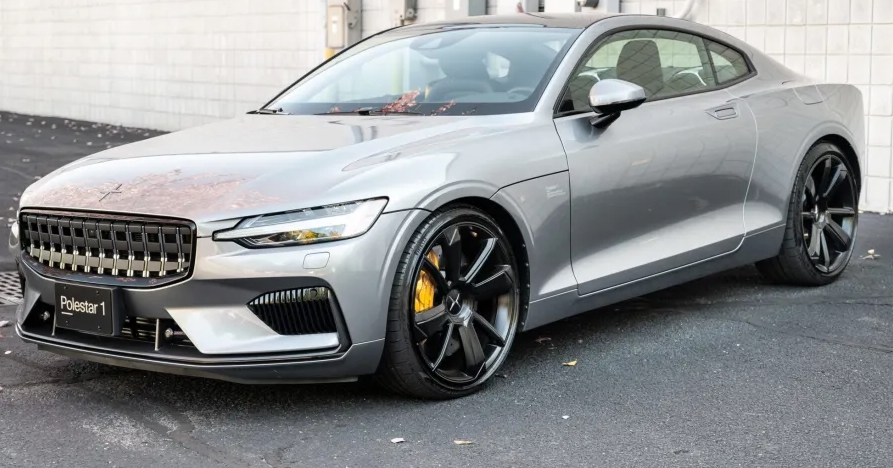
But the future was electric. In 2015, Volvo acquired Polestar entirely, setting the stage for a radical transformation. The first major step was the reveal of the Polestar 1 at the 2017 Shanghai Motor Show. It was a stunning, two-door coupe based heavily on the Volvo S60, but with a crucial difference under the skin. This was not a pure EV, but a “Plug-in Hybrid Electric Vehicle” (PHEV) with a very specific philosophy: a sophisticated electric drivetrain powering the rear wheels, augmented by a powerful gasoline engine for the front.
Production of the Polestar 1 began in 2019 at a bespoke, state-of-the-art factory in Chengdu, China. It was built on Volvo’s Scalable Platform Architecture (SPA) but was significantly modified. The coupe’s wheelbase was actually longer than the S60 sedan’s, and its body was a masterpiece of material science. A remarkable 23% of its body structure was made from carbon fiber, a first for a Volvo Group car. This “Carbon Fibre Reinforced Polymer” (CFRP) roof, trunk lid, and chassis components resulted in a chassis that was 45% stiffer than a standard Volvo S60, all while significantly reducing weight. This complex construction process involved bonding and riveting, requiring an entirely new production line and a team of highly skilled technicians.
.

.
The Powertrain: A Unique 4WD Symphony
The heart of the Polestar 1 was its unconventional powertrain, which delivered a combined output of 619 horsepower and a colossal 738 lb-ft (1,000 Nm) of torque.
Front Axle: The Volvo Heart The front of the car was driven by a modified version of Volvo’s ubiquitous and highly successful 2.0-liter four-cylinder Drive-E engine. This wasn’t just any four-banger; it was a twin-charged (both turbo- and supercharged) unit that produced 326 horsepower. It was mated to an 8-speed automatic transmission, which sent power to the front wheels.
Rear Axle: The Electric Muscle The rear axle was where the Polestar 1 truly shone. It featured a dual-motor setup powered by an 84 kWh battery pack, one of the largest PHEV batteries ever fitted to a production car. This setup powered only the rear wheels, providing not only 231 horsepower of pure electric propulsion but also torque vectoring. By independently controlling the two rear motors, the car could instantaneously distribute power between the inside and outside rear wheels during cornering. This Torque Vectoring via Twin Electric Rear Motors (TWRM) allowed the Polestar 1 to catapult out of bends with an agility and neutrality that belied its 2.3-ton curb weight.
The battery was large enough to provide an impressive all-electric range. At launch, it was rated at 150 km (93 miles) on the European NEDC cycle. In the more realistic EPA testing for the US market, it achieved an official figure of 52 miles, which was still the longest electric range of any PHEV on sale at the time. This meant most daily driving could be done with zero tailpipe emissions, while the gasoline engine provided a safety net for longer journeys, eliminating range anxiety. The car could also operate in “Pure” mode, disconnecting the front combustion engine entirely for a silent, rear-wheel-drive EV experience.
Models and Trim Levels: A Singular Vision
One of the most unique aspects of the Polestar 1’s story was its commercial strategy. From 2019 onwards, Polestar began its transition to becoming an independent, electric-only brand, moving away from its roots as a Volvo performance division. When the Polestar 1 was launched, it was the first car sold under this new identity.
No Trims, No Options, Just the Car Critically, the Polestar 1 was offered in a single, comprehensively specified trim level. This was a deliberate choice that reflected the brand’s future-forward, transparent, and hassle-free sales philosophy. The idea was to present a complete, perfected product, freeing the customer from the complex and often confusing process of selecting options. This approach would later become the standard for the Polestar 2 and subsequent models.
The single trim included a vast list of high-end features as standard:
- Chassis: Öhlins Continuously Controlled Electronic Suspension (CCES), a sophisticated adaptive damping system.
- Brakes: Massive Akebono 6-piston calipers at the front with 400mm carbon ceramic discs.
- Wheels: 21-inch forged alloy wheels with high-performance tires.
- Exterior: Full-LED headlights with Thor’s Hammer DRLs, carbon fiber components, and a panoramic glass roof.
- Interior: A luxurious cabin with semi-aniline leather upholstery, 16-way adjustable front seats with massage and ventilation, and a full digital driver’s display and center console screen. A high-end Bowers & Wilkins audio system was also standard.
- Software: Android Automotive OS was integrated from the start, providing a built-in infotainment system with Google Assistant, Google Maps, and the Play Store.
The “Polestar Engineered” Option Pack (For Volvo Cars) It’s important not to confuse the standalone Polestar 1 car with the “Polestar Engineered” designation that was later applied to other Volvo models. From 2020, Volvo offered a Polestar Engineered option pack for its T8 Twin Engine PHEV models like the S60, V60, and XC90. This pack included Öhlins dampers, Brembo brakes, a cat-back exhaust, and unique styling cues, but it was a mere shadow of the bespoke engineering that went into the Polestar 1.
A Limited and Definitive Production Run
The Polestar 1 was never intended to be a high-volume car. It was a “halo” model, designed to showcase Polestar’s capabilities and design language while the company developed its core product: the all-electric Polestar 2.
Production was capped at a maximum of 50 cars per month, and it was confirmed in early 2021 that production would end after the 2021 model year. In total, only 1,266 Polestar 1s were ever produced, making it an instant collector’s item.
While it was sold globally, key markets included China, the United States, Canada, the United Kingdom, Germany, Sweden, and the Netherlands.
The Driving Experience: A Complex and Capable GT
Reviews of the Polestar 1 were almost universally positive, praising its ability to be two very different cars at once. In its default “Hybrid” or “Pure” modes, it was a serene and quiet grand tourer. The electric rear motors provided smooth, silent progress, and the advanced suspension soaked up road imperfections with ease.
When the driver selected “Power” mode, the Polestar 1 transformed. The twin-charged engine roared to life, its 326 horsepower combining with the electric motors to deliver devastating, instant acceleration. The claimed 0-60 mph time was just 3.7 seconds, placing it in supercar territory.
On a winding road, the car’s advanced chassis and torque vectoring came into their own. Despite its weight, it felt incredibly composed and neutral, tucking into corners with surprising precision. The carbon fiber chassis provided a rigid and unyielding platform, and the powerful brakes offered immense stopping power. However, some reviewers noted that for a car with such a pole-axeling price tag (starting at around $155,000), its dynamics, while excellent, couldn’t quite match the visceral feel of a Porsche 911 or a McLaren. The Polestar 1 was a supremely capable and technologically advanced GT, but perhaps more of a scalpel than a lightsaber.
The Future Outlook: A Brief, Brilliant Legacy
The Polestar 1’s purpose was fulfilled long before the last car rolled off the production line. It successfully announced Polestar’s arrival as a serious, independent player in the automotive world. Its stunning design, which previewed the “Polestar Precept” concept, became the template for the brand’s aesthetic. The minimalist, tech-focused interior of the 1 was a direct predecessor to the cabin of the Polestar 2.
The use of PHEV technology, once seen as a necessary stepping stone to full electrification, is now viewed by Polestar as a chapter in its history that is firmly closed. The brand’s future is 100% electric, with the Polestar 2 proving to be a successful global seller, and future models like the Polestar 3 (SUV), 4 (coupe-SUV), and 5 (sports saloon) already in the pipeline.
Today, the Polestar 1 stands as a fascinating and important artifact. It was a bridge between two eras, a complex and expensive engineering exercise, and a beautiful, limited-edition piece of automotive art. It proved that a company born from Volvo could design and build a world-class performance car that could rival the established elite. For the few owners who managed to secure one, the Polestar 1 is more than just a car; it’s a tangible piece of a brand’s genesis, a low-slung, carbon-clad reminder of the brilliant, brief moment when Polestar took the stage to show the world exactly what it was capable of.