Evolution of The Plymouth Sundance: A Short, Bright Burst in Plymouth’s Twilight
In the grand, often convoluted tapestry of American automotive history, some cars are remembered for their revolutionary impact, others for their outright performance, and a few for the sheer, unadulterated charisma they exuded. The Plymouth Sundance, produced from 1983 to 1989, is not quite any of these. Instead, it is remembered as something arguably more important: a competent, honest, and critical player in a desperate game of survival. It was a car born of necessity, thrust into a market undergoing a seismic shift, and it carried the weight of a dying brand on its modest, front-wheel-drive shoulders. To understand the Sundance is to understand the automotive landscape of the 1980s, the decline of the American compact car, and the corporate machinations that sought to keep Plymouth relevant for just a little while longer.
The Fading “Plymouth Performance” Promise
To comprehend the Sundance’s existence, one must first look at what came before it. Throughout the 1970s and into the early 1980s, Plymouth was a brand still clinging to a flickering flame of its performance heritage. The name was etched into the annals of muscle car lore with the Hemi ‘Cuda and Road Runner. However, by the early 1980s, the landscape was dominated by the oil crisis hangover, government regulation, and a rising tide of Japanese imports. Plymouth’s lineup was a curious mix of badge-engineered Chrysler models and aging holdovers.
The Sundance was intended to be a spiritual successor to the Horizon and the notoriously slow Plymouth Horizon TC3 (a name that, despite sounding sporty, offered little in the way of genuine thrills). The old Horizon was competent but terminally dull. Chrysler, after its government bailout and subsequent resurgence under Lee Iacocca, needed to replace it with something more modern and stylish to compete with the likes of the Honda Civic and Volkswagen Golf. The result was the D-body platform, which would spawn two primary siblings: the Dodge Omni and the Plymouth Horizon would be replaced by the Plymouth Sundance and its slightly more upscale Dodge twin, the Dodge Shadow.
The Sundance name itself was a masterstroke of 1980s marketing. Evoking images of sun-drenched California coastlines, youthful freedom, and open-air motoring, it was an attempt to inject some much-needed excitement and lifestyle appeal into a humble economy hatchback. The problem was, it was still fundamentally a humble economy hatchback.
.

.
The First Generation (1983-1989): Arrival and Evolution
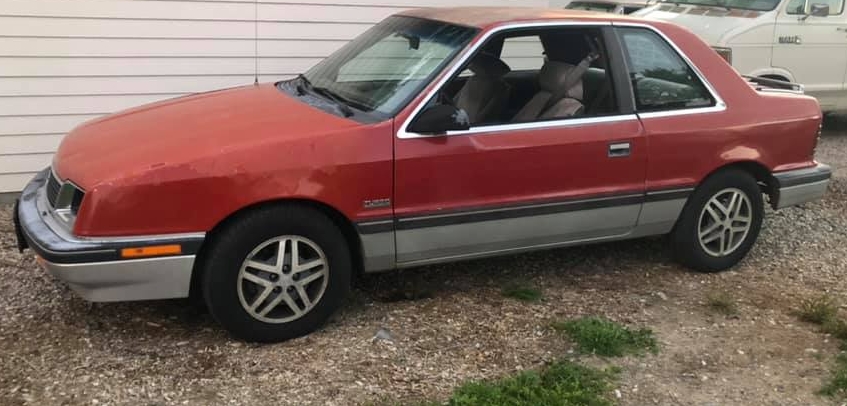
When the Plymouth Sundance debuted for the 1983 model year, it represented a significant departure from the boxy, utilitarian styling of the Horizon. It featured a “fastback” design, with a sloping rear window that gave it a more dynamic, coupe-like profile. This design was cleverly practical, as it incorporated a unique, vertically split “Sundance Hatch” rear door. This setup allowed for a large, usable cargo area without the need for a traditional, heavy, and complex two-piece liftgate. It was a functional and stylish solution that set the Sundance and its siblings apart from the more traditionally shaped Ford Escort and Chevrolet Chevette.
The Sundance was launched in three primary trim levels, each offering a distinct level of equipment and appeal:
- Base Sundance: This was the entry point. Stripped down and focused, it came with a 1.7-liter Volkswagen-built four-cylinder engine, producing a meager 70 horsepower. It was a known quantity, reliable if uninspiring. Features were spartan, including manual windows, manual door locks, and vinyl flooring. It was purely a transportation appliance, designed to undercut the Japanese competition on price.
- Sundance RS: The “Rally Sport” was the enthusiast’s choice, at least in theory. It was the visual upgrade, intended to tap into the performance image Plymouth so desperately wanted to project. The RS trim included a blacked-out grille, sportier interior trim, a grippy three-spoke steering wheel, and, most importantly, a standard four-speed manual transmission. It also boasted “Computer Command Ride,” a nifty feature for the time that allowed the driver to select between “Comfort” and “Firm” shock damping settings with the turn of a knob. While the engine remained the same 70-horsepower unit, the RS trim made the Sundance look the part of a hot hatch.
- Sundance Duster: This was the top-of-the-line model, a direct reference to the legendary Plymouth Duster of the early 1970s. The Duster moniker was a bold attempt to reconnect with performance buyers. It offered more creature comforts like upgraded cloth upholstery, a tachometer, and the distinctive “Duster” side stripes. Like the RS, it came standard with the four-speed manual, but it was more focused on comfort and style than outright sportiness.
The Heart of the Sundance: Engines and Transmissions
The engine bay of the early Sundance tells a story of corporate resourcefulness. The base 1.7-liter VW engine was a stopgap measure. While reliable, it was an Audi-designed engine that lacked power and torque, making the Sundance a sluggish performer.
Recognizing this weakness, Chrysler made a crucial change for the 1984 model year. The 1.7-liter VW engine was replaced by Chrysler’s own 2.2-liter inline-four, a design that would become the company’s workhorse engine for over a decade. The base version of this engine produced 84 horsepower, a noticeable 14-horsepower jump that significantly improved the Sundance’s drivability.
For those seeking more, a fuel-injected version of the 2.2-liter, known as the “Chrysler Electronic Fuel Injection” (or “Lean Burn” system), was introduced in 1984 on the Sundance RS and Duster, bumping power to 94 horsepower. This was the “high-output” engine and provided respectable performance for its time, allowing the Sundance to keep pace with traffic.
Transmission options were straightforward. The base Sundance and the RS/Duster models all came standard with a four-speed manual. A three-speed automatic transmission was available as an option across the board, though it was a significant compromise in both performance and fuel economy, particularly with the base engine.
The Sundance in the Marketplace: A Crowded Field
The Sundance was launched into one of the most competitive segments in automotive history. It wasn’t just fighting imports; it was fighting its own corporate siblings and a legion of American and Japanese rivals.
- Primary Competitors: Honda Civic, Volkswagen Golf, Toyota Tercel, Nissan Sentra. The Sundance offered a more stylish design and a more comfortable ride than many of these, but it lagged behind in terms of refinement, build quality, and brand cachet.
- Domestic Rivals: Ford Escort, Chevrolet Chevette, AMC Alliance. The Sundance’s design was arguably more modern than the Escort and the Chevette, offering a better blend of space and style.
One of the Sundance’s biggest selling points was its interior space. The “fold-flat” front passenger seat was a class-leading feature, allowing the Sundance to carry items up to eight feet long. This practicality, combined with its unique styling, gave it a strong edge for buyers who needed utility without sacrificing style.
The Final Years and the Shadow’s Ascendancy
The first generation Sundance ran with only minor changes until 1989. By the mid-to-late 1980s, however, the car was beginning to show its age. The interior plastics felt cheap, the ride was noisy by modern standards, and the competition was innovating at a rapid pace.
In 1987, Chrysler launched a new subcompact car based on the same platform: the Plymouth Sundance’s corporate cousin, the Dodge Shadow. While they were mechanically identical, the Shadow was a 2-door and 4-door sedan/hatchback, offering more versatility and a more conventional, and arguably more attractive, roofline. The Sundance’s fastback design, once a key selling point, was now seen as a limiting factor. The 4-door Shadow simply offered more practicality for the average family, and it sold in much greater numbers.
Sales of the Sundance began to wane. The car that was meant to be the youthful, exciting Plymouth had become an old warrior in a young man’s game. In 1989, a new generation of Plymouth compact arrived: the Plymouth Laser and the Dodge Daytona. While the Sundance name continued to be used for one final model year on a very basic version of the Dodge Shadow, the true Sundance, the original fastback, was discontinued. In 1990, the nameplate disappeared entirely, a victim of both age and a corporate restructuring that saw Chrysler consolidating its brands.
Legacy and Future Outlook
The Plymouth Sundance was never a headline-grabbing car. It didn’t win major awards for handling or design. It wasn’t a motorsports champion. Yet, its legacy is that of a crucial, foundational vehicle for the “New Chrysler.” It was one of the first products of the company’s revival, a tangible piece of Lee Iacocca’s plan to build a lineup of efficient, modern, and stylish front-wheel-drive cars.
It proved that an American car could be practical, efficient, and look good, all at a price point that could battle the imports. It was a bridge between the old, failing designs of the late 1970s and the successful K-cars that would fund Chrysler’s future. The Sundance and its siblings sold in the hundreds of thousands, providing a vital cash flow and market presence during a critical period.
As for its future, the Plymouth Sundance has settled comfortably into the role of a forgotten classic. It is not a highly sought-after collector’s item, with values remaining firmly in the budget classic or “beater” category. Its simple design and readily available Chrysler parts make it a popular choice for young enthusiasts looking for an inexpensive entry into the world of modified cars. Occasionally, a well-preserved Sundance RS or Duster will appear at a car show, prompting a wave of nostalgic smiles from those who remember when Plymouth was still a presence in every neighborhood.
In the end, the Sundance was not a car that was destined to be remembered for what it was, but rather for what it did. It was a competent and dependable soldier that helped hold the line, allowing Chrysler the time it needed to develop the cars that would define the next era. It was a short, bright burst of color and ambition in the twilight of a legendary brand, and for that, it deserves its place in the automotive history books.