The Last of the Hand-Built Supercars: History of the Panoz Avezzano
In the pantheon of automotive history, there are the titans—the Ferraris, Porsches, and Lamborghinis that dominate headlines and history books. Then, there are the outliers, the passionate, home-grown creations of visionaries who dared to challenge the established order. These are the cars built not in the pursuit of market share, but for the sheer, unadulterated love of driving. At the heart of this rebellious spirit, nestled in the rolling hills of Braselton, Georgia, lies the story of the Panoz Avezzano.
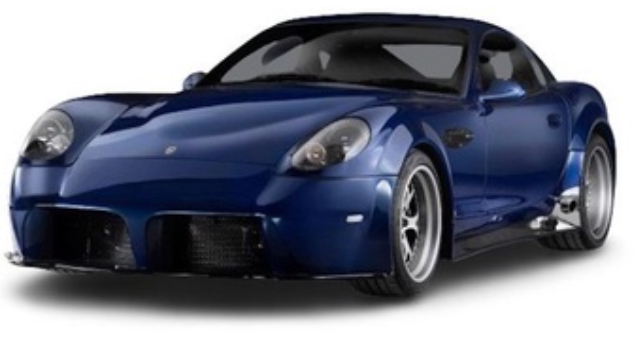
The Avezzano is not merely a car; it is the culmination of a legacy, a rolling testament to the philosophy of Dan Panoz, and arguably the last great, front-engined, hand-built American supercar. Its history is a fascinating tale of evolution, born from racing heritage and culminating in a vehicle of staggering power and intoxicating analogue character.
The Genesis: A Dream Forged from Racing DNA
To understand the Avezzano, one must first understand its progenitor: the Panoz Esperante GTR-1. In the mid-1990s, Panoz burst onto the international racing scene with the GTR-1, a wild, front-engined GT1 car that was, in essence, a “wedge on wheels.” Its avant-garde, long-nose, short-deck design was a product of pure function, designed to cheat the wind and dominate tracks like Le Mans. While its racing career was short, the GTR-1 became an icon of audacious engineering and cemented Panoz’s reputation for building cars that were both brutally effective and astonishingly unique.
The road-going version of the GTR-1 was the original Panoz Roadster, produced in extremely limited numbers from 1996 to 1999. It retained the GTR-1’s magnificent, all-aluminum 6.0-liter Ford “InTEQ” V8, but it was a raw, visceral machine. By 1999, Panoz felt the time was right to refine this concept into a more focused, purpose-built supercar. The goal was to create a vehicle that retained the Roadster’s dramatic power and character but with improved refinement, usability, and a fixed roof for superior rigidity. This project was codenamed “Avezzano,” named after the Italian town that was tragically devastated by an earthquake in 1915, a name chosen to symbolize resilience and rebirth—a phoenix rising from the ashes of the GTR-1 project.
.

.
Production and the Core Philosophy (1999 – 2006)
Production of the Panoz Avezzano began in 1999 and, like its predecessor, was a low-volume, almost bespoke affair. The cars were assembled by hand at the Panoz Auto Development facility in Braselton, Georgia. This was not a mass-production line; it was a workshop where a team of skilled technicians would meticulously craft each vehicle to the owner’s specifications. The total number of Avezzanos produced is famously difficult to pin down, with estimates ranging from just 12 to 17 examples ever being completed, making it one of the rarest modern supercars in existence.
The car was priced in the vicinity of $150,000 to $200,000, placing it in direct competition with the Dodge Viper GTS, Lotus Esprit V8, and entry-level Ferraris of the era. However, the Panoz offered something those cars could not: a completely unique, hand-built identity and the thunderous, front-mid-mounted American V8.
The core of the Avezzano was its backbone—a steel tube spaceframe chassis. This construction method is a hallmark of racing cars, providing immense rigidity and a lightweight foundation. The body, crafted from molded composite panels, was a direct evolution of the GTR-1’s shape, featuring the iconic long bonnet, a steeply raked windshield, and a truncated rear deck. Unlike the open-cockpit Roadster, the Avezzano was a proper coupe, featuring a fixed roof and side windows, which dramatically improved its aerodynamic profile and weatherproofing, making it a more viable, if still uncompromising, grand tourer.
The Heart of the Beast: Models and Specifications
Throughout its production run, the Panoz Avezzano was offered in a handful of configurations, though they were more about evolution and personalization than distinct “trim levels” in the traditional sense. The car’s fundamental character remained consistent, but its powertrain and body style offered compelling variations.
1. The “Base” Avezzano (1999-2001)
The initial production models were the purest expression of the Avezzano vision. These cars were powered by the same 6.0-liter (5993cc) Ford “InTEQ” V8 found in the original Roadster. This all-aluminum, 32-valve DOHC engine was a masterpiece of American power, featuring a lightweight block and high-flow heads derived from Ford’s racing programs.
- Engine: 6.0L Ford InTEQ V8
- Power: Approximately 400-415 bhp @ 6,500 rpm
- Torque: 390 lb-ft @ 4,800 rpm
- Transmission: 5-speed manual gearbox (a Getrag V560 unit was often specified).
- Performance: 0-60 mph in a blistering 4.5 seconds, with a top speed of around 180 mph.
The driving experience in this trim was famously raw and engaging. With no electronic traction or stability control, the rear-wheel-drive chassis and abundant torque demanded respect and skill, offering an unfiltered connection between driver, machine, and road. The gear change was mechanical and direct, the steering was heavy and full of feedback, and the V8’s induction roar, unfiltered by modern acoustic dampening, was a symphony of combustion.
2. The “Big Block” Avezzano (2001-2006)
In 2001, Panoz unveiled a significant evolution of the Avezzano, primarily targeting the American market’s insatiable appetite for torque. The standard 6.0-liter V8 was replaced with a monstrous 7.0-liter (6998cc) V8, sourced from Chevrolet’s legendary LS-series. This engine, essentially a detuned version of the Z06 powerplant, was a modern-day legend, renowned for its bulletproof reliability, lightweight construction, and immense, tire-shredding power. This version was often referred to as the “Avezzano GT” or simply the “Big Block” model, though it wasn’t a separate trim level but rather a running change to the standard car.
This new powerplant transformed the Avezzano from a sharp-edged sports car into a legitimate hypercar contender.
- Engine: 7.0L Chevrolet LS-series V8
- Power: Approximately 550 bhp and 490 lb-ft of torque. (Some sources claim up to 600 hp in certain configurations).
- Transmission: Upgraded 6-speed manual gearbox to handle the increased torque.
- Performance: 0-60 mph in a claimed 3.5 seconds, with a top speed exceeding 190 mph.
The addition of over 130 horsepower and nearly 100 lb-ft of torque was transformative. The car became a monster, capable of breaking traction in any gear and delivering breathtaking straight-line acceleration. It also necessitated minor chassis and suspension tuning changes to manage the extra grunt.
3. The Avezzano “GT” / T-top Model
While not an official factory designation for a separate model, some of the later Avezzanos were fitted with T-bar style removable roof panels. This was an option designed to offer the open-air experience of the original Roadster with the structural integrity of the coupe. It provided a “best of both worlds” approach, giving the driver the choice between the sealed, rigid feel of a fixed roof and the cockpit-wide exposure to the sky and the V8’s glorious soundtrack. These T-top cars are considered exceptionally rare and represent a unique blend of the two Panoz lineages.
4. The “One-Off” Customs
The beauty of Panoz’s low-volume production was its flexibility. Owners could work directly with the factory to commission bespoke modifications. This resulted in a number of unique “one-off” features on various chassis. For example, some customers opted for different paint schemes, bespoke interior leather colors and stitching, or even alternative wheel designs. This level of personalization was unheard of in the sub-$200,000 supercar bracket and reinforced the Avezzano’s “私人定制” (bespoke) nature. It wasn’t about choosing from a list of options on a brochure; it was about commissioning a piece of automotive art tailored to your exact desires.
The Driving Experience: Analogue Immersion
What truly set the Avezzano apart from its contemporaries was its unapologetic analogue character. In an era when rivals like the Ferrari 360 Modena were beginning to embrace electronic driver aids and paddle-shift gearboxes, the Panoz remained steadfastly mechanical. There was no traction control, no ABS (in the traditional sense, though some early cars had rudimentary systems), and certainly no stability management.
Everything was left to the driver. The steering was unassisted or very lightly power-assisted, providing a direct, unfiltered feed of information about the road surface. The throttle was a direct link to the engine’s vast torque reserve. The gearshift was a satisfyingly long-throw mechanical lever that required a firm hand. This rawness was not a flaw; it was the entire point. Driving an Avezzano was an immersive, physical experience that demanded full concentration and rewarded the skilled pilot with an incredible sense of connection and achievement. It was a car that felt alive in your hands, a beast that you had to tame, rather than an appliance that drove itself.
The Decline and Legacy
Despite its acclaim among enthusiasts and the automotive press, the Avezzano’s story was destined to be a brief one. The late 1990s and early 2000s were a challenging time for independent, low-volume manufacturers. The economic downturn following the dot-com bubble burst in 2001, coupled with the immense cost and logistical nightmare of homologating a bespoke supercar for sale in multiple global markets, proved to be an insurmountable hurdle.
Panoz had poured significant resources into developing the Avezzano and its racing cousin, the Panoz LMP-1 Roadster-S, but the road car side of the business could not sustain itself. By 2003, official production had effectively ceased, with a few cars trickling out of the Braselton facility until 2006 to fulfill existing orders. Panoz would pivot to producing more commercially viable vehicles like the Panoz Esperante GTLM before ceasing its own production entirely.
The Future Outlook: A Modern Phoenix?
Today, the Panoz Avezzano is a highly sought-after collector’s item. Its rarity, unique provenance, and thrilling driving dynamics have ensured its place in the collector car world. Values have steadily climbed from the original $150,000 price tag into the high six-figure range, with pristine examples likely commanding over $300,000 today. For collectors, it represents a fascinating footnote in the history of the American supercar—a car that could have, and perhaps should have, gone head-to-head with the world’s best.
As for a future revival, the chances are slim. The Panoz brand name has been dormant for years, and Dan Panoz himself has moved on to other ventures. The immense cost and regulatory hurdles of developing a new supercar from scratch make a rebirth nearly impossible for a small entity. However, the spirit of Panoz—the spirit of passionate, independent-minded engineering—lives on. It can be seen in the modern crop of small-scale hypercar builders who follow a similar ethos, such as Koenigsegg or Pagani.
Conclusion
The Panoz Avezzano was a car born of a specific moment in time, a product of racing triumph, American power, and a refusal to conform. It was a car that bucked the trend of increasing digitalization in the supercar world and doubled down on the raw, mechanical thrill of driving. While its production run was tragically short and its numbers painfully small, its impact was significant. It proved that a small company from Georgia could create a machine with the performance to shock the Italians and the character to captivate the world’s most discerning drivers. The Avezzano remains the definitive Panoz, a hand-built symphony of steel, composites, and American V8 thunder—a true phoenix of the asphalt.