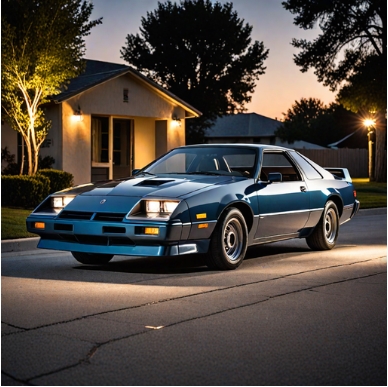
Evolution of The Lotus Eclat
Of all the cars to emerge from the storied, high-performance focused halls of Lotus in the 1970s, the Eclat stands as one of the most complex, misunderstood, and ultimately fascinating. It was a car born from a time of corporate turmoil, designed to satisfy market demands that were alien to the company’s core philosophy, yet it still bore the unmistakable DNA of Colin Chapman’s lightweight, driver-focused ethos. The Eclat was, in essence, a contradiction: a practical family car from a brand that eschewed practicality, a luxury cruiser built with minimalist principles, and a sales flop that has become a cult classic.
This is the story of the Lotus Eclat, from its genesis in crisis to its lasting, quirky legacy.
The Chapman Compromise: A Crisis of Identity
To understand the Eclat, one must first understand the Lotus of the late 1960s. The company was a master of building world-beating sports cars like the Elan and the Europe, but its finances were notoriously fragile. In 1966, facing mounting debts, Lotus agreed to a takeover by the American automotive giant Chrysler. The deal stipulated that Lotus would develop a new, family-oriented saloon car to be sold through the Chrysler dealer network. This project, codenamed “Project 504,” was a stark departure from Lotus’s lightweight two-seaters.
The new car was to be a 2+2, a practical four-seater with a hatchback for ultimate utility. It needed to be robust, comfortable, and powered by a reliable, low-maintenance engine—the antithesis of the high-strung, Twin-Cam Lotus engines. The design, penned by the talented Tony Williams, was sleek and aerodynamic, with a long wheelbase and a distinctive wedge profile.
However, before the car was ready for production, the Chrysler deal fell apart in 1969. Lotus was left with a nearly finished, four-seater hatchback project and no corporate partner to build or sell it. Now under the ownership of British car conglomerate BRM, Lotus founder Colin Chapman made a fateful decision. The car, now named the Eclat, would go into production as a Lotus. It would be a tough, and often painful, compromise for the company.
.
THIS might be a great place to get your new car from!
Or for those who are into the “car flipping” business, here’s an excellent resource for you!

.
The Birth of the Eclat S2 (1975-1980)
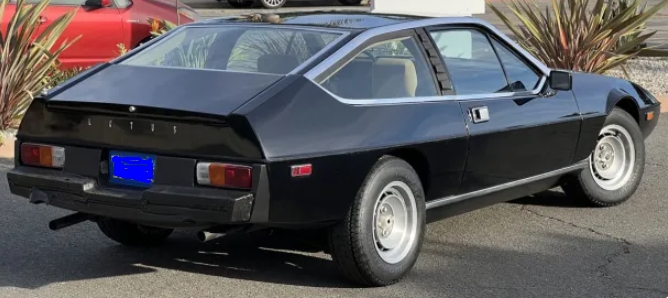
The first Lotus Eclat, officially designated the Series 2 (or S2) from the outset, was launched in 1975. It was a car of stark contrasts. The body was a steel monocoque, a conventional construction method for a family car. But the front and rear subframes were bolted on, a nod to race car engineering that made the car lighter and easier to assemble. The rear of the car featured a large, glass hatchback, providing access to a surprisingly spacious boot and a folding rear seat, making it one of the most practical Lotuses ever built.
Power came not from a high-revving Lotus engine, but from a 1.9-litre four-cylinder engine sourced from Toyota. Specifically, it was the “2T-B” engine from the Carina II, chosen for its reliability and suitability for the US market (which required a catalytic converter). In its standard UK specification, it produced a respectable 140 bhp, but this was a Lotus, so there were tuning options. The “Federal” specification for the US and other export markets had to meet stricter emissions standards, which reduced power to around 125 bhp.
The interior was a mix of luxury and frugality. It featured plush velour or optional leather seats and wood veneer trim, but the dashboard and switchgear were often sourced from humble Vauxhall or Opel parts bins. The signature element was the “waterfall” dashboard, where the wood trim flowed down from the top of the instrument binnacle to the centre console.
As with all Lotuses, the Eclat’s true genius lay in its handling. The fully independent suspension used double wishbones at the front and a sophisticated Chapman strut arrangement at the rear. With four-wheel disc brakes and a light curb weight of just over a ton, the Eclat handled with the poise and agility of a car half its size.
Throughout its production run, the S2 saw several updates:
- Eclat S2 (1975): The original model, with a 140 bhp engine (UK spec).
- Eclat S2.2 (1979): A significant update to improve the car’s notorious corrosion issues. The bodyshell was extensively redesigned, with new outer panels and a stronger chassis. This model was also the first to be officially badged as the Eclat, dropping the “Lotus” name from the bootlid.
- Eclat S2.3 (1980): The final iteration of the first generation. It featured a revised engine (the 2.0-litre “Xcel”) producing 150 bhp in UK trim, a new five-speed gearbox, and an improved interior.
Despite its technical merits, the S2 was a sales disaster. It was too expensive for a family car and not sporty enough for a Lotus. In a market dominated by the Ford Cortina and Vauxhall Cavalier, the Eclat was an oddity that few understood.
The Eclat Excel: A New Era of Refinement (1980-1982)
By 1980, Lotus was in deep financial trouble again. A new deal was struck, this time with the Edward Group, owners of British Leyland. This injection of capital allowed for a crucial update to the Eclat, intended to make it more refined, reliable, and marketable. This updated car was renamed the Eclat Excel.
The Excel (also known as the S2.4) was a comprehensive overhaul. The most significant change was under the bonnet: the problematic 2.0-litre engine was finally replaced by the legendary 2.2-litre Type 912 V8 from the Essex-engined Lotus Esprit. This all-aluminium, 160 bhp engine was a huge step up in performance and refinement, finally giving the Eclat the powertrain it deserved.
The Excel also received a major cosmetic and interior refresh:
- Exterior: New, aerodynamic, color-coded bumpers replaced the old chrome items. The driving lights were integrated into the grille, and new “phone dial” alloy wheels gave it a more modern look.
- Interior: The cheap Vauxhall switchgear was replaced with proper, custom Lotus parts. The dashboard was redesigned with a new centre console and air conditioning became an option.
The Excel was a far better car, but it arrived too late. By the early 1980s, the market for large, expensive V8 saloons was shrinking rapidly. It was also being built in the same factory that was struggling to produce the new, massively popular Lotus Excel sports car (a re-engineered, Japanese-engined successor to the Elan). Production of the Eclat Excel was slow and plagued by the build quality issues that plagued all British cars of the era.
All Models and Trim Levels
The production run of the Eclat is complex, with many cars having bespoke specifications from the factory. However, the primary models and trim levels can be summarized as follows:
1. Eclat S2 (1975-1980)
- Engine: 1.9-litre Toyota 2T-B I4 (125-140 bhp)
- Key Features: Glass tailgate, chrome bumpers, Vauxhall switchgear.
- Trim Levels:
- Standard: The base model.
- Luxury (L): Featured upgraded velour or leather seats, full wood trim, and often a radio.
- Federal: Export specification with reduced power due to emissions controls.
- Federal S: A sportier Federal model with uprated suspension.
2. Eclat S2.2 / S2.3 (1979-1980)
- Engine: 2.0-litre Lotus Xcel I4 (150 bhp)
- Key Features: Revised bodyshell with improved rust protection (S2.2), new five-speed gearbox (S2.3).
- Trim Levels: Continued to be offered in Standard, Luxury (L), and Federal trims.
3. Eclat Excel (1980-1982)
- Engine: 2.2-litre Lotus Type 912 V8 (160 bhp)
- Key Features: Color-coded bumpers, integrated driving lights, new “phone dial” wheels, redesigned interior with custom switchgear.
- Trim Levels:
- Standard: Essentially the base Excel.
- Luxury (L): The top-of-the-line model, featuring leather seats, air conditioning, and extensive wood trim.
- Federal: Export model, which sometimes came with different trim details.
The End of the Road and a Lasting Legacy
Production of the Eclat Excel ceased in 1982. By this time, Lotus was under the control of General Motors, who were investing heavily in the new front-wheel-drive Lotus Elan. There was no place in the lineup for a large, rear-wheel-drive, V8-powered saloon. Total production for the entire Eclat family was just 1,586 cars, making it one of the rarest British cars of its era.
During its life, the Eclat also had a brief and mostly unofficial racing career. Privateer teams, most notably in the British Saloon Car Championship, modified the car for track use. In Group 1 trim, a 2.2-litre V8 Excel could produce over 280 bhp, and with its light weight, it was a formidable, if fragile, competitor against Ford Capris and BMWs.
Today, the Eclat is a true cult classic. Its rarity makes it a prized collector’s item, but its complex history and flaws mean it is only for the dedicated enthusiast. Finding a good one is a challenge, as they suffer terribly from corrosion. Parts can be difficult and expensive to source.
However, for those who appreciate its unique blend of attributes, the Eclat offers an experience unlike any other. It is a car that drives like a nimble sports car, sounds like a proper V8 (in the Excel), and can carry a family and their luggage. It is a testament to Lotus’s ingenuity and resilience, a car born from a corporate crisis that somehow still managed to be quintessentially a Lotus. It was a bold, brave, and fundamentally flawed attempt to build a family car without compromising the company’s soul—a project that failed in the marketplace but has triumphed in the hearts of collectors.