A Wing and a Prayer: The Rise and Fall of the Holden FB
In the annals of Australian automotive history, few stories are as dramatic as that of the Holden FB. It was a car born under a cloud, a rushed solution to a crisis that no one in General Motors-Holden’s (GM-H) wildest nightmares could have predicted. It was, by many measures, a flawed vehicle, plagued by a notorious weakness in its construction. Yet, it sold in staggering numbers and, through its short and troubled life, played a pivotal role in securing the future of Australia’s car industry.
The story of the FB cannot be told without first understanding the catastrophe that befell its predecessor, the EH Holden. Launched in 1963, the EH was a brilliant success, an instant classic that was contemporary, comfortable, and quintessentially Australian. It was so popular that demand wildly outstripped supply, with waiting lists stretching to twelve months or more. But a critical error in its design would lead to its undoing and the creation of its successor. The EH’s body structure, specifically the front pillars and roof supports, lacked sufficient strength. The solution, hastily implemented, was a thicker gauge of steel. However, in an era where Australian industry was rapidly transitioning from lead-based paint to newer formulations, the company failed to update its paint specifications. The new, stronger steel was susceptible to galvanic corrosion, causing the paint to literally peel off the metal, particularly around the roof and pillars. It was an unmitigated disaster, a PR nightmare known as the “peeling roof” scandal.
The public lost faith, recalls were initiated, and GM-H needed a car—any car—fast. The FB Holden, officially unveiled on February 14, 1966, was the emergency replacement. It was not a ground-up redesign. Instead, engineers took the body shell of the outgoing EH, reinforced it with thicker steel in critical areas to fix the corrosion issue, and gave it a cosmetic overhaul. The result was a car that looked new but was, fundamentally, an evolution of a flawed design. The FB’s production run was destined to be the shortest of any Holden model to date, lasting a mere 18 months.
.
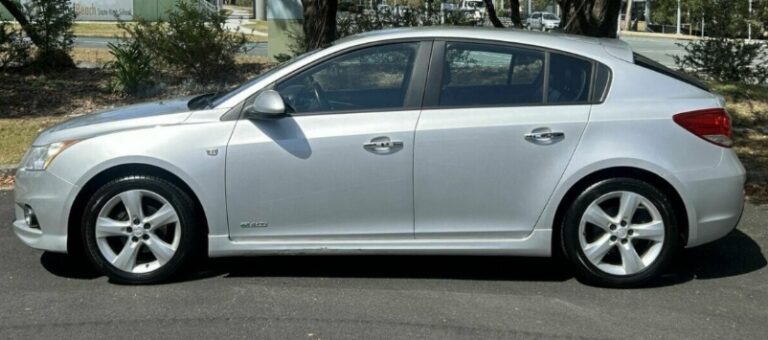
THIS might be a great place to get your new car from!
Or for those who are into the “car flipping” business, here’s an excellent resource for you!

.
The Styling and The “Wing”
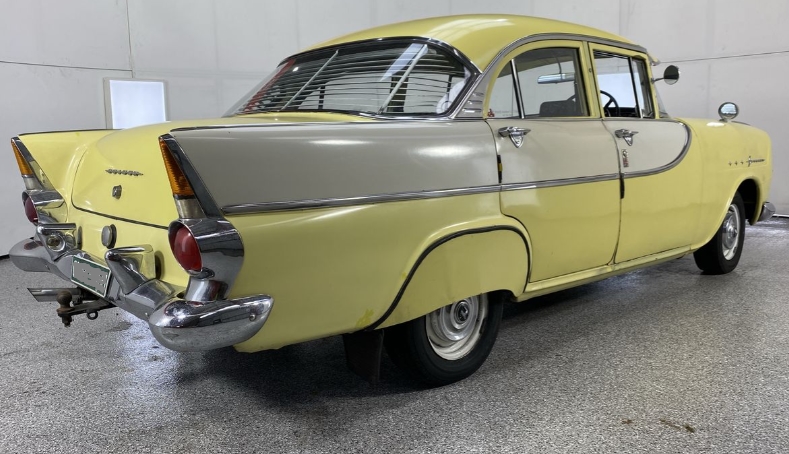
While the FB was structurally an EH, its appearance was a significant departure. The design language was all about the 1960s “Coke bottle” shape, with flared wheel arches and a subtly contoured body. The most obvious change was at the front, where the neat, horizontal grille of the EH was replaced by a bold new “center-port” design. A prominent chrome bar, flanked by two smaller bars, ran across the grille, bearing the new Holden nameplate in a modern, sans-serif font.
The most iconic and celebrated feature, however, was the “winged” appliqué on the front fenders. Unlike the simple “Holden” script on the boot lid of the EH, the FB featured a sleek, silver-toned wing emblem that swept back from the front guard. It was a touch of glamour and ambition, a symbol of a company striving to look forward despite the turmoil behind it. This small emblem would give the car its identity, affectionately known to enthusiasts simply as the “FB Wing.” The overall effect was more American-influenced and slightly larger-looking than the EH, a clear attempt to inject more style into a proven formula.
The Model Range: A Simplified Strategy
Given the urgent need to get the FB to market, GM-H kept the model range lean and focused. There were three body styles available, a familiar lineup from the EH era, but with simplified trim designations to streamline production and ordering.
1. The Holden MB (Standard Sedan) This was the entry-level workhorse of the FB range. The MB was the bare-bones model, aimed squarely at fleets, tradespeople, and budget-conscious families. It was powered by the venerable 149-cubic-inch (2.4-litre) inline-six “Red” engine, producing a modest 95 horsepower. Features were spartan: a three-speed column-shift manual transmission was standard, vinyl trim, a two-spoke steering wheel, and very little chrome. The MB was all about function over form, representing the affordable and reliable transport that Holden had built its reputation on.
2. The Holden NB (Special Sedan) The NB was the heart of the FB range, the popular choice for families who wanted a bit more comfort and style. It used the same 149ci engine as the MB but added a host of desirable features. The NB boasted revised interior trim with cloth and vinyl options, a horn ring on the steering wheel, a clock on the dash, and significantly more exterior chrome trim, including around the windows. The column shifter remained, but the overall impression was of a more comfortable and well-appointed car. The NB was the quintessential middle-class Australian family sedan.
3. The Holden PD (Premier Sedan and Wagon) At the top of the tree sat the PD Premier. This was Holden’s flagship model, designed to compete with upmarket sedans and offer a touch of luxury. The PD was distinguished by its full-length chrome side trim, leather accents on the interior (in the top-spec versions), a floor-mounted four-speed manual transmission, and a two-speed windscreen wiper as standard. Crucially, the Premier was also available with the larger, more powerful 173ci (2.8-litre) “Red” engine, which became an option across the entire range. This engine offered a noticeable performance boost and was highly sought after. The PD was the model that aspiring Australians dreamed of owning.
The Engine and Running Gear
The mechanical heart of the FB Holden was the trusty “Red” six-cylinder engine. As mentioned, two displacements were offered: the 149ci and the optional 173ci. Both were rugged, simple, and reliable pushrod engines, known for their torque and ease of maintenance.
Transmissions were a key differentiator. The MB and NB models came standard with a three-speed manual gearbox operated via a column shift. A three-speed floor shift was an option, but the coveted four-speed manual was reserved for the PD Premier. An automatic transmission, GM-H’s own “Hydra-Matic,” was available as a costly option on most models, signalling the growing trend towards easier driving in heavy traffic.
Underneath, the FB used a live axle at the rear with leaf springs, a conventional setup for the era. The front suspension was an independent coil-spring system, which had been a feature of Holdens since the HK, providing a reasonably good ride and handling compromise.
The End of an Era: V8 and Successor
One of the most persistent myths about the FB is that it was never offered with a V8 engine. While not available from the factory at its launch, a limited number of FB models were fitted with the new Chevrolet 283ci V8 by special order, primarily for high-profile executives and racing purposes. However, these are exceedingly rare, and the vast majority of FBs left the factory as dependable six-cylinder cars.
The FB’s short life meant it never received a proper facelift. By late 1967, the public and the industry were ready for a genuine, ground-up new model to finally put the memory of the EH/FB saga behind them. In October 1967, the Holden HK was launched. The HK was a completely new car, larger, more stylish, and with a vastly improved body structure. It also marked the official and hugely successful introduction of the V8 engine into the mainstream Holden lineup. The FB was swiftly phased out, its 18-month duty done.
Legacy and Future Outlook
The Holden FB is a fascinating paradox. It is not considered a “good” car by classic car standards; it was a stopgap, a repair job on a flawed predecessor. Its production numbers are a testament to its role as a commodity rather than a design triumph. Approximately 165,000 FBs were built, a massive figure for such a short run, proving that even a flawed Holden could sell if it wore the famous lion badge and was priced right.
In the long term, the FB’s legacy is not about its inherent quality but about its historical importance. It was a crucial bridge. It kept the production lines rolling and the public buying Holdens during a period of immense corporate crisis. The lessons learned from the FB’s rushed development and the subsequent HK’s comprehensive engineering undoubtedly strengthened GM-H’s design and manufacturing processes.
Today, the FB Holden is a beloved classic, not for its performance or perfection, but for its story. It represents a unique chapter in Australian industrial history: a car that had to be built, a car that flew on a wing and a prayer. For owners and enthusiasts, it is a symbol of a bygone era of ingenuity, haste, and the enduring appeal of a simple, six-cylinder Australian sedan. It may have been the “fixer,” but it remains an unforgettable part of the Holden legend.