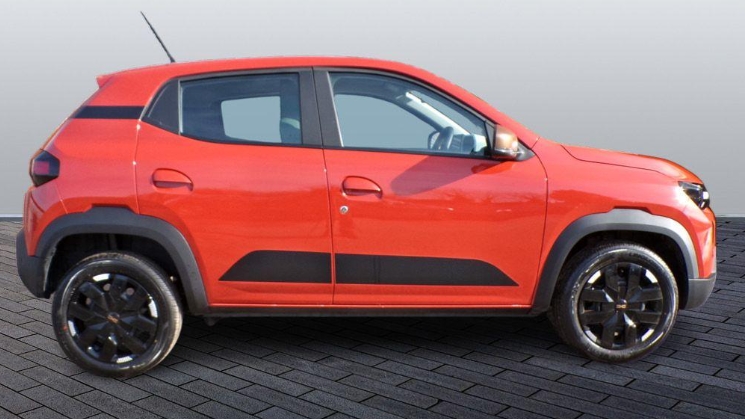
The Dacia Spring Evolution: How Dacia Democratized the Electric Vehicle
When Renault Group unveiled the Dacia Spring in 2020, it did more than simply launch a new city car; it triggered a seismic shift in the European automotive landscape. For years, the electric vehicle (EV) market had been characterized by increasing size, escalating prices, and a technological “arms race” that alienated the average consumer. The Dacia Spring, a tiny, unpretentious electric hatchback, cut through the noise. It was a vehicle that prioritized utility, accessibility, and affordability over luxury and blistering acceleration.
Produced at the Renault Group’s Craiova plant in Romania (alongside the Dacia Sandero and the Ford Puma), the Spring is essentially an electric evolution of the Dacia Sandero. However, it is distinct in its mission: to be the cheapest new EV on the market. Over the course of its production run, the Spring has evolved from a bare-bones utilitarian runabout into a slightly more refined, albeit still incredibly basic, electric staple.
This article traces the production history, model evolution, and trim levels of the Dacia Spring from its conceptual roots to its current iteration, exploring how a budget car managed to outsell premium EVs in several European markets.
The Genesis: 2020–2021
The Dacia Spring was born out of a specific strategic need for Renault Group. The company possessed the electric technology from its Renault Zoe, which had been on the market since 2012, but the Zoe was priced out of reach for many entry-level buyers. The goal was to create a “gateway” EV that leveraged existing, proven technology in a radically simplified package.
The Concept and Launch Unveiled as a concept in October 2020, the production version arrived in early 2021. It was marketed initially as a fleet vehicle, targeting corporate car-sharing services and business fleets (notably in France), before a consumer rollout. This strategy was crucial; it allowed Dacia to fine-tune the vehicle while benefiting from green energy subsidies available to commercial fleets.
The Mechanics Under the skin, the Spring shared its platform with the Renault K-ZE (an EV designed for the Chinese market), though it was heavily modified for European crash standards and regulations. It utilized a simple AC motor (synchronous reluctance) producing 45 horsepower (33 kW) in its initial form. The battery was a modest 26.8 kWh lithium-ion pack. While small by modern standards, it offered a claimed WLTP range of up to 230 km (143 miles) in the city cycle, or roughly 185 km (115 miles) in mixed driving.
.
THIS might be a great place to get your new car from!
Or for those who are into the “car flipping” business, here’s an excellent resource for you!

.
The Initial Lineup (2021–2023)
For the first three years of production, the Dacia Spring lineup remained relatively stable, defined by a clear distinction between the standard consumer model and the electric performance variant.
1. Dacia Spring Electric 45 (Standard Consumer Model) This was the entry-point for private buyers.
- Power: 45 hp (33 kW) electric motor.
- Torque: 125 Nm.
- Top Speed: 125 km/h (78 mph).
- Charging: 6.6 kW AC charging; DC fast charging optional (but slower, maxing out at roughly 30 kW).
2. Dacia Spring Electric 65 (Fleet & Performance Model) Launched simultaneously but initially restricted to business fleets (and later available to consumers), the “65” upped the ante.
- Power: 65 hp (48 kW) electric motor.
- Torque: 113 Nm (note: slightly lower torque due to motor architecture, but better high-speed performance).
- Top Speed: 125 km/h.
- Acceleration: 0–100 km/h in roughly 13.4 seconds (compared to 19+ seconds for the 45).
- Range: Identical battery capacity to the 45, but slightly lower range due to the more powerful motor (approx. 215 km WLTP city, 140 km mixed).
Trim Levels (2021–2023) Dacia kept things incredibly simple. The trims were not named (like “Style” or “Prestige”) but were defined by the motor choice and a few packs.
- Base Level (Standard): Included electric front windows, remote central locking, a 3.5-inch digital instrument cluster, and a smartphone holder (no infotainment screen initially). Safety features included ABS, ESC, and six airbags.
- Comfort Pack (Added later): This pack added a 7-inch Media Display touchscreen with navigation, Apple CarPlay, Android Auto, rear parking sensors, electric heated mirrors, and heated rear windows.
- Techno Pack (Added later): Included keyless entry, automated emergency braking, and blind-spot warning (rear cross-traffic alert).
The “Cargo” Variant A notable addition in 2022 was the Dacia Spring Cargo. Based on the Electric 45, this was a two-seater version (with a bulkhead behind the seats) designed for last-mile delivery. It removed the rear seats to increase payload capacity and was targeted strictly at commercial users.
The Facelift: The 2024 Model Year Update
In late 2023, Dacia unveiled a refreshed Spring for the 2024 model year. While it retained the underlying platform, the changes were significant enough to constitute a soft generational update. This update addressed the primary criticism of the original Spring: its spartan interior and lack of standard equipment.
Design Changes
- Exterior: The front fascia was completely redesigned. Gone was the simple black plastic bumper; it was replaced with a more aggressive look featuring Y-shaped LED daytime running lights and a skid plate, aligning it with Dacia’s new “Y” design language (seen on the Duster and Sandero).
- Rear: The taillights received a new graphic, and the Dacia logo was replaced by the new script branding.
- Wheels: New 15-inch alloy wheel designs were introduced, alongside new paint colors (like Sunstone and CDSL Blue).
Interior and Tech Upgrades
- Infotainment: The most welcome change was the standardization of the Media Control system. A new 7-inch or 10-inch screen (depending on trim) became standard, featuring built-in navigation and smartphone replication.
- Materials: The dashboard received soft-touch materials in upper areas, a significant improvement over the hard plastics of the pre-facelift model.
- Transmission: A new “Auto” gear selector was introduced (a rotary dial), replacing the manual toggle switch, cleaning up the center console.
Powertrain Evolution (2024–Present) The 2024 update also brought a new battery chemistry and motor options.
1. Dacia Spring 45 (Updated)
- Power: 45 hp (33 kW).
- Battery: 26.8 kWh (Lithium Iron Phosphate – LFP). LFP batteries are more durable and cheaper, though slightly heavier.
- Range: WLTP combined range improved slightly to approximately 220 km (city) / 140 km (mixed).
2. Dacia Spring 65 (Updated)
- Power: 65 hp (48 kW).
- Battery: 26.8 kWh (LFP).
- Range: WLTP combined range of approx. 200 km (city) / 135 km (mixed).
3. Dacia Spring Electric 110 (New Performance Variant) In a surprising move for a budget car, Dacia introduced a more powerful version in late 2024/early 2025 markets.
- Power: 110 hp (80 kW).
- Torque: 200 Nm.
- Performance: 0–100 km/h in under 11 seconds, with a top speed of 130 km/h.
- Battery: The same 26.8 kWh pack, meaning range drops in spirited driving, but this variant targets urban highway driving where quick overtaking is necessary.
Updated Trim Levels (2024–Present) Dacia streamlined the naming convention for the facelifted Spring into three distinct levels (nomenclature varies by market, e.g., Essential, Expression, Extreme, but the core offering is consistent):
- Essential (Base):
- Steel wheels with wheel covers.
- Manual air conditioning.
- 7-inch Media Display with DAB radio and smartphone replication.
- Electric front windows.
- Rear parking sensors.
- Expression (Mid-Range):
- 15-inch alloy wheels.
- Electrically adjustable and heated mirrors.
- Heated rear window.
- Keyless entry (Start/Stop).
- Automatic climate control.
- Blind spot warning (rear cross-traffic alert).
- Extreme (Top of the Range / Lifestyle Focus):
- Specific interior trim (eco-friendly fabric).
- 10-inch touchscreen with integrated navigation.
- Reversing camera.
- Specific exterior styling (satin chrome details, specific colors).
- Electrically folded mirrors.
Cultural Impact and Reception
The Dacia Spring’s evolution is interesting because it is driven by cost control rather than luxury. While competitors like the Fiat 500e or Mini Electric offered premium interiors and higher ranges (300km+), they cost nearly double the price of the Spring.
The Spring became the vehicle of choice for the “electric conversion” demographic—drivers who were hesitant to switch from internal combustion due to price. By 2023, the Spring was the best-selling electric car in several segments in countries like Romania, France, and Italy. Its low weight (under 1,000 kg, exceptionally light for an EV) meant it didn’t require massive batteries to achieve decent efficiency. It could utilize standard European plug sockets (Type 2) for charging, further reducing infrastructure barriers for buyers without dedicated wall boxes.
Future Outlook
As of 2024/2025, the Dacia Spring sits in a precarious but dominant position. The European automotive market is facing a crisis regarding the affordability of EVs. With the discontinuation of cheap internal combustion cars (due to Euro 7 emission standards) and the rising cost of batteries, the Spring is positioned to become even more relevant.
Future Prospects:
- The Dacia Spring “Next” (Post-2026): Renault Group has confirmed the development of the “Dacia Spring 2” (codenamed DCI02). Due around 2026-2027, this will be a ground-up EV built on the new Renault Group modular platform. It will likely retain the budget ethos but offer improved safety, a slightly larger battery (targeting 300km+ real range), and modern features like Vehicle-to-Load (V2L) capabilities.
- Market Expansion: Dacia is currently expanding sales outside Europe (e.g., Turkey, Israel, South America). The Spring is a candidate for broader export, potentially challenging Chinese dominance in emerging markets.
- Regulatory Survival: The Spring’s existence is somewhat dependent on emissions credits and government subsidies. As these evolve, Dacia will likely keep the price low through simplified engineering rather than relying on state aid.
Conclusion
From its humble debut in 2020 as a fleet-focused novelty to its 2024 facelift as a refined, style-conscious city car, the Dacia Spring has undergone a significant evolution. It has navigated the shift from the 45hp base model to the lively 110hp variant, and from a Spartan interior to a tech-enabled cabin.
Yet, its core philosophy remains unchanged: an electric vehicle must not be a luxury item. The Spring proves that consumers don’t necessarily need 500 kilometers of range or 0–100 km/h in 3 seconds; they need a reliable, safe, and affordable way to get from A to B. As the automotive world races toward autonomy and hyper-connectivity, the Dacia Spring remains grounded, serving as the most effective gateway to electric mobility for the masses. It is not the best electric car on paper, but for millions of drivers, it is the most important one available.