The Bentley Mulsanne’s Middle Years: A Chronicle of the SZ Platform (1980–1992)
In the narrative of Bentley Motors, the years between 1980 and 1992 represent a pivotal transformation. It was a period where the company shed its reputation for building hand-me-down Rolls-Royces and began forging an independent identity. While the modern Bentley Mulsanne (introduced in 2010) is a known quantity to contemporary enthusiasts, the original Mulsanne that defined this era—codenamed the SZ—remains a fascinating study of evolution. Produced from 1980 to 1992, this chassis served as the canvas upon which Bentley painted its future, transitioning from the stately Turbo R to the ultra-exclusive Continental Turbo R.
This article explores the specific twelve-year lifespan of the original Mulsanne platform, detailing its evolution through the 1980s and into the early 1990s, including all model variants and trim levels offered during this specific era.
The Genesis: 1980–1985
Prior to 1980, the Bentley range consisted of the Bentley Corniche (a convertible based on the Rolls-Royce Silver Shadow) and the T-series (a sedan). Both were essentially Rolls-Royces with slightly different grilles. In 1980, Bentley sought to change this dynamic.
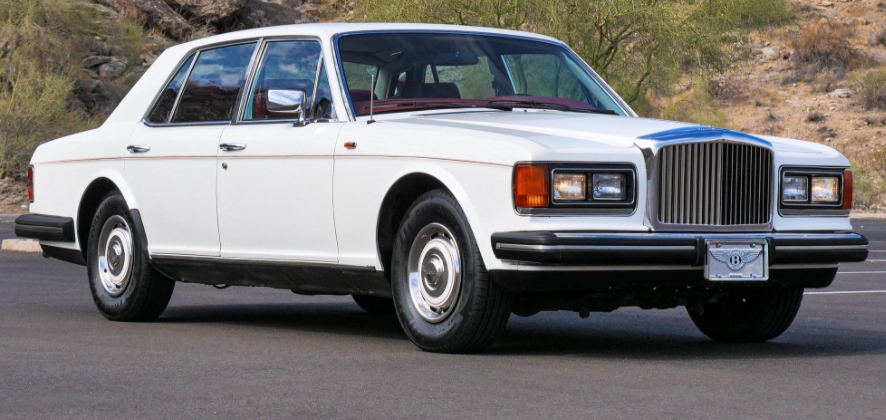
The Mulsanne (1980–1985) The original Bentley Mulsanne was introduced in March 1980. It was based on the Rolls-Royce Silver Shadow II platform but featured significant styling and mechanical revisions. The most defining feature was the front end; the Mulsanne utilized a distinct “squat” grille with a steeper angle than its Rolls-Royce counterparts, lending it a more aggressive, modern stance.
Under the hood lay the legendary 6.75-liter (412 cubic inch) pushrod V8 engine. While the engine displacement remained consistent with previous models, the Mulsanne benefited from a modernized fuel system. It utilized four Zenith-Stromberg carburetors (replacing the problematic dual-SUs of the past) and featured GM’s 400-series automatic transmission (later the 4L80E). The result was a car that produced approximately 300 horsepower and a massive amount of torque—enough to propel the 5,000-pound sedan to 120 mph.
- Trim and Interior: The standard Mulsanne offered a level of opulence that was becoming synonymous with the brand. The interior was dominated by Connolly leather hides, burr walnut veneers, and Wilton wool carpets. While the ride was supremely comfortable, the Mulsanne was positioned as a “driver’s car” for Bentley—sharper and more responsive than the Silver Spirit. A unique feature of the early SZ Mulsanne was the dashboard layout, which combined traditional British instrument dials with a more modern, integrated design.
- The Mulsanne E (1982–1985): In 1982, Bentley introduced a de-contented version known as the Mulsanne E (the “E” stood for “Executive”). This was a strategic move to compete with the Mercedes-Benz 450SEL 6.9 and the Jaguar XJ12.
- Features: The Mulsanne E removed some of the heavy sound insulation, featured slightly simpler trim, and offered manual window operation in the rear (though front electric windows remained).
- Engine: It used the same V8 but with a lower compression ratio, allowing it to run on lower-octane fuel—a selling point for export markets where high-grade petrol was scarce.
- Significance: The Mulsanne E was crucial because it lowered the entry price, broadening Bentley’s customer base during a difficult economic period in the early 1980s.
- The Mulsanne L (1984–1985): A very rare variant, the Mulsanne L (Long wheelbase) was introduced for specific markets, primarily the Middle East. It offered increased rear legroom, though it was not as extensively stretched as the later “Mulsanne Park Ward” models.
The Turbo Era: 1985–1987
By 1985, the automotive world was embracing turbocharging, and Bentley was eager to reclaim the performance crown it had lost in the post-war years.
The Mulsanne Turbo (1985–1987) In 1985, the standard Mulsanne was replaced by the Mulsanne Turbo. This was a seismic shift for the brand. While Rolls-Royce remained strictly naturally aspirated (until the 1990s), Bentley embraced forced induction.
- Mechanicals: A Garrett AiResearch turbocharger was bolted to the 6.75-liter V8, along with an air-to-water intercooler. Power jumped from 300 hp to over 325 hp initially, with torque seeing a massive increase.
- Visual Changes: The Turbo featured 15-inch wheels (larger than the standard Mulsanne’s 14-inchers) and “TURBO” badging on the rear flanks.
- Driving Dynamics: The Mulsanne Turbo introduced the “boost button” on the gear selector. In “kickdown,” the transmission would downshift and the wastegate would open fully, providing maximum acceleration. This car established the “Bentley Driver’s Car” ethos that would define the brand for decades.
During this two-year window (1985–1987), the naturally aspirated Mulsanne E continued to be sold alongside the Turbo, catering to those who prioritized reliability and fuel economy over outright speed.
.
THIS might be a great place to get your new car from!
Or for those who are into the “car flipping” business, here’s an excellent resource for you!

.
The Refinement: 1987–1992
The period from 1987 to 1992 marked the maturation of the SZ platform, culminating in some of the most desirable Bentleys of the 20th century.
The Turbo R (1987–1992) In 1987, the Mulsanne Turbo was rebranded as the Mulsanne Turbo R (the “R” standing for “Roadholding”). This was arguably the most significant Bentley of the decade.
- Suspension: The “R” introduced a revised suspension system featuring computer-controlled electronic damping and wider track widths. This solved the traditional Bentley affliction of body roll, allowing the car to corner with surprising flatness.
- Engine: The engine received a new intercooler system, raising output to approximately 325–350 hp (depending on the year and market).
- Styling: The Turbo R featured a lower, wider grille and a distinctive “Boot-lid” spoiler, giving it a sleeker profile. The interior was upgraded with airbags (optional, later standard) and more intricate wood veneers.
The Mulsanne S (1987–1992) Parallel to the Turbo R, Bentley continued to produce a naturally aspirated version, now called the Mulsanne S.
- Features: The S offered the styling of the Turbo R (including the lower grille and spoilers) but without the turbocharger. It was powered by the standard 300 hp V8.
- Target Audience: The Mulsanne S was designed for markets with extreme climates where turbocharging was deemed less reliable, or for buyers who preferred the effortless, non-turbocharged delivery of the V8. It served as the bridge between the entry-level Mulsanne E and the flagship Turbo R.
The Mulsanne Park Ward (1990–1992) By 1990, the SZ chassis was aging, but Bentley extended its life with the introduction of the Mulsanne Park Ward.
- Body Style: Unlike the standard sedan, the Park Ward was a two-door convertible (technically a “drophead coupe”). It was bodied by Park Ward, the coachbuilder owned by Rolls-Royce.
- Construction: It utilized the long-wheelbase platform (LWB) and featured reinforced sills to compensate for the lack of a roof. The interior was bespoke, often featuring burr walnut dashboards and unique color combinations.
- Exclusivity: Produced in very limited numbers (approximately 80 units total between 1990 and 1992), the Park Ward was the most expensive Bentley available at the time. It was powered by the naturally aspirated V8, though some were fitted with the Turbo R engine upon customer request (creating the rare Turbo RT).
The Continental Turbo R (1991–1992) Toward the very end of the SZ production run (overlapping with the introduction of the newer “Azure” convertible on the newer DH chassis), the Continental Turbo R was introduced.
- Hardtop Coupe: This was a two-door fixed-head coupe, based on the Mulsanne Turbo R chassis but featuring a unique roofline and rear window treatment.
- Performance: It was the pinnacle of SZ performance, offering the highest output engines (up to 385 hp in later specifications) and the most aggressive suspension tuning.
- Legacy: The Continental Turbo R bridged the gap between the SZ platform and the future Corniche and Azure models, serving as the last hurrah for the 1980s Bentley design language.
The End of an Era and Future Outlook
By 1992, the original Mulsanne platform had been in production for twelve years. While the Turbo R was still a formidable grand tourer, the chassis was becoming outdated compared to modern German competitors. The interior, while luxurious, utilized technology and switchgear that dated back to the mid-1970s.
1992: The Transition Production of the SZ Mulsanne sedans (Mulsanne S, Turbo R) effectively ended in 1992 as the “Azure” (on the newer DH platform) took over the convertible market, and the “Brooklands” (introduced in 1992) began to replace the sedan lineup. The Continental Turbo R continued slightly longer, effectively ending the lineage in 1993-1994 before the next generation of the “Mulsanne” name was briefly used on the Continental-based sedans.
The Legacy (1980–1992) The Mulsanne models from 1980 to 1992 are today considered modern classics. They represent the last of the “hand-built” era before computer-aided design fully took over in the mid-1990s.
- Collectibility: The Mulsanne Turbo R is currently experiencing a resurgence in value, recognized as one of the last true analog super-sedans. The Park Ward convertible remains a blue-chip collector car due to its extreme rarity.
- Engineering: The 6.75-liter V8 developed during this era is the same basic engine architecture that powered Bentleys until the Mulsanne model line was finally discontinued in 2020—a testament to the durability engineered into these cars between 1980 and 1992.
The twelve years covered here were not just about a single car model; they were about the redefinition of a brand. From the carbureted, naturally aspirated Mulsanne of 1980 to the intercooled, turbocharged Continental Turbo R of 1992, Bentley evolved from a maker of quiet luxury vehicles into a producer of high-performance grand tourers—a transformation that laid the groundwork for the Bentley of the 21st century.