The History of Austin Motor Company
The Long and Winding Road
For the majority of the 20th century, the British automotive industry was a global powerhouse, and standing firmly among its giants was the Austin Motor Company. To the American eye, the name Austin conjures images of diminutive, quirky cars navigating narrow European streets, but the company’s history is a sprawling epic of industrial innovation, wartime resilience, corporate maneuvering, and eventual absorption into the modern automotive landscape. From its inception in the early 1900s to its final dissolution in the 21st century, the story of Austin is the story of Britain itself—ascending to global dominance, weathering economic storms, and ultimately surrendering to the age of multinational conglomerates.
The Founder: Herbert Austin
The Austin Motor Company was the brainchild of Herbert Austin, a man whose engineering prowess rivaled that of Henry Ford, though his business acumen proved far more turbulent. Born in 1866 in Great Missenden, England, Austin began his career as an apprentice at the Wolseley Sheep Shearing Machine Company. It was here that he designed the company’s first motor car in 1895. By 1905, due to friction with the board of directors, Austin left Wolseley to establish his own enterprise.
In 1905, with a capital investment of £14,000 (roughly $70,000 in 1905 currency, or approximately $2.4 million today adjusted for inflation), Austin purchased the former Cadbury factory site in Longbridge, Birmingham. This location would become the beating heart of the company for nearly a century. Austin was a meticulous engineer, known for his obsession with quality and precision. He famously championed the “Royal Automobile Club” (RAC) horsepower tax rating system, which incentivized smaller, more efficient engines—a philosophy that would define British motoring for decades.
Early Years and First Models (1905–1914)
The company’s first vehicle was the Austin 7hp, a modest runabout that established the brand’s reputation for reliability. However, the early years were fraught with financial peril. In 1906, the company produced only 12 cars. By 1908, they had introduced the 15hp and 20hp models, which fared better, but cash flow remained tight. Austin’s insistence on building high-quality components in-house, rather than outsourcing, kept production costs high.
The company’s first major hardship occurred in 1910–1911. Production costs were higher than anticipated, and sales were sluggish, leading to a severe liquidity crisis. Austin was forced to restructure the company, raising additional capital and merging with a component supplier to stabilize operations. This period tested Austin’s resolve, but he emerged with a leaner, more focused company.
Milestone: In 1912, Austin produced the Austin 20, a large, stately touring car that was a commercial success. But the true game-changer was yet to come.
The Great War and The Austin 7
World War I (1914–1918) fundamentally altered the company’s trajectory. The British government contracted Austin to build vehicles for the war effort, including the famous “Austin Armored Car” and various aircraft engines. The factory expanded rapidly, and by the war’s end, Austin was a major industrial player.
In the post-war boom of 1922, Herbert Austin, along with his chief draughtsman Lawrence Pomeroy, introduced the Austin 7. Often called the “Baby Austin,” this car is arguably the most significant vehicle in the company’s history. It was a direct competitor to the Ford Model T but was smaller, more nimble, and possessed a distinct personality.
The Austin 7 was an engineering marvel. It was a compact, four-cylinder, 747cc vehicle that set a standard for small cars. It was licensed to manufacturers worldwide, including BMW in Germany (who built the Dixi) and Dodge in the United States (who built the “American Austin”). It democratized motoring in Britain and established the “small car” archetype that would later influence the Mini. For the American market, however, the 7 was too small to make a significant impact during the roaring 20s, though it found a niche among enthusiasts who prized economy over size.
The Interwar Years and the Great Depression
Between the 1930s, Austin continued to thrive on the 7’s success, eventually expanding into larger saloons like the Austin 12 and Austin 16. However, the Great Depression struck the company hard. Global demand for automobiles plummeted. In 1930, Austin’s profits fell dramatically. To survive, the company cut costs, reduced wages, and laid off workers. This led to the 1931 Austin Strike, a bitter dispute where Herbert Austin refused to recognize trade unions, leading to violence and unrest at the Longbridge plant.
The company resolved this by holding firm on its non-union stance for several years, though it eventually had to negotiate with the unions as the decade progressed. By the late 1930s, Austin had recovered, producing the Austin 10 and the sleek Austin 12/4, which featured a modern overhead-valve engine.
World War II: The Shadow Factory Plan
World War II saw Austin transform again. Under the “Shadow Factory Plan,” the company built a massive new plant at Cofton Hackett, a few miles from Longbridge, specifically for aircraft engine production. Austin produced over 1,000 Rolls-Royce Merlin engines per week at its peak, powering the Spitfire and Hurricane fighters that defended Britain during the Battle of Britain. This effort required 20,000 workers, many of whom were women entering the workforce for the first time.
Post-War: The Birth of the Mini and the Nuffield Merger
After the war, the British government encouraged consolidation to create stronger export champions. In 1952, Austin merged with the Nuffield Organization (owners of Morris, MG, and Riley) to form the British Motor Corporation (BMC). Herbert Austin had been elevated to the peerage (Lord Austin) but died in 1941, so he did not witness this merger. Under BMC, Austin became a brand within a larger portfolio.
The 1950s saw Austin introduce the A30 and Austin A40 Farina, designed with Italian styling. However, the company’s most legendary creation arrived in 1959: the Austin Mini.
Conceived by Alec Issigonis, the Mini was a masterpiece of packaging efficiency. It featured a transverse engine, front-wheel drive, and rubber suspension, maximizing interior space within a tiny 10-foot footprint. It was originally marketed as the “Austin Seven” (borrowing the name of the 1922 icon) and the “Morris Mini-Minor.”
Most Popular Vehicle: The Austin Mini The Mini is undoubtedly the most popular vehicle the company ever produced. It became a cultural icon of the 1960s, beloved by everyone from working-class Brits to celebrities like the Beatles and Twiggy. In the United States, it was marketed simply as the “Mini” and found a cult following, though its small size and British electrical quirks limited its mass appeal compared to American muscle cars. However, globally, it was a sensation.
- Global Sales: Over 5.3 million Minis were sold worldwide during its original 41-year production run (1959–2000).
- U.S. Sales: While exact U.S. figures are fragmented, the Mini sold approximately 300,000 units in North America over its lifetime. In 1967 alone, an estimated 20,000 Minis were sold in the U.S.
Racing Prowess: The Monte Carlo Wins
Austin (under the BMC banner) became a legend in motorsport. The Mini Cooper, a performance variant developed with John Cooper, defied physics. Despite its small engine, its lightweight chassis and road-holding capabilities made it a giant slayer.
In 1964, the Mini Cooper S won the Rallye Monte Carlo, driven by Paddy Hopkirk. It was a David vs. Goliath moment—beating larger, more powerful competitors. The Mini repeated the feat in 1965 and 1967. These victories were marketing gold, proving that the Austin Mini was not just an economy car but a performance machine.
Hardships in the 1960s and 1970s
While the Mini was a triumph, BMC was struggling. The company was plagued by industrial relations issues, model overlap (the Austin and Morris ranges were often identical under different badges), and high development costs.
In 1968, BMC merged with Leyland Motors (commercial vehicles) to form the British Leyland Motor Corporation (BLMC). This was a desperate attempt to consolidate the fragmented British industry. However, BLMC became a bloated bureaucracy.
The 1970s Crisis: The 1973 Oil Crisis hit the company hard. Austin’s larger cars, like the Austin 1800 “Landcrab,” were fuel-hungry and fell out of favor. Quality control deteriorated due to constant strikes and underinvestment. The Austin Allegro (1973) and Austin Princess (1975) were poorly received, particularly in the U.S., where they were sold as the Austin Marina. These cars suffered from reliability issues and dated engineering.
Resolution: The British government nationalized BLMC in 1975, forming British Leyland (BL). This bailout saved the company from total collapse but marked the end of Austin’s autonomy.
The Final Years: Rover Group to Defunct Status
In the 1980s, the company was restructured as the Austin Rover Group. Under the leadership of Michael Edwardes, there was a brief renaissance with the Austin Metro (1980), a hatchback based on the Mini platform, and the Austin Montego (1984).
However, the British market was now dominated by Japanese imports and American giants. In 1986, the “Austin” name was dropped from new models, replaced simply by “Rover.” The company became the Rover Group.
In 1988, the British government privatized the company, selling it to British Aerospace (BAe). This was the end of the “Austin” brand as a distinct corporate entity. In 1994, BAe sold the Rover Group to the German automotive giant BMW.
BMW kept the Mini brand for its iconic status but discontinued the “Austin” name entirely. In 2000, BMW broke up the group, selling the MG and Rover brands to the Phoenix Consortium (which eventually collapsed and was sold to SAIC of China), while retaining the Mini brand. The Longbridge plant was partially closed, with production shifting to Cowley and eventually to the Netherlands, then Germany, and back to the UK under BMW’s ownership.
The Austin Motor Company ceased to exist as a legal entity in 1994. The rights to the name were effectively extinguished when the brand was retired.
Factory Operations
For the majority of its life, Austin’s operations were centered at Longbridge in Birmingham. It was a vertically integrated plant, meaning Austin cast its own engine blocks, pressed its own steel panels, and assembled the vehicles all in one location. At its peak in the post-war era, Longbridge employed over 20,000 workers and was one of the largest car factories in the world. The factory layout was an evolution of Ford’s assembly line concepts, adapted for British volume production. Longbridge remains operational today as part of the MG Motor UK company (owned by SAIC), a poetic, albeit ironic, full circle, as MG was originally a rival to Austin before the 1952 merger.
U.S. Consumer Reception
The American reception to Austin vehicles was mixed. In the early 20th century, large Austin models competed with Buick and Packard but were overshadowed by domestic brands.
During the “British Invasion” of the 1960s, the Austin Mini and the Austin-Healey sports cars (a collaboration with the Donald Healey Motor Company) found a dedicated fanbase in the U.S. The Mini was loved for its parking ease in New York and San Francisco, though its heating system was notoriously ineffective against American winters.
By the 1970s, the reputation of British cars in the U.S. had plummeted due to electrical gremlins and rust issues. The Austin Allegro and Marina sold poorly in the States, contributing to the brand’s withdrawal from the American market by the early 1980s. Today, Austin cars are viewed as charming classics or collectibles rather than daily drivers in the U.S.
Models: First and Last
- First Model: The 1905 Austin 7hp. It was a simple, upright tourer with a 2-cylinder engine and a top speed of roughly 25 mph. It laid the groundwork for the company’s reputation for solid, if unexciting, engineering.
- Last Model: The Austin Montego (produced until 1994). Before the brand was retired, the Montego was a midsize family sedan that represented the final attempt to modernize the Austin lineup with front-wheel drive and efficient packaging. In its final years, the “Austin” badge was largely relegated to fleet sales and specific export markets, as the Rover badge had taken precedence.
Why Austin Was Different
What set Austin apart from competitors like Ford or Vauxhall was its obsession with innovation in small packaging. While Ford pursued mass production of standardized vehicles, Austin championed the “civilized small car.” The Austin 7 and the Mini proved that a vehicle didn’t need to be large to be safe, comfortable, and fun to drive. Austin also had a distinct “British” character—polished wood veneers, woolen upholstery, and a focus on touring capability over sheer speed (until the performance variants appeared).
Marketing and Strategy
Austin’s marketing evolved significantly. Early advertisements focused on reliability and the status of ownership. In the 1920s, they used the slogan “The Car That Made the Family Saloon Famous.”
A notable marketing strategy in the 1950s was the sponsorship of the Austin Film Society, associating the brand with high culture. The Mini campaign, however, was revolutionary. It relied on the car’s inherent “coolness” and its rallying victories. The slogan “The Magic of Mini” captivated a generation. BMC was also one of the first to heavily utilize TV advertising, showing the Mini driving through impossible obstacles (like the inside of a telephone booth) to emphasize its size.
Current Status and Outlook
The Austin Motor Company, as it was known for over 80 years, is defunct. It ceased independent operations in 1952 when it became BMC, and the brand name was retired by BMW in 1994.
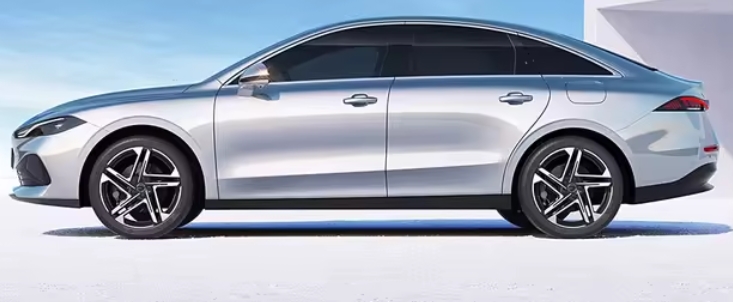
However, the legacy of Austin lives on. The Mini is currently one of the most successful premium compact cars globally, produced by BMW in the UK and Netherlands. The Longbridge factory is still partially active, now producing the MG 5 (a sedan) under the ownership of China’s SAIC Motor. While the Austin name is gone, the engineering DNA of that Longbridge workshop—efficient, compact, and British—remains a vital part of the global automotive industry.
Summary of Sales Figures (Austin Specific)
- Total Global Sales (Company Peak 1960s): In 1965, BMC (Austin/Morris) was the fourth-largest car manufacturer in the world, producing over 600,000 vehicles annually.
- Last Model Sales (Austin Montego): Production ended in 1994. By the early 90s, annual UK sales were roughly 50,000 units, with minimal exports to the U.S. (which had ceased).
- U.S. Market Exit: Austin effectively withdrew from the U.S. passenger car market in 1982, following the failure of the Austin/Morris Marina and the impending bankruptcy of the parent corporation.