The Precision Path: Charting the Evolution of the Acura TLX
In the pantheon of automotive history, few segments have experienced as much turbulence and transformation as the mid-size luxury sedan. For decades, this was the battleground where German engineering met Japanese reliability, and where comfort clashed with performance. Acura, Honda’s luxury division, entered this fray with a legacy of engineering excellence, but it was the TLX—introduced in 2014—that truly attempted to synthesize the brand’s disparate strengths into a single, cohesive package.
The story of the Acura TLX is not merely a list of specifications and model years; it is a narrative of identity. It traces the brand’s journey from the front-wheel-drive comfort of the early 2000s, through a controversial styling era, and finally to a renaissance of rear-wheel-drive performance. This is the evolution of the Acura TLX, a vehicle that bridged the gap between the historic TL and TSX, and eventually evolved into a standalone performance icon.
The Genesis: A Bridge Between Worlds (2014–2020)
To understand the TLX, one must first understand what it replaced. In 2014, Acura consolidated two distinct models: the TL, a larger, V6-powered, front-wheel-drive cruiser, and the TSX, a smaller, four-cylinder, handling-focused sedan based on the European Honda Accord. The automotive landscape was shifting; buyers wanted the agility of a smaller car with the presence of a larger one. The TLX was born to fill this void.
The First Generation (2014–2020)
Debuting in the summer of 2014 as a 2015 model year vehicle, the first-generation TLX was built on the Honda Accord’s mid-size platform but heavily modified with Acura-specific components. It featured a sleek, aerodynamic profile characterized by the “Jewel Eye” LED headlights—a design cue that would become Acura’s signature.
Powertrains and Transmissions The first generation offered two distinct paths for buyers:
- The 2.4L Inline-4: Paired with an 8-speed dual-clutch transmission (DCT) with a torque converter, this engine produced 206 horsepower. It was the spiritual successor to the TSX, prioritizing fuel economy and front-wheel-drive dynamics.
- The 3.5L V6: Mated to a 9-speed automatic transmission, this engine generated 290 horsepower. It came standard with Front-Wheel Drive (FWD) but offered the revolutionary Super Handling All-Wheel Drive (SH-AWD) as an option. This system was capable of vectoring torque to individual rear wheels, significantly improving cornering stability.
Trim Levels (2014–2020) The trim hierarchy was straightforward, allowing buyers to scale up in luxury and technology:
- Base: The entry point, featuring leatherette upholstery, 17-inch wheels, and the AcuraWatch suite of safety technologies (standard across all trims).
- Technology Package: Added genuine leather seats, a navigation system, premium ELS Studio audio, and blind-spot monitoring.
- Advance Package: The pinnacle of luxury, adding ventilated front seats, a panoramic roof, adaptive dampers, and a surround-view camera system.
The Mid-Cycle Refresh (2018) In 2018, Acura addressed early criticisms regarding the front grille’s “beak” design. The refresh introduced a more aggressive “Diamond Pentagon” grille, inspired by the Acura NSX. While the powertrains remained largely unchanged, the 2018 update improved interior materials and added Apple CarPlay and Android Auto integration—a crucial update for the tech-savvy buyer.
However, by 2020, the automotive market had shifted decisively toward SUVs and crossovers. The first-generation TLX, while competent, was caught in a difficult position: it was larger than a compact sedan but lacked the rear-wheel-drive architecture of its German rivals (BMW 3-Series, Mercedes C-Class). Acura realized that to compete, they needed to reinvent the TLX entirely.
.
RepairSurge Online Repair Manuals Replace Bulky Books With Reliable Digital Information!
Faster And Cheaper Than Traditional Printed Manuals, Users Get Instant Access To The Repair Information They Need For Any Car, Truck, Van or SUV:
.
The Renaissance: A Return to Roots (2021–Present)
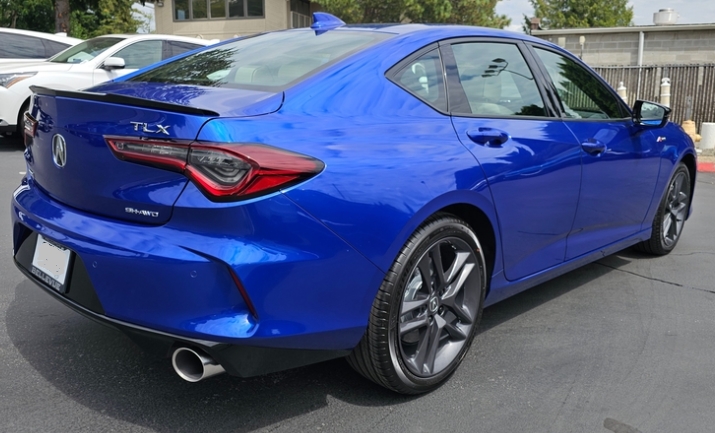
The second generation of the TLX, unveiled in 2020 for the 2021 model year, marked a dramatic departure from its predecessor. It was a ground-up redesign that abandoned the shared Accord platform in favor of a dedicated, independent chassis. This was a pivotal moment: Acura moved the TLX to a rear-wheel-drive-biased platform, finally giving it the athletic proportions required to challenge European competitors.
The New Architecture The 2021 TLX was lower, wider, and longer than the first generation. It featured a double-wishbone front suspension—a rarity in modern sedans—borrowed directly from the Honda Accord and Odyssey, but tuned for luxury performance. This suspension setup allowed for sharper handling and a more compliant ride.
Powertrain Evolution The engine lineup underwent a significant transformation:
- 2.0L Turbo VTEC: The V6 was retired in favor of a 2.0-liter direct-injection turbocharged four-cylinder engine. While it produced less horsepower (272 hp) than the old V6, it offered more torque (280 lb-ft) at lower RPMs, providing a punchier, more responsive driving experience.
- 10-Speed Automatic Transmission: The new engine was paired with a 10-speed automatic transmission, ensuring smooth power delivery across all gears.
The Type S Era Perhaps the most exciting development in the TLX’s history was the introduction of the Type S trim in 2021. This marked the return of Acura’s performance badge after a decade-long hiatus. The Type S was not just a trim level; it was a statement of intent.
- 3.0L Twin-Turbo V6: The Type S utilized a bespoke 3.0-liter twin-turbo V6, producing 355 horsepower and 354 lb-ft of torque. This engine was derived from the NSX’s V6 but de-tuned for reliability in a daily driver.
- Performance Upgrades: The Type S featured a stiffer chassis, larger brakes (borrowed from the Brembo partnership), 20-inch wheels, and a sport-tuned adaptive damper system. It also utilized a rear-biased SH-AWD system that could send up to 70% of torque to the rear wheels.
Trim Levels (2021–Present) The second-generation TLX streamlined the trim structure to focus on performance and technology:
- TLX (Base): Included the 2.0L turbo engine, 19-inch wheels, a 10.2-inch infotainment screen, and the AcuraWatch 360+ safety suite.
- Technology Package: Added theELS Studio 3D premium audio system, leather upholstery, and upgraded interior trim.
- A-Spec: The visual sport package. It included unique 19-inch wheels, aggressive front and rear bumpers, quad exhaust outlets, and red ambient lighting. While it offered a sportier look, it retained the standard 2.0L engine (no power increase).
- Advance Package: Focused on luxury, adding adaptive dampers, a head-up display, premium leather, and a 17-speaker audio system.
- Type S: The performance flagship. It included the 3.0L twin-turbo V6, 20-inch wheels, Brembo front calipers, sport seats, and unique exterior styling cues.
- Type S Advance: The fully loaded performance model, combining the Type S powertrain with the luxury amenities of the Advance package (such as the surround-view camera and premium leather).
Special Editions In recent years, Acura has released limited-run models to keep the lineup fresh:
- TLX Type S PMC Edition (2022-2023): Built alongside the NSX at the Performance Manufacturing Center in Ohio. These featured a unique yellow or red paint, copper-colored wheels, and a hand-assembled build process.
- TLX Type S in Dragon Blue Pearl (2024): A limited color run celebrating the model’s visual appeal.
The Electric Future and Current Status
As the automotive industry pivots toward electrification, the TLX finds itself at a crossroads. In 2023, Acura launched the ZDX, an all-electric SUV based on GM’s Ultium platform. This signaled a shift in brand strategy. While the TLX remains in production as of the 2024 model year, its future beyond 2025 is the subject of intense speculation.
Market Challenges The mid-size luxury sedan market has contracted significantly. Consumers have flocked to SUVs like the Acura RDX and MDX. Consequently, sales of the TLX have softened. In late 2023, Honda announced it would end production of the TLX (and the Honda Accord) at its Marysville, Ohio plant, shifting focus to hybrid and electric SUV production.
The Outlook There are rumors of a potential electric successor to the TLX, possibly utilizing the “0 Series” design language Acura has previewed. However, for now, the TLX stands as a testament to internal combustion performance. The 2024 TLX Type S remains one of the most affordable ways to get a twin-turbo V6 in a luxury sedan, offering a driving experience that rivals cars costing significantly more.
Relevant Information for Buyers and Enthusiasts
For those looking to own a TLX, the evolution of the model offers distinct choices depending on priorities:
- Reliability: The 2.4L and 3.5L V6 engines from the first generation are renowned for their bulletproof reliability, utilizing timing chains rather than belts. The newer 2.0L turbo and 3.0L twin-turbo are also robust but are more complex.
- Technology: The second generation’s infotainment system (True Touchpad Interface) is a polarizing feature. Unlike a touchscreen, the touchpad is mapped 1:1 with the screen, which some drivers find distracting while driving. It is a trade-off for a cleaner dashboard design.
- Resale Value: Acuras generally hold their value well, though not as aggressively as Porsche or Lexus. The Type S models, particularly in rare colors or PMC editions, are likely to become future collectibles due to their low production numbers and unique engines.
Conclusion
The Acura TLX has evolved from a competent, if somewhat conservative, bridge between two distinct models into a confident, rear-wheel-drive performance sedan. It has navigated the changing tides of consumer preference, surviving the “crossover craze” to deliver a driving experience rooted in mechanical engagement.
From the efficient 2.4L base models of 2015 to the thunderous twin-turbo Type S of today, the TLX has proven that Acura remains committed to the art of the sedan. While its future may be electric, the current generation of the TLX represents the peak of Acura’s gasoline-powered engineering—a final, roaring celebration of the internal combustion engine in the luxury segment. Whether viewed as a value-packed alternative to German rivals or as a standalone performance icon, the TLX has carved out a precise and enduring path in automotive history.