The Unlikely Survivor: A Look at the Four-Decade Evolution of the Austin Metro
In the annals of British automotive history, few cars carry as much baggage—or as much affection—as the Austin Metro. Born from a crisis, raised as a budget supermini, and later reborn as a sporty icon, the Metro’s story is a microcosm of the British motor industry’s turbulent journey through the late 20th and early 21st centuries. It is a tale of badge engineering, corporate mergers, and surprising longevity.
For over 40 years, the Metro name survived the collapse of its parent company, the transition to Japanese ownership, and the shifting sands of consumer taste. This article explores the complete evolution of the Metro, tracing its lineage from the drawing boards of Longbridge to its final resting place in the used car market.
Part I: The Genesis (1975–1980)
The story of the Metro begins not with a marketing plan, but with a financial emergency. By the early 1970s, the British Leyland (BL) empire was crumbling. Its small car offerings—the Austin Allegro and Morris Minor—were aging, and the company was hemorrhaging money. The government intervened, demanding a new small car that could rival the booming Ford Fiesta and Volkswagen Polo.
Originally codenamed the “ADO88,” the project was a crash priority. Under immense pressure, BL engineers utilized existing components to keep costs down. The car’s suspension was derived from the Mini (MacPherson struts at the front, torsion beam at the rear), while the dashboard was famously lifted from the Triumph Acclaim, a Japanese-sourced Honda design.
On October 8, 1980, the car was launched by the newly formed Austin Rover Group. It was christened the Austin Metro. The name was chosen to evoke modernity and urban mobility. Notably, the car was initially sold only as an Austin; the Morris and Wolseley versions were planned but never materialized due to BL’s shrinking dealer network.
The Original Range (1980–1990)
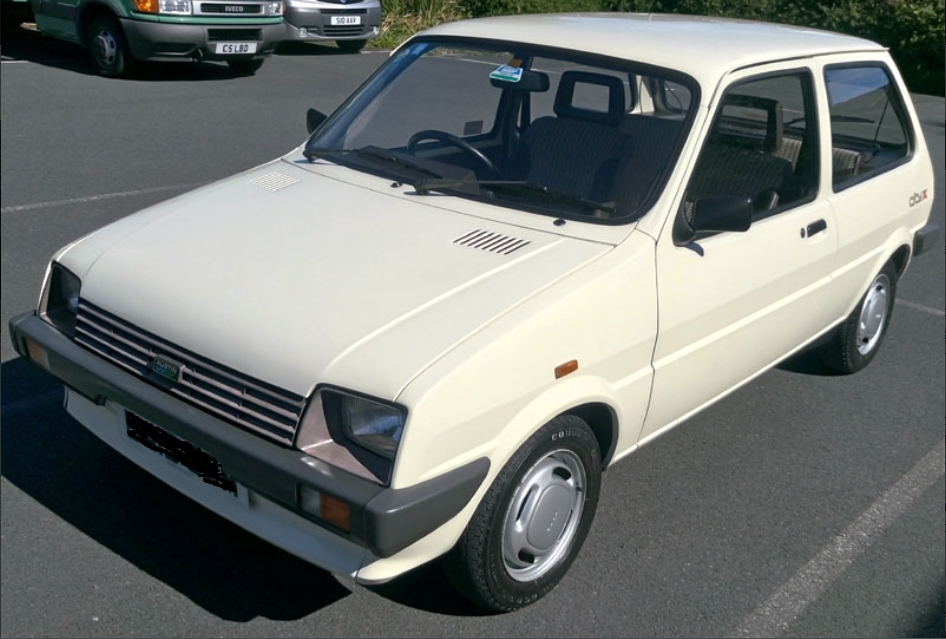
The first-generation Metro was a revelation. It offered hatchback practicality in a market still dominated by saloons, with a spacious interior thanks to its tall, boxy design.
- The Engines:
- 1.0L (998cc) A-Series: The entry-level workhorse, producing around 40 hp. It was carbureted and known for its frugality.
- 1.3L (1275cc) A-Series: Offered in two states of tune. The standard version produced 68 hp, while the high-compression “Sport” engine pushed out 71 hp.
- 1.3L Diesel (1983): A Perkins PRD diesel engine was added later, offering incredible fuel economy but sluggish performance.
- The Trim Levels:
- City: The absolute base model. Launched in 1982 to combat the recession, it featured rubber floor mats, no rear wash/wipe, and minimal chrome. It was cheap and cheerful.
- L: The “Luxury” model. This included a rear wash/wipe, heated rear window, and cloth seats. It was the family choice.
- HL: The top-of-the-range model initially, featuring vinyl roof trim (a 1980s design staple), spotlights, and upgraded interior trim.
- Sport: Introduced in 1981, this was the enthusiast’s choice. It featured the higher-output 1.3 engine, sports seats, a tachometer, and a distinctive stripe kit.
- The Van:
- A commercial variant, the Metro Van, was offered for business users, removing the rear seats to create a load bay. It was popular with tradesmen due to its low tax bracket.
Part II: The Rover Era and the GTi (1990–1998)
By the late 1980s, the original Metro was showing its age. British Leyland had been broken up, and the remnants were now the Rover Group (later acquired by BMW in 1994). A complete redesign was necessary.
Launched in 1990, the second-generation Metro was a heavily reworked car. While it looked entirely new, it still utilized the platform of the original, albeit with significant updates including a front subframe and improved crash protection. The car was now marketed as the Rover Metro, reflecting the brand’s shift upmarket.
The GTi Revolution (1990–1994)
The defining moment for the second generation was the introduction of the Rover Metro GTi in 1991. This car transformed the Metro from an economy runabout into a genuine “hot hatch” contender.
- The Engine: The GTi utilized the 16-valve K-Series engine (1389cc), producing 100 hp. This was a significant leap from the old A-Series, offering a 0-60 mph time of under 8 seconds.
- The Look: It featured flared wheel arches, 14-inch alloy wheels, and a distinctive “sport” interior with bolstered seats.
- The 1994 Facelift: In 1994, the Metro received a mild refresh. The Rover badge became larger, and the interior was updated with a new dashboard shared with the Rover 200 series. The GTi received a rear spoiler and updated bumpers.
Trim Levels (1990–1998):
- City: Still the budget option, but now with improved safety features.
- L: The standard model with cloth seats and basic amenities.
- SL: The “Super Luxury” trim. This featured velour seats, a sunroof, and body-colored bumpers.
- GTi: The performance flagship (100 hp 16v).
- GTa: An automatic version of the GTi, aimed at the urban market.
- Dipper: A utility version (similar to the original City) released in the mid-90s for fleet buyers.
The Diesel Evolution: The 1.4L L-Series diesel engine replaced the old Perkins unit. It was available in the 1.4 SLX and 1.4 Dipper. While not fast, it was incredibly torquey and reliable.
.
THIS might be a great place to get your new car from!
Or for those who are into the “car flipping” business, here’s an excellent resource for you!

.
Part III: The RSport and the End of the Line (1995–1998)
As the 1990s progressed, the Metro began to feel dated compared to newer superminis like the Ford Fiesta and Peugeot 206. However, it found a second wind in the form of motorsport.
The Rover 200 (Tomcat) Engine Swap: Enthusiasts and tuners began swapping the Metro’s engine for the 1.8L VVC (Variable Valve Control) engine found in the MGF and Rover 200 Tomcat. This resulted in the Metro 1.8i VVC, a limited-run special produced by RSport (Rover’s tuning division).
- RSport Metro 1.8i VVC: Producing 145 hp, this was the ultimate Metro. It featured a Getrag gearbox, limited-slip differential, and Recaro seats. It was a true giant-killer, capable of outperforming hot hatches like the VW Golf GTI of the era.
The Rover 100 (1994–1998): In late 1994, the Metro was renamed the Rover 100 (though the Metro name lingered on commercial models). The 100 series featured a revised front end with a larger grille and new headlights. It was offered in:
- 111 (1.1L)
- 114 (1.4L)
- 114 SLi
- 114 GSi
- 114 Diesel
Despite cosmetic updates, the car’s aging chassis could not hide its 1970s origins. Sales declined, and in 1998, production ceased. The Metro/100 line was replaced by the all-new, Honda-based Rover 25.
Part IV: The MG Rover Revival (2003–2005)
After BMW sold Rover Group in 2000, the new company, MG Rover, was left with aging platforms. To fill a gap in the market for an affordable performance car, they looked to the old Metro platform.
In 2003, MG Rover launched the MG ZR. While technically based on the Rover 25, it was a spiritual successor to the Metro GTi. It utilized the same chassis geometry as the 1990 Metro, updated with modern suspension tuning.
- The Engines:
- 1.4L (1396cc): 105 hp (Petrol)
- 1.6L (1588cc): 115 hp (Petrol)
- 1.8L (1796cc): 160 hp (Petrol) – The flagship VVC model.
- 2.0L (1998cc): 101 hp (LPG/Diesel variants)
- The Models:
- ZR 105: Entry-level sport.
- ZR 115: Mid-range.
- ZR 160: The top model, featuring the K-Series VVC engine, 18-inch wheels, and aggressive styling.
The MG ZR was essentially the final evolution of the Metro lineage. It retained the tall hatchback silhouette but with modernized bumpers, spoilers, and interior tech. It was a stop-gap car that kept the Metro’s DNA alive until MG Rover’s collapse in 2005.
Part V: The Chinese Connection (2011–Present)
The story does not end in 2005. The intellectual property and tooling for the Rover 25/MG ZR were sold to the Chinese company SAIC (Shanghai Automotive Industry Corporation).
In 2011, SAIC launched the MG 3 in China and later in the UK. While it looked like a completely new car, the MG 3 shared its rear suspension design (torsion beam) and overall footprint with the old Metro/25 platform. The 1.5L VTi-TECH engine was a modern evolution of the principles found in the old A-Series.
Today, the MG 3 continues the Metro’s legacy as a budget, fun-to-drive supermini, now with hybrid technology (2024 models), proving that the fundamental concept of the Metro—affordable, practical, and surprisingly engaging—remains viable.
Technical Legacy and Engineering
The Metro’s longevity was due to two key engineering decisions:
- The A-Series Engine: Originally designed in the 1950s, the A-Series was a masterpiece of simplicity. It was lightweight, robust, and incredibly tunable. The “Mini” engine architecture allowed the Metro to be punchy despite its weight.
- Hydragas Suspension: Later models (specifically the GTi and VVC) utilized Hydragas suspension units (borrowed from the MGF). This replaced the traditional springs and dampers with a fluid/gas system, providing a unique blend of ride comfort and handling that no modern car quite replicates.
Future Outlook and Cultural Impact
The Austin Metro holds a unique place in automotive culture. It was the car that introduced the supermini concept to the mass market in Britain. It bridged the gap between the utilitarian Mini and the modern hatchback.
Today, the Metro is a cult classic.
- The Classic Scene: Original 1980s Metros, particularly the 1.3 Sport and the rare Vanden Plas versions (which featured leather seats and walnut dashboards), are highly sought after by classic car enthusiasts. The “Metro 6R4” rally car, a mid-engined monster built for Group B rallying, adds a layer of motorsport prestige to the name.
- The Survivor Market: Many second-generation Rover Metros and MG ZRs are still on the road in the UK, serving as affordable classic cars for younger drivers.
Conclusion
The Austin Metro was born of necessity but lived on through adaptability. It evolved from a badge-engineered BL product into a Rover, then a performance MG, and finally a Chinese-built modern supermini.
While the badge “Austin Metro” disappeared in 1998, its spirit never truly died. It survived the collapse of British Leyland, the bankruptcy of MG Rover, and the shift to foreign ownership. For over 40 years, this humble supermini has provided cheap motoring, rally stage excitement, and a stepping stone for drivers entering the automotive world. The Metro proved that you don’t need luxury to have character, and in doing so, it secured its place in history as one of Britain’s most enduring automotive survivors.