Shelby (Dodge) Omni GLHS: America’s Unexpected Hot Hatch Legend
In the mid-1980s, performance legend Carroll Shelby—best known for Cobra, GT350 Mustang, and Shelby-modified Fords—turned his attention briefly to front-wheel-drive hatchbacks, creating one of the most surprising and collectible performance Compacts of the era: the Shelby Omni GLHS. Unlike broad, multi-year model lines with many trim levels, the GLHS story is brief, intense, and rooted in 1980s performance culture. Its evolution reflects a unique collaboration between Shelby American and Dodge, centering on the humble Dodge Omni platform and culminating in a limited-production hot hatch that genuinely “Goes Like Hell Some-More.”
The Origins: From Dodge Omni to Hot Hatch
To understand the GLHS, we must first consider its humble base. The Dodge Omni was introduced in the late 1970s as a simple, economical front-engine, front-wheel-drive hatchback designed to compete with small imports like the Volkswagen Rabbit and the European hot hatches that followed.
In the early 1980s, Chrysler decided to give the Omni a performance edge. Enter Shelby American, who had already worked with Chrysler on the Shelby Charger and was asked to help make a performance version of the Omni to appeal to enthusiasts and compete with cars like the Volkswagen GTI. The result was the Omni GLH—named “Goes Like Hell” — and it debuted for the 1984 model year with Shelby-tuned enhancements designed to improve handling, braking, and power over the base model.
1984–1986: The GLH and GLH Turbo Years
Although the GLHS is the headline act for Shelby’s work on the Omni, the GLH and GLH Turbo models set the stage.
- 1984 Dodge Omni GLH: Shelby’s first performance variant included suspension upgrades, fatter wheels and tires, firmer dampers, quicker steering, larger brakes, and a high-output version of the 2.2-liter four-cylinder engine—producing about 110 hp. This gave the little hatch surprising agility and performance for the era.
- 1985 Dodge Omni GLH & GLH Turbo: For 1985, Dodge added a turbocharged version of the 2.2-liter engine—Turbo I—producing around 146 hp and significantly sharper acceleration. The turbo model further reduced torque steer with equal-length drive shafts and cemented the GLH as a genuine competitor to hotter imports.
- 1986 Dodge Omni GLH & GLH Turbo: The GLH and GLH Turbo returned with only minor changes; 1986 marked the last year for these factory models before Shelby American would take the final turbo Omnis and convert them into GLHS models.
These GLH generations had no Shelby branding on the hood in 1984–86—they carried Dodge badges, with Shelby’s role sometimes behind the scenes or as a collaborator with Dodge.
.

.
1986: The One-Year Wonder — Shelby Omni GLHS
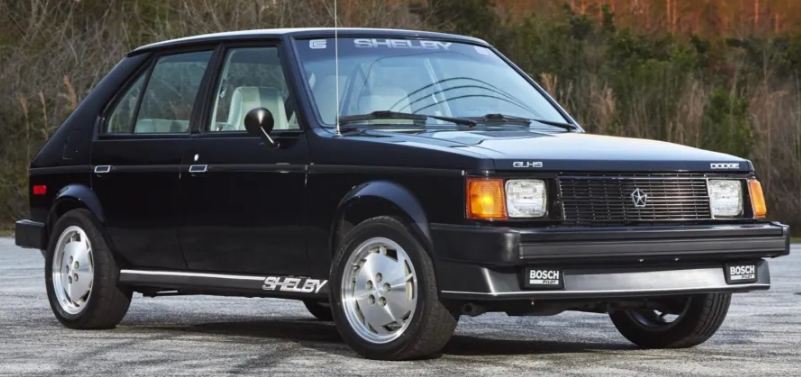
The Shelby Omni GLHS (commonly interpreted as “Goes Like Hell Some-More”) was not a factory Dodge model in the traditional sense, but rather a special, limited-production performance version created by Carroll Shelby’s company. In 1986, Shelby American bought 500 Dodge Omni GLH Turbo cars (all black) from Dodge and completed extensive modifications at its Whittier, California facility before resale through select Dodge dealerships.
Performance and Mechanical Enhancements
Under the Shelby banner, the GLHS received a host of mechanical and performance upgrades that significantly distinguished it from the standard GLH Turbo:
- Engine Upgrades: Shelby fitted a larger turbocharger, an air-to-air intercooler, larger fuel injectors, a Shelby-designed intake manifold, and a revised ECU to safely increase boost pressure from 9 psi to around 12 psi. This transformed the 2.2-liter turbo engine to about 175 hp and 175 lb-ft of torque, compared with approximately 146 hp stock.
- Transmission: A 5-speed manual gearbox was standard across Shelby GLHS models, enhancing driver engagement and control.
- Suspension & Chassis: Shelby installed Koni adjustable shocks and springs, improved wheel alignment with more negative front camber and rear toe-in, and kept performance anti-roll bars to sharpen handling.
- Wheels & Tires: Shelby Centurion 15 x 6-inch aluminum wheels were paired with wider 205/50VR-15 Goodyear Eagle Gatorback tires, improving grip and cornering confidence.
- Speedometer & Instrumentation: Because the stock Dodge speedometer was limited to 85 mph, Shelby added a vinyl decal that extended the gauge markings up to 130–135 mph—reflecting the car’s genuine high-speed capability.
- Interior Touches: Additional touches included a serialized dash plaque, MOMO shift knob, a leather-wrapped steering wheel, and optional roll-cage and oil cooler packages.
Performance Figures
With these enhancements, the GLHS could sprint from 0-60 mph in around 6.5 seconds, run the quarter-mile in the 14.8–14.9-second range, and reach a top speed of about 130 mph — remarkable figures for a small hatchback of the era.
Production and Rarity
Only 500 Shelby Omni GLHS cars were produced in 1986, making it a highly limited and collectible variant among the broader Dodge Omni family. Each was finished in black and came with a numbered Shelby dash plaque, reinforcing its special status.
Though advertised and sold through select Dodge dealerships, these cars were officially Shelby American vehicles due to the extent of the modifications. This distinction also contributes to the rarefied standing the GLHS holds among hot hatch and Shelby enthusiasts today.
Trim Levels? A Unique Case
When discussing “models and trim levels,” the Shelby Omni GLHS stands apart from typical automotive nomenclature:
- Unlike traditional model families (e.g., base, sport, premium), the GLHS was a single, limited variant built only in 1986. There were no multiple GLHS trims or optional packages beyond a roll-cage or oil cooler.
- Within the Omni platform, earlier GLH models in 1984–86 did have variants (naturally aspirated GLH vs. Turbo GLH), but Shelby’s GLHS was a distinct aftermarket model with no separate trim hierarchy.
Historical Significance
At a time when the American automotive industry was struggling with emissions standards, fuel economy concerns, and diminished performance offerings, the Shelby Omni GLHS stood out as a rare performance bright spot. Designed to take on European hot hatches like the Volkswagen GTI on price and performance, it offered genuine acceleration and handling without the premium price tag of many competitors.
Shelby’s involvement also lends the GLHS heritage credibility: Carroll Shelby had already cemented his performance legacy with muscle cars and sports cars. That he turned his attention to a turbocharged four-cylinder hot hatch illustrates both the flexibility of his tuning philosophy and the eclectic nature of 1980s tuning culture.
Collectibility and Market Presence Today
Today, the Shelby Omni GLHS is a sought-after collectible among enthusiasts of 1980s performance cars and hot hatches. While values remain modest compared to classic muscle cars or high-end European hot hatches, well-preserved examples have appreciated steadily due to their rarity and performance pedigree.
Compared to standard Dodge Omni GLH and GLH Turbo models—which were more common and affordable—the GLHS commands a premium thanks to its limited production, Shelby branding, and unique performance enhancements.
Future Outlook
Because the Shelby Omni GLHS was produced for a single model year and in a strictly limited number, there are no future factory versions or official continuations in the same lineage. The future of the GLHS is rooted in collector enthusiasm, preservation, and restomod culture:
- Collector Interest: Low production numbers and Shelby provenance ensure that the GLHS will continue to attract attention at vintage car shows and auctions.
- Restoration and Enthusiast Support: Communities focused on L-body vehicles, 1980s performance cars, and Shelby vehicles maintain interest in parts sourcing, maintenance guidance, and preservation.
- Cultural Legacy: The GLHS occupies a unique niche as one of the earliest, most genuine American hot hatches. Its bridging of Shelby performance heritage with front-wheel-drive economy car roots makes it historically intriguing and often celebrated as an offbeat flagship of 1980s automotive performance.
Conclusion
The Shelby Omni GLHS represents a fascinating footnote in automotive history: a performance hatchback that arose from a collaboration between Shelby American and Dodge in an era when neither was known for such machines. Born out of the Omni GLH Turbo platform, the GLHS elevated the little Dodge from budget econobox to true American hot hatch, with enhanced power, refined tuning, and performance upgrades that delivered genuine speed in a fun, agile package.
With only 500 units built, the GLHS didn’t need a long evolution or multiple trim levels to etch itself into enthusiast lore. Its brief, exciting existence — and its embodiment of Shelby’s performance ingenuity applied to an unexpected architecture — ensures that it remains a celebrated part of both Shelby’s legacy and 1980s automotive history.