Kia K9: Evolution of Kia’s Full‑Size Luxury Sedan
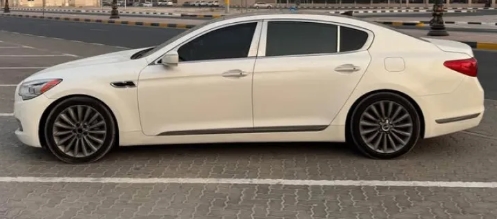
The Kia K9 — known for much of its life in export markets as the Kia K900 and in some regions as the Kia Quoris — represents the Korean automaker’s attempt to break into the full‑size luxury sedan segment dominated by European and Japanese premium brands. Launched in 2012, the K9 has evolved through generations and updates, blending luxury, technology, and luxury‑car gravitas with Kia’s own styling cues and market positioning. Over its lifespan, the K9 has been offered with a range of engines, trim levels, and luxury features, and it remains a key flagship for Kia even as market tastes shift toward SUVs and electrification.
Origins and Development (2012–2018)
The Kia K9 was first introduced in May 2012 in Kia’s home market of South Korea, positioning the company’s first true rear‑wheel‑drive flagship luxury sedan above the existing K7/Cadenza lineup. It was a statement that Kia was not just moving upmarket in terms of features and refinement but also competing head‑on with large executive sedans from established luxury brands.
Built on a platform closely related to that of the Hyundai Equus/Genesis and using a rear‑wheel‑drive layout, the K9 offered spacious proportions and full‑size comfort. The name K9 was used domestically, while overseas it appeared as the K900 in North America and other markets, and as the Quoris in select regions before Kia harmonized the name globally.
Powertrain and Baseline Equipment
The first‑generation K9/K900 was offered with a selection of petrol engines, all mated to an eight‑speed automatic transmission driving the rear wheels:
- 3.3 L V6 — an entry‑level engine providing balanced performance.
- 3.8 L V6 GDi — the most common engine worldwide, valued for its smoothness and power (~311 hp).
- 5.0 L V8 Tau GDi — the flagship powerplant (producing ~425 hp) offered on higher trims until it was discontinued later in the model’s life.
These engines underscored Kia’s ambition to compete with established competitors by offering both smooth displacement and strong performance figures.
.

.
Trim Levels and Features (2012–2018)
In its early years, particularly in export markets like the United States, the K900 was offered in tiered trim levels that added features incrementally as buyers moved up the range:
- Standard — the base configuration, which already came well equipped with leather seating, advanced infotainment, and key luxury features.
- Premium — added higher levels of comfort and convenience equipment, such as improved audio systems and driver‑assistance packages.
- Limited/Luxury — top‑tier trim with the most advanced technology, enhanced interior materials, panoramic sunroof, adaptive suspension, and other flagship‑class enhancements.
In many markets, including the U.S., buyers could also choose all‑wheel drive with certain engines, expanding the K9’s appeal as a year‑round luxury cruiser.
These trim distinctions helped the K900 offer a more affordable entry point than some European rivals while still providing many of the luxuries expected in this segment — but sales in markets like North America remained limited, leading to eventual withdrawal in 2021.
Second Generation (2018–Present)
In March 2018, Kia unveiled the second generation of its flagship sedan — still known as the K9 domestically and as the K900 in many export markets — at the New York International Auto Show. This generation represented a major redesign and refinement of the formula established by the first model.
Design and Luxury Focus
The second‑generation vehicle was longer and wider than its predecessor, contributing to a more commanding presence and improved interior space. The platform was developed to share some architecture with the Kia Stinger, but the K9’s luxury orientation remained clear through its exterior design, materials choice, and feature set.
Kia also introduced all‑wheel drive for the second generation, enhancing traction and refinement for buyers in regions with diverse weather conditions.
Engine and Drivetrain Options
The second generation continued to offer powerful engine options, though the V8 was eventually dropped after 2021:
- 3.3 L turbocharged Lambda II V6 — producing around 370 hp.
- 3.8 L naturally aspirated Lambda II V6 — producing around 315 hp.
- The 5.0 L V8 was available earlier in the generation but discontinued after the 2021 updates.
All engines were paired with an eight‑speed automatic transmission, and buyers could choose rear‑wheel drive or all‑wheel drive depending on trim and market.
Facelifts and Updates
The second generation has been refined several times:
- 2021 Mid‑Cycle Refresh: Kia significantly revised styling front and rear, expanded interior technology (including larger displays and driver assistance features), and updated chassis tuning, particularly in markets where the model remained competitive.
- 2025 Update: A subtler facelift introduced a redesigned front grille with horizontal slats, new alloy wheel designs, interior theme options like Martian Brown and Misty Gray, along with added convenience features such as “After Blow” air‑conditioning duct drying technology to prevent odors and USB‑C ports throughout the cabin.
These updates illustrate Kia’s ongoing effort to keep the K9 technologically and aesthetically competitive among full‑size luxury sedans, particularly in markets where the sedan still commands attention.
Trim Levels and Equipment (2018–Present)
In the second generation and its updates, Kia simplified trim hierarchies, especially where the vehicle was offered primarily as a flagship luxury model without strong competition from within its own lineup:
- Platinum: Base trim with a highly‑equipped standard feature set.
- Best Selection / Best Selection II: Higher trims offering the most comprehensive luxury features, including more advanced seating options (such as Ergo‑Motion seats on higher lines), premium audio, enhanced safety systems, and available all‑wheel drive.
Trim distinctions are often tied directly to engine choice and drivetrain configuration, with turbocharged models typically reserved for higher trims and premium equipment groupings.
Market Reception and Challenges
Despite Kia’s investments in product quality and features, the K900 struggled in the North American market. Sales were modest, with several hundred copies sold annually before Kia discontinued the model there in 2021 due to weak demand and limited dealer network support.
This trend reflects broader market shifts: full‑size sedans have been losing ground to SUVs and crossovers globally, especially in North America. Even well‑equipped luxury sedans have seen declining sales, putting pressure on manufacturers to pivot their strategies or exit the segment.
However, the K9 continues to be offered in other markets — notably South Korea, parts of the Middle East, and select Asian countries — where demand for traditional luxury sedans persists. Kia’s ongoing updates suggest the automaker still sees value in maintaining a flagship offering, particularly if it can attract buyers seeking luxury and technology at a relatively competitive price point compared to European rivals.
Legacy and Future Outlook
The Kia K9/K900 stands as a landmark in Kia’s model history: the first full‑size luxury sedan designed and marketed to rival premium European, Japanese, and American offerings. It showcased Kia’s ability to combine strong value with advanced features, luxurious appointments, and powerful performance inspired by its parent Hyundai Group’s engineering collaborations.
Looking ahead, the traditional full‑size sedan segment faces continued challenges from SUV preference and the global shift toward electrification. Kia’s broader electrification strategy — exemplified by models like the EV6 and newer EV flagships — suggests that future large luxury sedans may include battery‑electric or hybrid powertrains as buyers increasingly prioritize sustainability alongside luxury. Should Kia choose to evolve the K9, electrification would almost certainly play a central role.
From its 2012 debut as Kia’s flagship full‑size luxury sedan through multiple updates and a generational redesign in 2018, the Kia K9/K900 has represented ambitious engineering and premium aspirations for the Korean automaker. Offered with varied engines, luxury trims, and features that grew increasingly sophisticated over time, the K9 remains a respected — if niche — competitor in a shrinking segment. Its continued refinement and regional persistence underscore Kia’s commitment to luxury and the possibility of future electrified iterations as the automotive world shifts toward new technologies and consumer preferences.