The Evolution of the Mosler Consulier GTP: America’s Radical Lightweight Sports Car
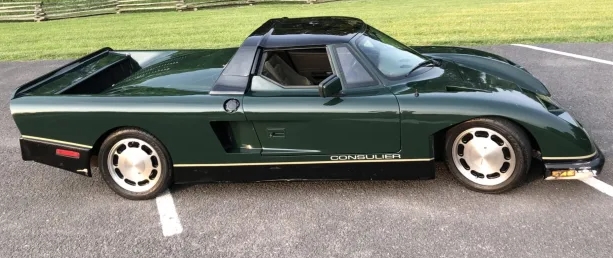
The Consulier GTP, often referred to as the Mosler Consulier, was one of the most unconventional American sports cars ever produced. Built between 1988 and 1993 by Consulier Industries, the vehicle was the brainchild of entrepreneur Warren Mosler. It introduced several groundbreaking engineering concepts, including a fully composite chassis and body structure with no structural metal—an extremely rare approach for a road-legal production car at the time.
Although its styling and unconventional engineering divided opinions, the Consulier GTP earned a reputation as a lightweight performance machine capable of competing with far more established sports cars. The platform would later evolve into the Mosler Intruder and Mosler Raptor, eventually leading to the development of the Mosler MT900 supercar in 2001.
This article explores the evolution of the Mosler Consulier, including its history, models, trim levels, racing achievements, and lasting legacy.
Origins of the Consulier GTP
Development of the Consulier began in 1985, when Warren Mosler set out to build a lightweight sports car that emphasized efficiency, strength, and track performance rather than luxury or styling.
Mosler’s goal was to create a car with exceptional power-to-weight performance. The final result was a mid-engine sports car weighing about 2,200 pounds, significantly lighter than most performance cars of the late 1980s.
The chassis and body were particularly innovative. The car used a fiberglass, Kevlar, and carbon-fiber composite monocoque, making it one of the first production cars to feature a fully composite structure without structural metal.
Mechanically, the Consulier relied heavily on parts from Chrysler vehicles, including its turbocharged engine and many interior components.
Despite its unconventional appearance, the car delivered strong performance thanks to its lightweight design.
.
THIS is GOOD stuff if your car is in need:

.
Production Overview (1988–1993)
The Consulier GTP entered limited production in 1988 and remained in production until 1993.
Key specifications included:
- Layout: Rear mid-engine, rear-wheel drive
- Body styles: 2-door coupe and targa
- Engine: Chrysler 2.2-liter turbocharged inline-four
- Transmission: 5-speed manual (Getrag)
- Weight: roughly 2,200 pounds
Performance figures for later versions included:
- 0–60 mph: about 5 seconds
- Top speed: about 155 mph.
These numbers were impressive for a small manufacturer using a relatively modest engine.
Consulier GTP Models and Trim Levels
Throughout its production run, the Consulier GTP was offered in several versions and configurations.
1. Consulier GTP Series I (1988–1990)
The Series I models were the first production versions of the Consulier GTP.
Production Years
1988–1990
Engine
- 2.2-liter Chrysler Turbo II inline-four
- approximately 175 horsepower.
Performance
Thanks to its extremely low weight, the car delivered strong acceleration and track performance.
Trim Levels
Two primary trim levels were available:
GTP Sport
The Sport served as the base model.
Key features included:
- lightweight interior
- basic instrumentation
- manual controls
- performance-focused configuration
This model was designed primarily for drivers interested in track performance rather than luxury.
GTP LX
The LX was the more luxurious version.
Available equipment included:
- Recaro bucket seats
- leather upholstery
- Alpine sound system
- wool carpeting
- power windows and mirrors
- cruise control
- air conditioning
- tilt steering wheel.
Optional features included a security system and even a car phone, which was considered a high-end feature in the late 1980s.
2. Consulier GTP Series II (1990–1993)
The Series II represented an updated version of the Consulier GTP with improved performance.
Production Years
1990–1993
Engine
Series II models used the improved Chrysler Turbo III engine, producing approximately 190 horsepower.
Improvements
The Series II featured:
- refined styling updates
- engine improvements
- better performance and reliability
With the upgraded engine, the Series II could reach a top speed of around 155 mph, while maintaining the car’s lightweight design.
Like the Series I, it was available in both Sport and LX trims.
Body Style Variants
While the coupe was the most common version, the Consulier GTP was also produced in other body styles.
Coupe
The standard fixed-roof model.
Targa
A removable roof panel version that allowed open-air driving.
Roadster
A very small number of roadsters were built with no fixed roof structure.
These variations were produced in extremely limited numbers.
Racing Success
Despite its small production numbers, the Consulier GTP achieved impressive success in motorsports.
The car competed in IMSA and SCCA racing series throughout the late 1980s and early 1990s.
One of its most notable achievements occurred at the Nelson Ledges 24-hour endurance race, where the Consulier won multiple consecutive victories.
The car’s dominance became so overwhelming that racing organizers eventually imposed a 300-pound weight penalty, and later banned the car entirely from the competition.
This unusual outcome demonstrated just how competitive the lightweight Consulier platform had become.
Production Numbers and Rarity
Production of the Consulier GTP remained extremely limited throughout its lifespan.
Estimates suggest that between 60 and 100 cars were produced between 1988 and 1993.
Some estimates place production closer to 83 vehicles, including both road cars and race cars.
Because of these low numbers, surviving examples are extremely rare today.
Transition to Mosler Automotive
In 1993, Consulier Industries reorganized its automotive division into Mosler Automotive.
Under the new company name, the GTP platform continued to evolve into more powerful vehicles.
Mosler Intruder (1993–1997)
The first successor was the Mosler Intruder, which replaced the Chrysler turbo engine with a 5.7-liter Chevrolet LT1 V8.
This significantly increased performance and helped move the car closer to supercar territory.
Mosler Raptor (1997–2000)
The final evolution of the platform was the Mosler Raptor, which featured:
- a Lingenfelter-modified 383 cubic-inch V8
- around 446 horsepower
- a Porsche 911 Turbo transaxle.
These later versions retained the basic lightweight architecture first developed for the Consulier.
Engineering Philosophy
The Consulier GTP was built around several key design principles.
Lightweight Construction
At just over 2,000 pounds, the car prioritized weight reduction over engine size.
Composite Materials
Its composite structure made it one of the earliest production vehicles to use advanced materials such as carbon fiber and Kevlar in a road car chassis.
Mid-Engine Layout
The rear mid-engine configuration provided balanced weight distribution and strong handling characteristics.
Reception and Criticism
The Consulier GTP received mixed reactions when it debuted.
Positive Reception
Enthusiasts and engineers praised the car for:
- innovative engineering
- impressive power-to-weight ratio
- strong racing performance
Criticism
However, critics frequently pointed out:
- unusual styling
- limited brand recognition
- modest horsepower compared to exotic cars
Despite these criticisms, the car developed a loyal following among enthusiasts who appreciated its engineering philosophy.
Legacy of the Consulier
Although it was produced in tiny numbers, the Consulier GTP had a lasting impact on boutique American sports car development.
Its most important contributions include:
- pioneering composite chassis technology
- demonstrating the advantages of lightweight performance
- establishing the foundation for Mosler’s later supercars
The platform eventually led to the Mosler MT900, which became one of the most successful American boutique supercars of the early 2000s.
Future Outlook and Collectibility
Today, the Consulier GTP is considered a rare and historically significant American performance car.
Because fewer than 100 were produced, surviving examples have become collectible among enthusiasts interested in unusual and innovative sports cars.
Although Mosler Automotive ceased operations in 2011, the legacy of the Consulier platform continues through collectors, racing historians, and enthusiasts who appreciate its unique place in automotive history.
The Mosler Consulier GTP was one of the most unconventional and innovative sports cars ever produced in the United States. Built between 1988 and 1993, it introduced advanced composite construction, lightweight engineering, and a racing-focused design philosophy that set it apart from traditional performance cars.
Through models such as the Sport, LX, and later Series II updates, the Consulier evolved into a capable and competitive performance machine. Its success in endurance racing demonstrated the effectiveness of its lightweight design.
More importantly, the Consulier laid the foundation for the future of Mosler Automotive, leading directly to the development of the Intruder, Raptor, and ultimately the MT900 supercar.
Today, the Consulier GTP remains a fascinating chapter in American automotive history—an experimental sports car that proved innovation and engineering creativity could rival the world’s largest manufacturers.