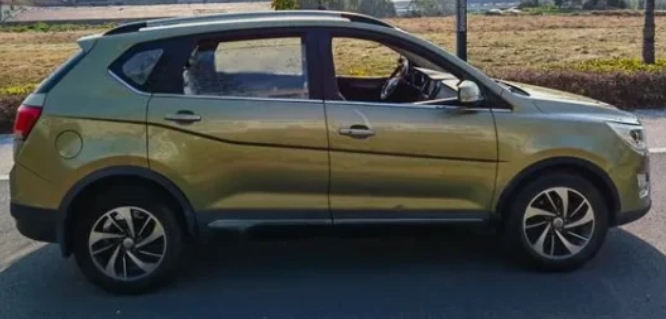
The Evolution of the Baojun 560: SAIC-GM-Wuling’s Breakthrough Compact SUV
The Baojun 560 was one of the most important vehicles produced by SAIC-GM-Wuling under its Baojun brand. Introduced in 2015, it marked the company’s entry into the booming compact crossover SUV segment in China. Though its production run lasted only a few years, the 560 played a pivotal role in establishing Baojun as a major player in the SUV market and laid the groundwork for later models.
This article explores the evolution of the Baojun 560, including its development, production years, trim levels, variants, and lasting impact.
Origins and Background (2010–2015)
The Baojun brand itself was established in 2010 as a joint venture between SAIC Motor, General Motors, and Wuling Motors. Its purpose was to create affordable vehicles tailored to domestic Chinese consumers.
By the mid-2010s, demand for SUVs in China had surged dramatically. Baojun responded by developing its first SUV, the 560, which debuted at the 2015 Shanghai Auto Show.
The 560 was designed to be:
- Affordable yet spacious
- Practical for families and small businesses
- Competitive with domestic rivals like Haval and Geely
First and Only Generation (2015–2018)
Overview
- Production years: 2015–2018
- Assembly: Liuzhou, Guangxi, China
- Class: Compact crossover SUV
- Body style: 5-door SUV
- Layout: Front-engine, front-wheel drive
Unlike many long-running models, the Baojun 560 remained a single-generation vehicle throughout its lifecycle. However, it underwent continuous updates and improvements.
.

.
Launch and Initial Model Year (2015–2016)
The Baojun 560 officially launched in July 2015.
Design and Features
At launch, the 560 featured:
- A “trendy, grand, and strong” exterior design
- A large 2,750 mm wheelbase for increased interior space
- Foldable rear seats (60/40 split)
- An 8-inch touchscreen infotainment system
- Push-button start and cruise control
Its spacious cabin and modern features made it highly competitive in its price range.
Powertrain (2015–2016)
The initial engine offering included:
- 1.8L naturally aspirated inline-4 engine
- Output: approximately 137 horsepower
- Transmission options:
- 5-speed manual
- 6-speed manual
- 5-speed automated manual
This setup emphasized reliability and affordability rather than performance.
Trim Levels (2015–2016)
The early Baojun 560 lineup featured several trims, typically structured as:
- Base / Standard trim:
- Manual transmission
- Basic infotainment and interior materials
- Comfort trim:
- Additional convenience features
- Improved seating materials
- Luxury trim:
- Larger infotainment system
- Alloy wheels
- Enhanced interior finishes
Though exact naming varied, the trim hierarchy followed a clear progression from basic to well-equipped models.
Rapid Market Success (2016)
The Baojun 560 quickly became a sales success:
- One of the best-selling SUVs in China in 2016
- Third-best-selling SUV that year, behind major competitors
Its combination of price, space, and features made it particularly appealing to:
- First-time SUV buyers
- Families in smaller cities
- Fleet and commercial users
Mid-Cycle Updates and Expansion (2017)
The most significant evolution of the Baojun 560 occurred in 2017, when the model received major mechanical and structural upgrades.
Introduction of Turbocharged Engine
A new engine option was added:
- 1.5L turbocharged inline-4 engine
- Output: approximately 150 horsepower
- Paired with a 6-speed dual-clutch transmission (DCT)
This upgrade significantly improved:
- Acceleration
- Fuel efficiency
- Overall driving performance
New Transmission Options
By 2017, the 560 offered a wide range of transmissions:
- 5-speed manual
- 6-speed manual
- 5-speed automated manual
- 6-speed dual-clutch (new)
This variety allowed buyers to choose based on cost, convenience, and driving preference.
Seven-Seat Variant
A major addition in 2017 was the introduction of a 7-seat configuration:
- Seating layout: 2+3+2
- Foldable second and third rows
- Increased versatility for families
This made the 560 more competitive against larger SUVs and MPVs.
Interior and Feature Updates
The 2017 update also included:
- Refined interior materials
- Updated infotainment system
- Improved climate control
- More premium cabin finishes
Trim Levels (2017–2018)
With the addition of new engines and features, trim levels expanded:
- 1.8L Base trims:
- Manual transmission
- Entry-level features
- 1.8L Mid-range trims:
- Improved interior and infotainment
- 1.5T Turbo trims:
- Dual-clutch transmission
- Enhanced performance
- High-end trims (Luxury / Premium):
- Full feature set
- Advanced infotainment
- Premium materials
These trims allowed the 560 to compete across multiple price points.
Design Philosophy and Practicality
The Baojun 560 was designed with practicality in mind:
- Long wheelbase for maximum interior space
- Comfortable ride tuned with a Lotus-derived chassis
- Flexible seating configurations
- Emphasis on family and utility use
Its design prioritized usability over sportiness, aligning with its target market.
Safety and Engineering
The 560 incorporated several safety features:
- Electronic stability control (ESC)
- Tire pressure monitoring system (TPMS)
- Rearview camera and parking sensors
- Up to four airbags
It was also designed to meet C-NCAP five-star safety standards, highlighting its focus on structural integrity.
Discontinuation (2018)
Production of the Baojun 560 ended in 2018.
Reason for Discontinuation
Several factors contributed:
- Rapid evolution of the SUV market
- Introduction of newer Baojun models
- Need for more modern platforms and technology
Successor
The 560 was replaced by the Baojun 530, which offered:
- Updated styling
- More advanced technology
- Improved global market compatibility
Complete Timeline Overview
- 2015: Baojun 560 launched
- 2016: Becomes one of China’s best-selling SUVs
- 2017: Major update (turbo engine, DCT, 7-seat version)
- 2018: Discontinued and replaced by Baojun 530
Strengths and Weaknesses
Strengths
- Affordable pricing
- Spacious interior
- Flexible seating options
- Strong sales performance
Weaknesses
- Limited global availability
- Modest base engine performance
- Short production lifespan
Market Impact
The Baojun 560 played a crucial role in Baojun’s growth:
- Helped establish Baojun in the SUV segment
- Achieved over one million units sold within a short time
- Set sales records for new vehicle launches in China
Its success paved the way for future models like:
- Baojun 510
- Baojun 530
Design Legacy and Influence
The 560 influenced later Baojun vehicles through:
- Emphasis on interior space
- Value-oriented feature packaging
- Modular platform development
It also demonstrated the importance of:
- Rapid product updates
- Competitive pricing
- Meeting evolving consumer demands
Future Outlook
Although the Baojun 560 itself is no longer in production, its legacy continues.
Successor Models
The Baojun 530 and newer SUVs build on the 560’s foundation, offering:
- More advanced safety features
- Improved infotainment systems
- Global market expansion
Electrification and Innovation
Future Baojun vehicles are increasingly focused on:
- Electric vehicles (EVs)
- Hybrid systems
- Smart connectivity features
Market Position
The Baojun brand continues to target:
- Entry-level buyers
- Budget-conscious families
- Emerging markets
The Baojun 560 may have had a relatively short production run from 2015 to 2018, but its impact on the Chinese automotive market was significant. As Baojun’s first SUV, it successfully entered a highly competitive segment and quickly became one of the best-selling models in the country.
Through continuous updates—including new engines, transmissions, and seating configurations—the 560 demonstrated Baojun’s ability to adapt to market demands. Its success not only strengthened the brand but also laid the groundwork for future models.
Today, the Baojun 560 is remembered as a milestone vehicle—one that helped define the modern era of affordable compact SUVs in China.