A Case of Mistaken Identity: The Brief Story of the Chevrolet City Express
In the sprawling and fiercely competitive world of commercial vehicles, legacy and brand identity are paramount. For decades, when American businesses needed a work van, the conversation often started and ended with names like the Ford E-Series or Chevrolet’s own venerable Express. These were large, rugged, body-on-frame behemoths, powered by thirsty V8 engines, designed for heavy-duty work. However, by the early 2010s, a new paradigm was emerging. Spurred by volatile fuel prices and increasing urban congestion, a market for smaller, more efficient, and city-friendly cargo vans—a segment long popular in Europe—was gaining significant traction in North America.
Ford was the first to capitalize on this shift with its hugely successful Transit Connect. Ram followed suit with the Fiat-derived ProMaster City. General Motors, watching from the sidelines, realized it had a significant hole in its commercial portfolio. Its full-size Express van was too large and inefficient for plumbers, florists, and delivery services operating in tight urban cores. GM needed a solution, and it needed one fast. The answer wasn’t a ground-up new design, but a pragmatic and common industry practice: badge-engineering. This decision led to the creation of one of the most short-lived and often-overlooked vehicles in Chevrolet’s modern history: the Chevrolet City Express.
The Genesis: A Partnership of Convenience
Developing a new vehicle platform from scratch is an extraordinarily expensive and time-consuming process, often taking years and costing billions of dollars. For a niche market like compact cargo vans, the return on such a massive investment was uncertain. Instead of reinventing the wheel, General Motors turned to a competitor with a ready-made solution: Nissan.
Nissan had already introduced its NV200 compact cargo van to the global market, and it was a well-regarded, purpose-built vehicle. It was the right size, offered a fuel-efficient powertrain, and had proven its reliability. In a strategic partnership announced in 2013, GM struck a deal to purchase NV200 vans directly from Nissan’s assembly plant in Cuernavaca, Mexico, perform some minor cosmetic surgery, and sell them through its extensive Chevrolet dealership network as the “City Express.”
This arrangement was a win-win, in theory. GM could instantly enter a growing market segment with a proven product, bypassing all research and development costs. Nissan, in turn, could increase its production volume and revenue without any additional marketing or sales effort. The Chevrolet City Express officially launched for the 2015 model year, ready to compete for the business of America’s urban workforce.
.
NO MORE dead batteries with this:

.
Under the Skin: The Nuts and Bolts
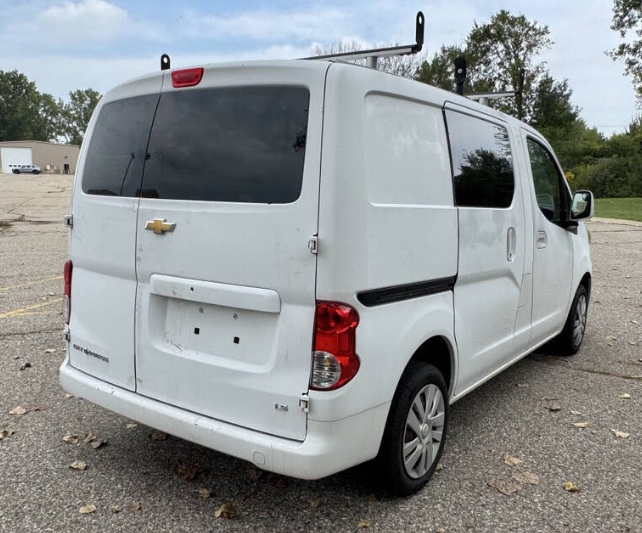
The Chevrolet City Express was, for all intents and purposes, a Nissan NV200 wearing a Chevrolet Bowtie. The changes made by Chevrolet were purely superficial, limited to:
- A new front grille: The signature Chevrolet dual-port grille with a gold Bowtie emblem was grafted onto the front fascia.
- Badging: Chevrolet logos replaced Nissan emblems on the steering wheel, wheel covers, and rear doors.
- Warranty and Service: It was backed by Chevrolet’s commercial warranty and could be serviced at any Chevrolet dealership.
Beyond these cosmetic touches, the vehicle was mechanically and structurally identical to its Japanese counterpart.
Years Produced: The Chevrolet City Express was sold in the United States and Canada for four model years, from 2015 to 2018.
Powertrain and Performance: Every City Express was powered by the same engine and transmission combination. The heart of the van was Nissan’s MR20DE, a 2.0-liter DOHC 16-valve inline four-cylinder engine. It produced a modest 131 horsepower and 139 lb-ft of torque. This engine was mated exclusively to an Xtronic Continuously Variable Transmission (CVT).
This powertrain was never intended for high-performance applications. Its a-arm was efficiency and low-speed maneuverability. The CVT provided smooth, shiftless acceleration, which was ideal for stop-and-go city traffic, and it helped the City Express achieve a respectable EPA-estimated fuel economy of around 24 MPG in the city and 26 MPG on the highway. Power was sent to the front wheels, another feature that distinguished it from traditional, rear-wheel-drive American vans and contributed to its stable handling and low, flat cargo floor.
Chassis and Cargo Capability: The City Express was built on a unibody platform, which provided a more car-like ride and handling experience compared to the body-on-frame construction of its larger stablemate, the full-size Express. Its compact dimensions were its greatest asset. With a tight 36.7-foot turning circle, it could navigate narrow alleys and crowded parking lots with ease.
The cargo area was cleverly designed for maximum utility. It offered 122.7 cubic feet of cargo space, a figure competitive with its rivals. Access was provided by dual sliding side doors and 40/60 split rear cargo doors that could open to 90- and 180-degree positions, allowing for easy forklift access. The interior was a blank canvas for commercial upfitters, featuring a flat load floor, six floor-mounted D-rings, and multiple reinforced mounting points along the interior walls for installing shelves, racks, and bins. The payload capacity was rated at 1,500 pounds.
Models and Trim Levels: A Study in Simplicity
Reflecting its purpose as a no-nonsense work vehicle, the Chevrolet City Express was offered in just two straightforward trim levels: LS and LT.
1. Chevrolet City Express LS: The LS was the base model, aimed squarely at fleet buyers and business owners who prioritized cost and function above all else. Its standard features were spartan but practical:
- 15-inch steel wheels with wheel covers.
- Gray cloth seats with vinyl wear patches on the bolsters for durability.
- Power windows and door locks.
- A simple two-speaker AM/FM/CD audio system with an auxiliary input.
- Air conditioning.
- A fold-flat front passenger seat that could double as a work surface or allow for hauling longer items.
- Six standard airbags and stability control.
The LS was the quintessential work van: simple, durable, and devoid of frills.
2. Chevrolet City Express LT: The LT trim added a handful of creature comforts and technological upgrades for owner-operators or businesses wanting a slightly more comfortable mobile office. Building upon the LS features, the LT included:
- Power-adjustable and heated side mirrors.
- Cruise control.
- Bluetooth connectivity for hands-free phone calls.
- A single 12-volt power outlet in the rear.
- Remote keyless entry.
- Steering wheel-mounted audio controls.
Even in its top trim, the City Express was far from luxurious. However, the LT model offered an optional Technology Package, which was the only significant option bundle available. This package included:
- A 5.8-inch touchscreen infotainment system with navigation.
- A USB port.
- SiriusXM Satellite Radio.
- A rearview camera system, a crucial safety feature for a windowless cargo van.
Buyers could also add rear door windows, glass in the sliding side doors, and a few other minor dealer-installed accessories, but the product lineup remained remarkably simple throughout its four-year run.
The Market Reality and Eventual Demise
Despite being a competent and practical vehicle, the Chevrolet City Express was a sales disappointment. From its inception, it struggled to gain a foothold in a market dominated by the Ford Transit Connect. Several factors contributed to its failure.
- Lack of Differentiation: The City Express offered no compelling reason for a customer to choose it over the nearly identical Nissan NV200. With the same powertrain, interior, and capability, the decision often came down to dealer proximity or minor price differences.
- Tough Competition: The Ford Transit Connect, the segment leader, offered far more variety. It was available in two different wheelbase lengths, with different roof heights, and as a passenger wagon (“Wagon” model), making it more versatile. The Ram ProMaster City, meanwhile, boasted a more powerful engine (178 hp) and a conventional nine-speed automatic transmission, which appealed to buyers wary of CVTs.
- Brand Disconnect: For loyal Chevrolet fleet customers accustomed to the V8 power and body-on-frame toughness of the full-size Express, the small, CVT-equipped City Express felt like an outsider. It didn’t fit the traditional “Chevy tough” image, and many commercial buyers simply stuck with what they knew.
Sales figures told the story. In its best year, Chevrolet sold just over 10,000 City Express vans in the U.S. In the same period, Ford was consistently selling over 40,000 Transit Connects. The van was simply lost in the shuffle. Recognizing the low sales volume and its inability to make a significant dent in the market, General Motors officially discontinued the Chevrolet City Express after the 2018 model year. The partnership with Nissan quietly concluded, and GM once again exited the compact cargo van segment.
Legacy and Future Outlook
The Chevrolet City Express remains a curious footnote in the brand’s history. It is a prime example of badge-engineering as a low-risk market entry strategy, but also a cautionary tale about the importance of brand identity and product differentiation. The van itself was not a bad vehicle; the Nissan NV200 on which it was based was a successful global platform (famously serving as New York City’s “Taxi of Tomorrow”). However, the Chevrolet version failed to build its own identity or resonate with its target audience.
Today, used City Express vans can represent a good value for small businesses looking for a reliable, efficient work vehicle. They benefit from the same durability as the NV200 but can sometimes be found at a slightly lower price point on the second-hand market due to their lesser-known status.
As for the future, Chevrolet has shown no intention of re-entering the compact cargo van space. The market for these small vans has itself softened in North America, with both Ford and Ram discontinuing their offerings in the early 2020s. Instead, GM’s commercial focus has shifted in two directions: maintaining its dominance in the full-size van and truck market, and looking toward an all-electric future with its BrightDrop commercial EV division. The brief, quiet, and ultimately unremarkable journey of the Chevrolet City Express serves as a reminder that even for an automotive giant, sometimes the most convenient path is not the most successful one. It pulled up to the job site, did its work for four years, and then drove off into the annals of automotive history, a Bowtie-badged echo in a market it could never quite conquer.