A Comprehensive History of The SEAT Ibiza
The SEAT Ibiza is one of the most important and best-selling vehicles in the history of the Spanish car manufacturer SEAT. Since its launch in 1984, the Ibiza has served as a cornerstone for the brand, helping to define SEAT’s identity in the compact car segment. Over the decades, the Ibiza has evolved through multiple generations, adapting to changing market demands, safety standards, and technological advancements.
This article examines the SEAT Ibiza’s history, production timeline, generations, models, trim levels, and its outlook for the future.
Origins and Early History
In the early 1980s, SEAT was looking to establish itself as a more independent automaker. Prior to this, SEAT had produced a range of vehicles under license from Fiat. The Ibiza project was significant because it marked one of the company’s first major steps towards developing its own designs.
The first-generation SEAT Ibiza debuted at the 1984 Paris Motor Show. The car’s styling was penned by renowned Italian designer Giorgetto Giugiaro, with input from Karmann on bodywork and Porsche on engine development. This international collaboration gave the Ibiza an appealing combination of style, engineering credibility, and affordability.
.
THIS could come in handy for your auto garage (and everywhere else!):

.
Generations of the SEAT Ibiza
First Generation (1984–1993)
- Years produced: 1984–1993
- Platform: SEAT’s own platform, derived in part from Fiat technology.
- Notable features:
- Distinctive hatchback styling by Giugiaro.
- Engines developed with Porsche Engineering, marketed with the “System Porsche” branding.
- Offered in three- and five-door hatchback forms.
Trim Levels and Models:
The first Ibiza came with a variety of trims depending on market and year, often including:
- Base/Standard – Minimal equipment
- L / GL / GLX – Increasingly better-equipped trims
- SX / SXi – Sportier variants with upgraded engines
- Special editions – Market-specific limited runs
The first-generation Ibiza was a success for SEAT, selling over 1.3 million units worldwide.
Second Generation (1993–2002)
- Years produced: 1993–2002
- Platform: Volkswagen Group A03 platform (shared with the VW Polo and Skoda Felicia). This was the first Ibiza developed under Volkswagen Group ownership, as SEAT had become part of the VW Group in 1990.
- Design: Again styled by Giugiaro but with more modern lines.
- Variants: 3-door and 5-door hatchbacks, plus a sedan version called the SEAT Córdoba.
Trim Levels and Models:
- Base / S / SE – Entry-level to mid-range trims
- SX / GT / GTi – Sport versions, with GTi models offering more performance
- Cupra (Cup Racing) – High-performance variant introduced in the late 1990s, fitted with more powerful petrol engines and sport-tuned suspension
- Special Editions – Such as the “Chill” and “Signa” trims in some markets
The second-generation Ibiza solidified SEAT’s reputation for building affordable, fun-to-drive small hatchbacks.
Third Generation (2002–2008)
- Years produced: 2002–2008
- Platform: Volkswagen Group PQ24 platform (shared with VW Polo Mk4, Skoda Fabia Mk1).
- Design: Penned by Walter de’ Silva, SEAT’s design chief at the time, giving the Ibiza a sharper, sportier appearance.
- Technological improvements: Better safety features, improved build quality, and more refined interiors.
Trim Levels and Models:
- Reference – Entry-level trim
- Stylance – Comfort-oriented with more features
- Sport – With sportier suspension and styling
- FR (Formula Racing) – Performance-oriented, sitting below the Cupra
- Cupra – Top performance model with turbocharged petrol or diesel engines
- Special Editions – Market-specific versions like “Signo” and “Chill”
The third generation was praised for its handling and sporty character, especially in FR and Cupra forms.
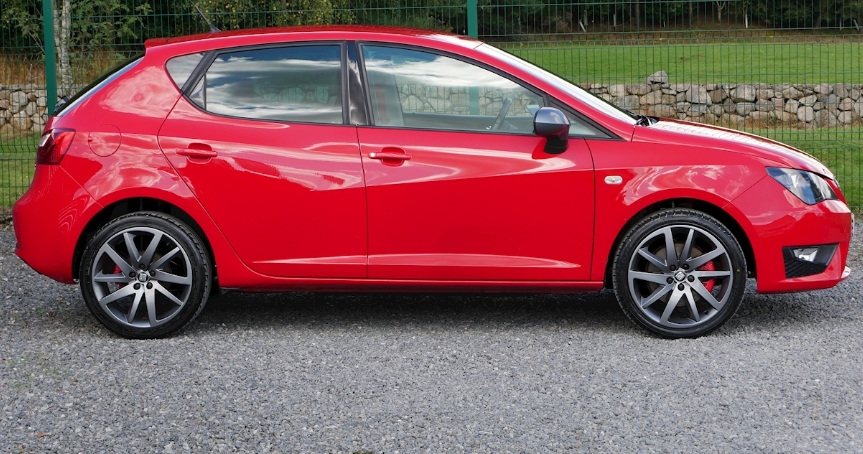
Fourth Generation (2008–2017)
- Years produced: 2008–2017 (facelift in 2012)
- Platform: Volkswagen Group PQ25 platform (shared with VW Polo Mk5, Audi A1).
- Design: Created under the “Arrow Design” language by Luc Donckerwolke, giving the Ibiza a distinctive, dynamic look.
- Variants: 3-door (SC), 5-door hatchback, and ST (station wagon) models.
Trim Levels and Models:
Over its long production run, the fourth-gen Ibiza had varying trims depending on model year and market. Common trims included:
- Reference – Basic equipment level
- Style – More comfort and technology features
- FR – Sport styling and performance enhancements
- Cupra – High-performance flagship with turbocharged engines
- I-TECH – Technology-focused special edition
- Connect – With enhanced infotainment and smartphone integration
The fourth generation was notable for its efficiency and the introduction of more advanced infotainment systems. It also embraced downsized turbocharged petrol engines and efficient TDI diesels.
Fifth Generation (2017–Present)
- Years produced: 2017–present (as of 2024)
- Platform: Volkswagen Group MQB A0 platform (shared with VW Polo Mk6, Skoda Fabia Mk4, Audi A1 Mk2).
- Design: More mature and wider stance, with improved interior space thanks to the new platform.
- Variants: Only offered as a 5-door hatchback; the 3-door SC and ST estate versions were discontinued due to falling demand in Europe for those body styles.
Trim Levels and Models:
Depending on region, the fifth-gen Ibiza is available in trims such as:
- Reference – Entry-level
- Style – Comfort and convenience upgrades
- FR – Sportier styling, suspension tuning, and performance options
- FR Sport – Enhanced FR with additional features
- XCELLENCE – Focus on luxury, comfort, and advanced tech
- XCELLENCE Lux – Top luxury-oriented trim
- Special Editions – Including anniversary and technology packages
The fifth-generation Ibiza has been praised for its ride quality, interior design, and safety features, benefiting from MQB A0’s structural rigidity and modern electronics.
Performance Variants: FR and Cupra
Throughout its history, the Ibiza has been known for its sport-oriented trims:
- FR (Formula Racing): Positioned as a warm hatch with sporty features and engines, but more affordable than the Cupra.
- Cupra: The high-performance flagship, often featuring turbocharged petrol or diesel engines, sport-tuned suspension, and aggressive styling. In earlier generations, the Cupra was available with both petrol and diesel performance engines, a rarity in small hot hatches.
However, in recent years, SEAT has shifted its performance branding towards the standalone CUPRA marque, meaning there is no Cupra version of the current generation Ibiza.
Market Position and Sales Success
The SEAT Ibiza has generally been positioned as an affordable yet stylish small car, competing with vehicles like the Ford Fiesta, Renault Clio, Peugeot 208, and Volkswagen Polo. Its appeal has always been strongest among younger buyers and those looking for a sportier alternative in the supermini segment.
By 2023, the Ibiza had sold over 6 million units globally since 1984, making it SEAT’s best-selling model in history.
Technological Advancements Over Time
- 1980s–1990s: Introduction of Porsche-assisted engines, improved safety, and more refined design.
- 2000s: Adoption of Volkswagen Group platforms brought higher safety ratings, better interior quality, and wider engine choice.
- 2010s: Downsized turbocharged engines, advanced infotainment systems, and improved efficiency.
- 2020s: Enhanced driver-assistance systems, LED lighting, and increased connectivity, including full smartphone integration and digital instrument clusters in higher trims.
Future Outlook for the SEAT Ibiza
As of 2024, the future of the SEAT Ibiza is shaped by two major trends: electrification and brand repositioning. Volkswagen Group has been increasingly focusing on electrified vehicles, and SEAT’s CUPRA sub-brand is taking on a more prominent performance role.
While SEAT has not officially confirmed a fully electric Ibiza, industry speculation suggests that a future generation could share an EV platform with the Volkswagen ID.2 and similar small electric cars from the Group, potentially arriving mid-decade.
However, market forces may also see SEAT as a brand focusing on urban-friendly, efficient vehicles, with CUPRA handling sportier and higher-margin products. This could mean that the Ibiza will evolve into a more tech-oriented, possibly hybrid or fully electric model, keeping its role as SEAT’s entry-level hatchback.
Conclusion
The SEAT Ibiza is more than just a small hatchback; it is a symbol of SEAT’s growth from a local Spanish automaker to a key player in the European market under the Volkswagen Group. Across its five generations, it has consistently delivered style, driving enjoyment, and value for money.
From its Porsche-engineered first generation to today’s high-tech MQB-based model, the Ibiza has adapted to changing tastes and technologies while maintaining its youthful, dynamic image. As the automotive industry moves towards electrification, the Ibiza’s next chapter is likely to be as revolutionary as its first, keeping it relevant — and competitive — in a rapidly evolving market.