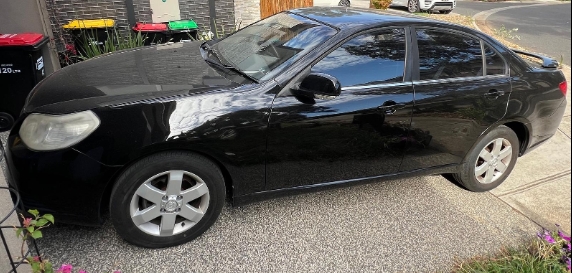
A Quiet Chapter: The Complete Evolution of the Holden Epica
In the expansive and often passionate history of Holden, certain models roar into the spotlight, commanding attention and etching themselves into the national consciousness. The Monaro, the Kingswood, and the indomitable Commodore are titans of Australian automotive lore. Then, there are the quieter chapters, the vehicles that served a specific purpose during a transitional era, fulfilling a role without fanfare before fading from view. The Holden Epica is the definitive vehicle of this latter category—a stopgap sedan that tells a fascinating story of globalization, brand strategy, and the changing face of the Australian car market.
Produced from 2007 to 2011, the Epica was Holden’s answer to a pressing question: what could economically fill the medium sedan void left by the departure of the respected but increasingly expensive German-sourced Holden Vectra? The solution came not from Europe, but from South Korea, a result of General Motors’ acquisition of Daewoo. The Holden Epica was, in essence, a rebadged Daewoo Tosca, a product of GM’s strategy to leverage its global platforms to fill portfolio gaps in various markets. Its story is one of practicality over passion, a pragmatic choice in a market segment fiercely contested by Japanese titans.
The Arrival: The ‘EP’ Series (2007–2008)
The Holden Epica made its Australian debut in April 2007, entering a market dominated by the Toyota Camry, Mazda 6, and Honda Accord Euro. Holden positioned the Epica as a value-driven proposition, offering a wealth of standard features and a unique engine configuration at a highly competitive price point.
The most distinctive feature of the initial Epica range was its powertrain. In a segment saturated with four-cylinder engines, Holden offered a pair of transversely mounted, Australian-built inline-six engines. Developed by Porsche and manufactured at Holden’s Port Melbourne engine plant, these ‘Alloytec’ derivatives were designed to be exceptionally smooth and quiet.
The EP Series was launched with two distinct trim levels: the CDX and the CDXi.
1. Holden Epica CDX
The entry-level model, the CDX, was aimed squarely at budget-conscious families and fleet buyers. It offered a choice of two powertrains:
- 2.0-litre DOHC inline-six engine: This smaller six-cylinder produced a modest 105 kW of power and 195 Nm of torque. It was available exclusively with a five-speed manual transmission, a configuration that appealed to traditionalists but limited its market reach.
- 2.5-litre DOHC inline-six engine: This was the volume seller. It produced a healthier 115 kW of power and 237 Nm of torque and was paired exclusively with a five-speed automatic transmission with a manual shifting mode.
Despite its entry-level status, the CDX was generously equipped for its time. Standard features included:
- 16-inch alloy wheels
- Front and side airbags for driver and passenger
- Air conditioning
- Cruise control
- Four-wheel disc brakes with ABS
- Power windows (front and rear)
- An eight-speaker sound system with a CD player
- Steering wheel-mounted audio controls
- A trip computer
The interior was functional, with durable cloth trim and a straightforward, albeit uninspired, dashboard layout. The Epica’s primary appeal was its quiet and refined ride quality. The inline-six engines were silky smooth, providing a level of NVH (Noise, Vibration, and Harshness) suppression that was genuinely impressive for its price class. However, the initial reception from automotive critics was lukewarm. While the refinement was praised, the performance was deemed lacklustre, particularly the 2.0-litre manual. The handling was safe and predictable but lacked the dynamic engagement of rivals like the Mazda 6.
2. Holden Epica CDXi
The flagship CDXi model aimed to add a touch of luxury to the Epica package. It was available only with the 2.5-litre inline-six engine and the five-speed automatic transmission. The CDXi built upon the CDX’s specification list with a host of desirable upgrades:
- 17-inch alloy wheels
- Full leather seat upholstery
- Electronic climate control
- Six-disc in-dash CD stacker
- Curtain airbags (front and rear)
- Rear parking sensors
- Front fog lamps
- Chrome exterior door handles and detailing
- A leather-wrapped steering wheel and gear knob
The CDXi was a compelling value package. For a price significantly less than its top-spec Japanese competitors, buyers received a leather-appointed, six-cylinder sedan with a full suite of safety and convenience features. It represented the Epica’s core mission: to provide more car for the money.
.

.
The Mid-Life Refresh: The ‘EP’ Series II (Late 2008–2011)
By late 2008, Holden recognised the Epica’s shortcomings and the need for a significant update to keep it competitive. The Series II refresh was more than just a cosmetic facelift; it introduced a crucial new powertrain option and addressed some of the key criticisms of the original model.
The most significant change was the introduction of a diesel engine. This was a strategic move to appeal to fuel-conscious buyers and to offer the low-end torque that the petrol six-cylinders lacked.
The New Powertrain: 2.0-litre Turbo Diesel
Sourced from Italian engine specialist VM Motori, the new 2.0-litre SOHC common-rail turbo-diesel engine transformed the Epica’s driving character. It produced 110 kW of power, a figure similar to the 2.5-litre petrol engine, but delivered a substantial 320 Nm of torque from just 2000 rpm. This torque-rich delivery provided effortless acceleration and made the Epica feel much more responsive in everyday driving situations. Paired with a new six-speed automatic transmission, the diesel Epica was not only more drivable but also significantly more fuel-efficient, with an official combined cycle figure of 7.6 L/100km.
Aesthetic and Interior Updates
The Series II Epica received a noticeable exterior facelift to align it more closely with the contemporary Holden family look, particularly the VE Commodore.
- Front End: A bold new grille featuring a prominent horizontal chrome bar and a larger Holden lion emblem replaced the more anonymous grille of the first series.
- Rear End: The tail-lights were revised with a new internal design.
- Interior: Inside, Holden focused on perceived quality. The dashboard materials were improved, the centre stack was revised, and the audio system was updated to include an auxiliary input jack for MP3 players—a must-have feature by 2008.
Revised Model Lineup
The trim levels remained as CDX and CDXi, but the powertrain options were reshuffled. The slow-selling 2.0-litre manual petrol variant was discontinued, streamlining the range.
1. Holden Epica CDX (Series II)
The base model was now offered with two engine choices:
- 2.5-litre inline-six petrol: Still paired with the five-speed automatic.
- 2.0-litre turbo-diesel: Paired with the new six-speed automatic.
Standard equipment was enhanced slightly, with the addition of the new audio input and the inclusion of Electronic Stability Control (ESC) as standard across the entire range—a major safety upgrade that brought it in line with its key rivals.
2. Holden Epica CDXi (Series II)
The top-spec model also received the new engine choices, giving premium buyers the option of petrol refinement or diesel torque.
- 2.5-litre inline-six petrol: Five-speed automatic.
- 2.0-litre turbo-diesel: Six-speed automatic.
The CDXi retained its leather trim, climate control, and larger alloys, and with the addition of standard ESC, it became an even more complete package. The diesel CDXi, in particular, was arguably the pick of the entire Epica range, blending strong real-world performance with luxury features and excellent fuel economy.
The Final Years and Discontinuation (2011)
Despite the significant improvements of the Series II update, the Epica never managed to capture the public’s imagination. Sales remained modest as the market continued to favour the established Japanese players and began its seismic shift towards SUVs. The Epica’s competent but unexciting nature meant it was often overlooked in a crowded marketplace.
By 2011, the Daewoo Tosca platform was aging, and GM was preparing its next-generation global mid-size sedan. Holden quietly phased out the Epica during 2011, selling remaining stock into early 2012. It was a low-key departure for a car that had lived its entire Australian life in the shadows of more popular models.
The Epica was eventually replaced in 2013 by the Holden Malibu. Like the Epica, the Malibu was another globally-sourced GM product (based on the Chevrolet Malibu), but it was a much more modern and stylistically confident vehicle, designed to compete more directly with the best in the segment.
Legacy
The Holden Epica occupies a curious place in the brand’s history. It was never a sales champion, nor was it a car that inspired a passionate following. It was, however, a perfect embodiment of GM’s global strategy in the mid-2000s. It demonstrated an attempt to provide Australian consumers with a feature-packed, comfortable, and affordable family car by leveraging the corporation’s international assets.
Its unique inline-six engines remain a notable engineering footnote, offering a taste of premium refinement in a mainstream package. The later introduction of the torquey and efficient diesel engine showed Holden’s willingness to adapt the car to local tastes and market trends.
While often forgotten, the Holden Epica served its purpose. It filled a critical gap in Holden’s lineup for five years, providing a competent and value-oriented alternative to the default choices. It was a quiet chapter, but one that highlights the complex global dynamics that shaped the final decades of Australia’s own car company.