Aerodynamic Ambition: The Complete History of the Eagle Vista
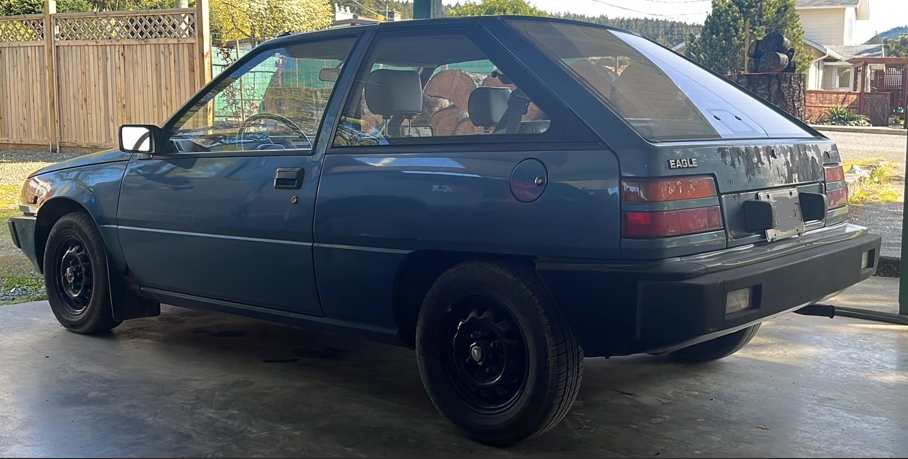
In the automotive landscape of the late 1980s, the American market was undergoing a dramatic transformation. The oil shocks of the 1970s had given way to a demand for efficiency, but American consumers still craved the space and presence of domestic vehicles. The “badge engineering” era was in full swing, where manufacturers shared platforms to reduce costs and fill market niches. While Chrysler had the Conquest and Ford had the Probe, American Motors Corporation (AMC) sought a piece of the growing coupe market. The result was a vehicle that would become one of the brand’s final acts before its absorption into the Chrysler corporate: the Eagle Vista.
Although the “Eagle” brand was established in 1988, the Vista was not a new invention; it was a rebadged and heavily modified version of a platform with a complex lineage. To understand the Eagle Vista, one must trace its origins through the history of Mitsubishi Motors, the Chrysler-Mitsubishi partnership, and the final years of AMC’s independence.
The Genesis: A Japanese Platform on American Soil
The Eagle Vista was based on the first-generation Mitsubishi Mirage coupe. However, the chassis work had deeper roots. The Mirage utilized a truncated version of the Starion’s platform, a rear-wheel-drive architecture that Mitsubishi had developed in the early 1980s.
The Eagle Vista made its debut for the 1989 model year. It arrived at a pivotal moment for AMC. By this time, Renault owned a controlling interest in AMC, and the company was preparing for its eventual sale to Chrysler. The Eagle brand was created to market vehicles that were imports or import-based, distinct from the traditional Renault-inspired designs of the AMC Eagle line.
While the Eagle Vista shared its underpinnings with the Mitsubishi Starion, it was distinct in its execution. The Vista was designed to be a “personal luxury” coupe, softer in styling than the raw, angular aggression of the Starion. It was intended to compete with the Chevrolet Beretta, Ford Thunderbird, and Chrysler’s own E-Class.
.
THIS might be a great place to get your new car from!
Or for those who are into the “car flipping” business, here’s an excellent resource for you!

.
The 1989 Model Year: Launching the Lineup
For its inaugural year, the Eagle Vista was offered exclusively as a coupe. It was built in Japan by Mitsubishi and shipped to the United States, where it underwent final assembly and received its Eagle badging.
The Engine and Drivetrain: The Vista was powered by a 2.6-liter Mitsubishi “Sirius” inline-four engine (often referred to as the G54B). This engine was a stalwart of the Japanese automotive industry, known for its durability and simplicity.
- Horsepower: 135 hp at 5,000 rpm.
- Torque: 143 lb-ft at 3,500 rpm.
- Transmission: Standard was a 5-speed manual transmission; a 4-speed automatic was available as an option.
Trim Levels (1989):
- Eagle Vista DL: The base model. The DL (DeLuxe) was the entry-level trim, offering standard cloth seating, a manual transmission, steel wheels with covers, and a basic AM/FM stereo. It focused on value and economy.
- Eagle Vista LX: The mid-range option. The LX added creature comforts such as power windows, power locks, a digital clock, and upgraded interior fabrics. It often included a tachometer and a center console.
- Eagle Vista SE: The top-tier trim. The SE (Special Edition) was the luxury statement. It featured full leather upholstery, a premium sound system with equalization controls, alloy wheels, and integrated fog lamps. The SE also received distinct badging and often a dual-tone paint scheme to distinguish it visually from the lower trims.
The 1990 Model Year: Expansion and Refinement
In 1990, the Eagle Vista lineup saw significant changes, most notably the introduction of a four-door sedan variant. This move was an attempt to broaden the appeal of the platform, competing with the Honda Accord and Toyota Camry.
The Sedan Introduction: The sedan shared the front-end styling of the coupe but featured a longer roofline and a functional trunk rather than a hatch. While the coupe retained the rear-wheel-drive (RWD) architecture of the Starion, the sedan utilized a front-engine, front-wheel-drive (FWD) layout. This distinction is crucial for collectors and enthusiasts today, as the FWD sedan and RWD coupe were essentially different cars sharing a nameplate.
Trim Levels (1990):
For the Coupe (RWD):
- DL: Continued as the budget option.
- LX: Remained the volume seller, adding power accessories.
- SE: The luxury option, now often available with an automatic transmission as standard.
For the Sedan (FWD):
- DL Sedan: Offered basic transportation with the 2.6-liter engine.
- LX Sedan: The most popular sedan trim, featuring enhanced sound insulation and comfort features.
- ES Sedan: A sportier trim for the sedan, featuring a firmer suspension, sport seats, and specific trim accents.
Engine Note for Sedans: While the coupe stuck with the 2.6L engine, the sedan (and some later coupes) eventually saw the introduction of a 2.0-liter SOHC engine in specific configurations, though the 2.6L remained the primary powerplant for the performance-oriented coupes.
The 1991 Model Year: The Final Act
The 1991 model year would be the last for the Eagle Vista. By this time, Chrysler had officially acquired AMC (a deal finalized in 1987, but the integration of product lines took years). Chrysler was reorganizing its brands: Eagle was to become the “import fighter,” Jeep was the off-road division, and Dodge and Plymouth would handle mass-market domestic cars.
Changes for 1991: The 1991 Vista received minor aesthetic updates, including new upholstery patterns and slight revisions to the dashboard layout. However, sales were sluggish. The coupe market was shrinking, and the Eagle brand itself lacked the recognition of Honda or Toyota.
The 1991 Trim Hierarchy:
Coupe (RWD):
- Base: The DL trim was simplified to a “Base” model, stripping away some of the optional extras to lower the price point.
- LX: The core model, still featuring the 2.6L engine.
- SE: The luxury flagship. By 1991, the SE was somewhat an anomaly; it was a rear-wheel-drive, Japanese-built luxury coupe competing against the newer, front-wheel-drive domestic coupes.
Sedan (FWD):
- Base: Replacing the DL, offering standard manual transmission.
- LX: The volume leader, offering automatic transmission availability.
- ES: The sport-oriented sedan trim.
Technical Specifications and Driving Dynamics
To appreciate the Eagle Vista, one must understand the mechanical divergence between the two body styles.
The Coupe (The “True” Vista): The coupe was the spiritual successor to the Mitsubishi Starion. It featured a live rear axle with coil springs and a front independent suspension. This gave it a handling characteristic that was more akin to American muscle cars of the era than the IRS (Independent Rear Suspension) found on European sports cars. It was tail-happy when pushed, but predictable. The 2.6L engine was carbureted in early models and later moved to throttle-body fuel injection, providing adequate acceleration (0-60 mph in roughly 8.5 seconds) for the time.
The Sedan (The “Practical” Vista): The sedan was a completely different beast. Based on the Mitsubishi Galant platform, it featured MacPherson struts at all four corners. It was softer, more isolated from the road, and prioritized cabin space over cornering speed. While reliable, it struggled to compete with the refinement of the Honda Accord or the Ford Taurus.
The Eagle Brand and the Vista’s Role
The Eagle Vista was a product of a transitional era. In 1988, AMC was gone, but the Eagle brand was born to sell vehicles that were “world cars.” The Vista was marketed as a vehicle for the modern driver—someone who wanted the reliability of an import but the backing of an American dealer network.
Marketing for the Vista emphasized its aerodynamic styling. The coupe, in particular, featured a distinct “notchback” design that was aerodynamically efficient for its time, boasting a drag coefficient of around 0.33.
However, the Vista faced an identity crisis. To enthusiasts, it was a watered-down Starion. To economy buyers, it was an expensive import. To luxury buyers, it lacked the prestige of European brands.
The End of the Line: 1992 and Beyond
The Eagle Vista was discontinued after the 1991 model year. It did not receive a second generation. By 1992, Chrysler was streamlining its lineup. The Eagle Vista sedan was effectively replaced by the Eagle Premier (a Renault-designed car) and later the Intrepid. The coupe segment was abandoned entirely by the brand.
The chassis of the Vista coupe lived on, however. Chrysler acquired the tooling and rights to the Mitsubishi Starion/Eagle Vista coupe platform and produced the Chrysler Conquest until 1994, effectively selling the same car with different badges for two extra years. This allowed the RWD platform to have a longer lifespan in the American market, though it remained a niche vehicle.
Legacy and Current Status
Today, the Eagle Vista is a rare sight on the road. The sedans, being FWD and practical, were often driven into the ground or rusted away due to inadequate undercoating. The coupes, however, have developed a cult following in the drift and drag racing communities.
Because the Vista coupe shares its chassis, suspension, and engine with the Mitsubishi Starion and Chrysler Conquest, parts are relatively available through aftermarket support. The 2.6L engine is legendary for its ability to handle forced induction; turbocharging a Vista coupe is a common modification, unlocking performance that rivals modern sports cars.
The interior of the Vista remains a snapshot of late-80s ergonomics. The DL featured durable but scratchy cloth, while the SE offered plush leather that often cracked with age. The digital dashboards found in higher trims were prone to failure, a common issue with vacuum fluorescent displays of the era.
Future Outlook and Collector Status
The Eagle Vista sits in an interesting position in the collector market. It is not yet a “classic” in the eyes of the mainstream, but it is approaching “Youngtimer” status (vehicles from the 1980s and 90s).
The Coupe: The Vista LX and SE coupes are gaining value. Because they are mechanically identical to the more desirable Mitsubishi Starion and Chrysler Conquest, they are often sought after as budget alternatives for project cars. A clean, low-mileage 1989 Vista SE coupe with a manual transmission is a highly desirable find today, representing one of the last American-badged, rear-wheel-drive Japanese coupes.
The Sedan: The sedan holds little collector value currently. It is viewed primarily as a curiosity of automotive history—the moment an American brand sold a Japanese sedan. However, for fans of the Mitsubishi Galant or those interested in the history of the Chrysler-Mitsubishi relationship (Diamond-Star Motors), the Vista sedan is a noteworthy artifact.
The Future: As the automotive world pivots to electric vehicles, the mechanical simplicity of the Eagle Vista becomes more appealing to enthusiasts. The lack of complex computers and the robust nature of the 2.6L engine ensure that these cars can be kept on the road indefinitely.
Conclusion
The Eagle Vista was a vehicle born of necessity and executed with pragmatism. It represented AMC’s last attempt to capture the youth market with a stylish, imported coupe before the Chrysler takeover. While it never achieved the sales figures of its Japanese competitors, it carved out a unique niche as a “sleeper” car—understated styling hiding a capable rear-wheel-drive chassis.
From its debut in 1989 to its quiet discontinuation in 1991, the Eagle Vista served as a bridge between two automotive eras. It was the end of the traditional American coupe and the beginning of the badge-engineered import. Today, it remains a testament to a time when American dealerships sold Japanese-engineered cars with American names, a unique chapter in the ongoing evolution of the automobile.