ASC and the Pontiac Firebird: The Evolution of a Coach‑Built Pony Car
The story of the ASC Pontiac Firebird is not about a single model built by ASC, but rather a fascinating, niche chapter in the history of the Pontiac Firebird — one of America’s iconic pony cars — where the company known as ASC (American Sunroof Company / American Specialty Cars) played a critical role in transforming standard Firebirds into rare specialty vehicles through convertible conversions and body‑modification programs. This article traces the evolution of these ASC‑influenced Firebirds, focusing on the years the conversions were produced, how ASC worked with Pontiac, the trim levels and variants involved, and the broader historical and cultural context of these unique vehicles.
A Brief History of the Pontiac Firebird
Before delving into ASC’s role, it’s important to understand the backdrop: the Pontiac Firebird itself. Introduced in 1967 as Pontiac’s pony car to compete with the Ford Mustang and Chevrolet Camaro, the Firebird remained in production through 2002, spanning four generations of design and performance philosophy.
Across its lifespan, the Firebird offered multiple trim levels (depending on generation), including:
- Base Firebird – the entry‑level model offering a range of engine options.
- Firebird S/E – an appearance and equipment package for early third‑generation cars (1982–1986).
- Firebird Formula – a performance‑oriented version emphasizing power and handling.
- Firebird Trans Am – the top‑tier performance variant with more powerful engines and distinctive styling.
- Trans Am GTA – a higher‑luxury, performance‑oriented Trans Am variant available in the late 1980s and early 1990s.
Convertible versions were part of the Firebird lineup in the first generation (1967–1969), but dropped after 1969 and did not return officially until the 1991 model year.
ASC: Who They Were and What They Did
ASC — originally the American Sunroof Company, later renamed American Specialty Cars — was a Michigan‑based specialty vehicle producer capable of designing and fabricating low‑volume vehicles and conversions. Founded in 1965, ASC grew into one of the most respected independent builders of convertible versions and specialty modifications for major manufacturers.
While ASC worked on many projects (including building convertible roof systems and coachbuilt versions for GM vehicles such as the Corvette and Cavalier), its involvement with the Pontiac Firebird is most notable for two distinct areas:
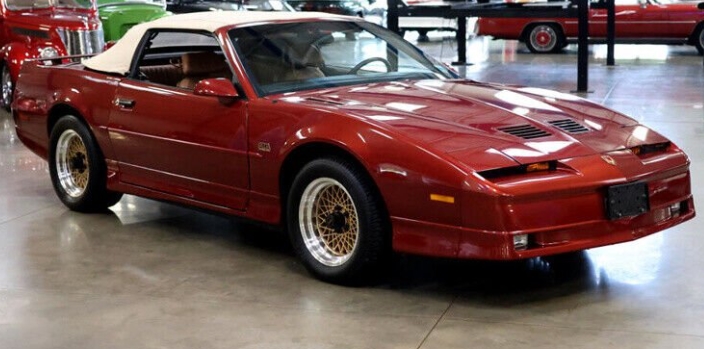
- ASC‑converted Firebird convertibles (1987–1992) during the third generation.
- ASC‑installed WS6 Ram Air packages on fourth‑generation Firebirds (1998–2002).
Third‑Generation Firebird Convertibles (1987–1992)
Context
The third generation Firebird was produced from 1982 to 1992, sharing the GM F‑Body platform with the Chevrolet Camaro. The early years of this generation did not include a factory‑built Firebird convertible — even though the Camaro had one — largely due to concerns around fuel economy and the resulting gas guzzler tax that GM believed would be triggered by a convertible Trans Am or Formula equipped with a V8 engine.
However, dealerships and customers still wanted a Firebird drop‑top, and ASC stepped in to provide an official convertible version through a dealer‑order, drop‑ship conversion process.
.

.
ASC Convertible Conversions (1987–1989)
Beginning in 1987, ASC was contracted to convert Pontiac Firebirds into convertibles by modifying vehicles — typically ordered as T‑top cars — and performing roof cut‑outs, structural reinforcements, and convertible top installation. These cars were then sent back to dealers for delivery, often with GM‑backed warranty coverage similar to the Camaro convertible program.
ASC built hundreds of these Firebird convertibles during the late 1980s. Reported figures include:
- 1987: ~173 convertibles constructed by ASC.
- 1988: ~104 convertibles.
- 1989: ~330 convertibles across multiple trims such as base Firebird, Formula, Trans Am, and GTA, with various engines.
Although these cars were structurally converted at ASC, they were sold through Pontiac dealers and often serviced through dealer networks. Despite this “semi‑official” status (later fully integrated into production for 1991), they are considered legitimate convertible Firebirds because each was modified before being delivered to the customer.
1991–1992: Official Convertible Models
By 1991, changes to the Firebird’s aerodynamics and reduced weight allowed GM to offer factory‑approved convertible Firebirds under regular production ordering channels. ASC continued to build these, but now under a more integrated model through GM’s regular ordering procedure.
In these years, Firebird convertibles were available in several trim levels:
- Base Firebird Convertible – featuring either V6 or V8 engines.
- Firebird Trans Am Convertible – typically equipped with larger V8 powerplants and more equipment.
These 1991–1992 Firebird convertibles were structurally similar to their coupe counterparts but featured ASC’s convertible top mechanisms and reinforced body structure. Production numbers in these final years of the third generation were modest — around 1,505 convertibles in 1991 and 1,928 in 1992 — representing a small fraction of overall Firebird output.
Fourth‑Generation Firebird and ASC (1993–2002)
The fourth generation Firebird debuted in 1993 and continued until the end of production in 2002. Although a convertible option continued to be offered (initially still built by ASC), the company also took on other specialized roles later in the Firebird’s life.
Convertible Continuation (1993–2002)
ASC continued converting Firebirds into convertibles in the early years of the fourth generation until 2002 when the Firebird was discontinued. These vehicles were ordered as coupes through dealers and sent to ASC for conversion, similar to the earlier third‑generation process.
Convertible Firebirds from these later years include:
- Base and Formula Convertibles — with a range of four‑ and six‑cylinder engines in the early 1990s, and later V8s as performance options.
- Trans Am Convertible WS6 — performance‑oriented fourth‑generation Trans Am convertibles often with WS6 suspension and handling package from 1998 onward.
Though Firebird convertible production numbers were limited relative to coupes, these ASC‑built open‑top models remain prized by enthusiasts due to their rarity and distinctive style.
ASC and the WS6 Ram Air Package (1998–2002)
In the late 1990s, ASC’s involvement with the Firebird evolved beyond convertibles. Street Legal Performance (SLP) had previously developed the Firehawk performance package during the 1990s, but ASC later took over involvement with the WS6 Ram Air package for Firebirds and Trans Ams.
The WS6 package originally began in 1978 as a suspension and performance handling package for Firebird Formula and Trans Am models, distinguishing them with better ride control, upgraded sway bars, and broader wheels and tires.
From 1998 through 2002, ASC manufactured head‑unit components and assembled WS6 Ram Air vehicles shipped from GM’s Ontario assembly plant. These cars represented some of the most potent production Firebirds in the final years of the model’s life, combining fourth‑generation aerodynamic improvements with the WS6 performance tuning that appealed to traditional muscle car fans.
Trim Levels and Variants Relevant to ASC Firebirds
An ASC‑modified Pontiac Firebird could appear in several general Firebird trim levels, depending on the generation and customer order:
- Base Firebird Convertible / Coupe – standard model often with V6 or entry‑level V8 engines.
- Firebird Formula – a performance variant with more powerful engines and sport‑oriented suspension.
- Trans Am – iconic performance model with larger V8 engines and athletic styling.
- Trans Am GTA – luxury‑performance blend available during third generation.
- Trans Am WS6 (Ram Air) – handling and performance package in later years, often produced with ASC’s involvement.
What distinguishes an ASC Firebird from standard models is not a separate trim level but rather the coach‑built modifications to body style, especially convertibles, and in some cases production involvement on WS6 performance models.
Cultural Impact and Enthusiast Appeal
ASC‑built Pontiac Firebirds occupy a unique place in the pony car world. Because convertibles were not factory‑produced for all years of the third generation (until officially offered in 1991–1992), the ASC conversions from 1987 through 1990 are rarer and often viewed as collector pieces because they combine official dealer ordering, modification by ASC, and GM warranty back‑up before full factory support existed.
In the fourth generation, ASC continued to build convertibles and play a role in WS6 performance conversions, which makes those models stand out from the millions of standard Firebirds built between 1993 and 2002.
Today, ASC‑modified Firebirds are sought by collectors for their:
- Low production numbers in a given year.
- Distinctive convertible bodywork not commonly found on coupe‑only generations.
- Association with a specialized manufacturer historically important to low‑volume car enthusiasts.
Future Outlook
With Pontiac’s discontinuation in 2010 and the end of Firebird production in 2002, no new ASC Firebirds will ever be produced as part of a contemporary platform. However, the legacy of ASC conversions continues to fuel interest in the collector and restoration market:
- Restoration demand — ASC‑converted cars often require bespoke parts and historic verification, increasing their desirability among dedicated restorers.
- Heritage recognition — shows, clubs, and online communities increasingly document ASC Firebirds as a subcategory of rare pony cars.
- Valuation trends — as low‑production variants in a discontinued nameplate, ASC Firebirds often trade at higher premiums than their coupe counterparts, especially in well‑preserved or documented example.
While ASC itself ceased operations around 2017, its contributions to vehicle individuality and specialty manufacturing help underline the value of low‑volume coachwork in automotive history.
Conclusion
The ASC Pontiac Firebird story is not a lineage of factory‑produced, distinct trim levels but rather a fascinating, nuanced chapter in the broader Firebird legacy. Through ASC’s convertible conversions in the third generation (1987–1992), and its involvement with performance enhancements and convertible builds in the fourth generation (1993–2002), these cars represent a rare and collectible slice of pony car history. Their rarity, coupled with their place in the evolution of specialized automotive manufacturing, ensures that ASC Firebirds remain treasured by aficionados and collectors alike.