Baldwin-Motion (Chevrolet) Camaro: The Evolution of a Rare Muscle Car Legend
From the muscle car heyday of the late 1960s through early 1970s, a handful of specialty performance dealers carved out an outsized legacy by offering dealer-built ultra-high-performance Chevrolet models. Among the elite tier — which included Yenko Chevrolet and Nickey Chevrolet — stood the Baldwin-Motion Camaro: a rare, hand-built, big-block super-Camaro created through the collaboration of Motion Performance and Baldwin Chevrolet. This article traces the Baldwin-Motion Camaro’s evolution, the various models and performance levels offered, the years in which these unique vehicles were produced, and their historical and cultural significance.
Origins: Baldwin-Motion and the Fantastic Five (1967–1974)
The Baldwin-Motion Performance Group emerged in 1967 as a partnership between Baldwin Chevrolet — a long-established Chevrolet dealership in Baldwin, Long Island, New York — and Motion Performance, a highly regarded performance shop led by Joel “Mr. Motion” Rosen. Motion provided engine and chassis expertise, and Baldwin provided sales, financing, and delivery like any other new Chevrolet — a groundbreaking approach in dealer-built specialty cars.
Under the Baldwin-Motion program, a suite of Chevrolet vehicles could be ordered new with factory warranties, sent to Motion Performance for extensive performance upgrades, and delivered to customers documented under Chevrolet VINs. This range was marketed in period materials as the “Fantastic Five”: Camaro, Chevelle, Nova, Corvette, and Biscayne motocars featuring 427 cubic-inch powerplants and bespoke performance enhancements.
A hallmark of Baldwin-Motion’s philosophy was its written performance guarantee: Phase III-level cars — the highest-tier models — were promised to run at least 120 mph in 11.50 seconds or better in the quarter mile with an approved driver, or the purchaser could return the car — though no one ever did.
.

.
1967–1969: The First Baldwin-Motion Camaros
SS-427 Camaro (circa 1967–1969)
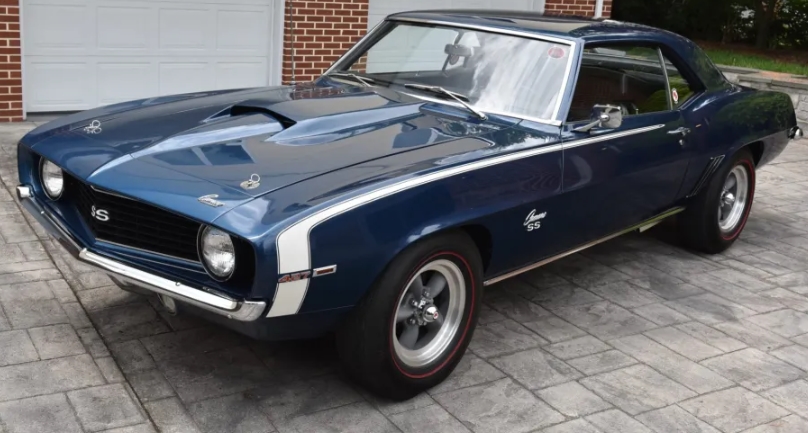
The earliest Baldwin-Motion Camaro builds were produced as early as 1967 on first-generation Camaros (1967–1969). The foundational variant in this era was the SS-427 Camaro, a big-block conversion that replaced the Camaro’s largest factory-available 396 ci V8 with a 427 cubic-inch V8 sourced from other Chevrolet platforms, such as the Corvette.
These Baldwin-Motion SS-427 Camaros came with Motion-tuned engines (typical outputs around 425 hp or higher depending on engine choice), aligning with the program’s focus on serious straight-line performance. The upgraded drivetrain was often paired with custom suspension enhancements — such as traction bars to quell wheel hop — and distinctive exterior treatments including SS-427 or Motion badging and bold hood scoops.
Documentation for some of these original 1968 Baldwin-Motion Camaros exists: unrestored examples still retain original Motion-installed 427 ci engines tuned to 425 hp, original traction devices, and other signature modifications. These cars were sold as dealer-built performance machines, blending factory Corvette power with Camaro agility — essentially creating early American supercars long before that term existed.
Phase III Models (Late 1960s)
As the Baldwin-Motion program matured in the late 1960s, select Camaros received the prestigious Phase III designation — indicating top-tier modification level with expanded big-block options and enhanced performance tuning. Phase III cars were typically specified with higher horsepower engines (well north of 500 hp in some cases) and came with more comprehensive chassis and performance upgrades to support the increased output.
Phase III Camaros remain exceptionally rare, with reliable estimates suggesting fewer than a dozen Phase III Camaros were built in the original 1967–1974 period. Many Baldwin-Motion enthusiasts believe the exact number is smaller still, particularly for Phase III Camaros, making genuine examples some of the most collectible first-generation Camaros on the market.
Rare Variants and Notable Builds
1-of-1 LS7 Camaro (1969)
Perhaps the most storied Baldwin-Motion Camaro example is a one-off 1969 Camaro SS Baldwin-Motion fitted with an all-aluminum Corvette LS7 454 ci engine producing approximately 525 hp. Although never replicated, this unique car stands as a testament to Baldwin-Motion’s willingness to push beyond standard builds when customers and circumstances allowed.
This particular LS7 build was coupled with a close-ratio M21 4-speed manual transmission and beefed-up rear end, making it a legendary combination for both collectors and performance aficionados. Today it is recognized globally as one of the most valuable Baldwin-Motion Camaros ever built.
Production Overview and Rarity
Baldwin-Motion never published exact production statistics for its vehicles, and much about raw production count remains approximate. However, credible historical sources indicate:
- Baldwin-Motion’s specialty car program ran from 1967 through about 1974, with Camaros among the earliest and most esteemed entries in that lineup.
- Baldwin-Motion and Motion Performance combined likely built fewer than 500 cars total across all makes during their peak years, with Camaros representing only a fraction of that production.
- Phase III Camaros are particularly rare, with historical commentary suggesting only tiny numbers were completed in the original era — often well under a dozen.
These figures help explain why genuine Baldwin-Motion Camaros command serious collector interest and high prices at auctions: they are not merely modified vehicles, but authentic dealer-built performance rarities from a short, vibrant chapter of muscle car history.
Return and Continuation Efforts (2000s–2010s)
Although the original Baldwin-Motion program ceased regular operation in the mid-1970s due to regulatory changes and market shifts, there have been continuation and revival efforts extending the Baldwin-Motion legacy into the 21st century:
2005 Baldwin-Motion Camaro 540 SuperCoupe
In 2005, a modern interpretation of Baldwin-Motion supercars surfaced with the Baldwin-Motion Camaro 540 SuperCoupe, revealed at the SEMA Show and built as part of a revived Baldwin-Motion/Motion partnership. This bespoke, two-seat steel body coupe featured a 540 cubic-inch big-block Merlin/Motion V8, independent suspension, powerful brakes, and modern comfort features — blending retro muscle with contemporary engineering.
The SuperCoupe was crafted as a limited collector piece rather than a mass-market revival, showcasing the timeless appeal of Baldwin-Motion performance while pushing design and engineering boundaries. The prototype example has achieved strong collector prices at auction, signaling continued interest in the Baldwin-Motion tradition.
2011 Phase III 427-SC and Fantastic Five Continuation Series
In 2011, Baldwin-Motion and performance partners such as Redline Motorsports and dealers like DeNooyer Chevrolet reintroduced “modern Baldwin-Motion” Camaros — often referred to collectively in revival press as the Fantastic Five — featuring updated SS-427, Phase III 427, SS-454, Phase III 454, and supercharged Phase III 427-SC variants with power outputs significantly higher than their 1960s predecessors (some approaching 800 hp with superchargers).
These modern continuation efforts borrowed the ethos of customized big-block power and distinctive graphics from the original Baldwin-Motion builds, while applying contemporary performance parts and safety equipment. They function more as tributes or coachbuilt specials than direct continuations of the original 1967–1974 production — but they sustain the Baldwin-Motion name and heritage.
Performance and Engineering Philosophy
Across its classic and continuation builds, the Baldwin-Motion Camaro maintained a few core engineering principles:
- Big-Block Power: Original Baldwin-Motion Camaros were known for installing 427 and 454 cubic-inch Chevrolet V8s well beyond the factory offerings for Camaros in the late 1960s, with tunes often exceeding 500 hp.
- Chassis and Suspension Upgrades: Traction bars, beefed-up rear ends, and other chassis modifications helped manage the significant torque delivered by large displacement engines.
- Customization and Warranty: Cars were modified to order and sold with warranty coverage and documentation backed by Baldwin Chevrolet and Motion Performance — an unusual arrangement for dealer-built specialty cars.
- Performance Guarantees: Phase III models carried a bold assurance of straight-line performance that helped build the Baldwin-Motion brand as synonymous with extreme street performance.
This blend of engineering rigor, dealer support, and enthusiast engagement helped establish the Baldwin-Motion Camaro as more than an aftermarket modifier’s project — it was a certified specialty muscle car in its time.
Cultural Impact and Collector Status
Today, Baldwin-Motion Camaros are among the most eagerly sought pieces of first-generation Camaro lore. Their rarity, performance pedigree, and documented provenance make them centerpiece cars at major auctions. For example, unrestored 1968 Baldwin-Motion Camaros have sold for over half a million dollars at collector auctions, reflecting their deep historical significance.
Collectors prize original Baldwin-Motion builds not only for horsepower and rarity, but also for the story they represent: a period in American automotive history when independent performance shops and forward-thinking dealers could create legitimate, factory-warranted supercars that rivaled or exceeded what major manufacturers offered.
Future Outlook
The future of the Baldwin-Motion Camaro tradition lies less in mass production and more in continued heritage celebrations, limited-edition continuation models, and collector interest. Legacy builders and restorers continue to:
- Preserve original Baldwin-Motion Camaros through meticulous restoration and documentation verification.
- Recreate or tribute classic Baldwin-Motion designs with modern engineering for the collector market.
- Expand historic registries to protect authenticity and heritage records.
Given the strong collector prices and cultural cachet of Baldwin-Motion cars, it is likely that interest in these rare Camaros will remain strong among muscle car enthusiasts and investors for decades to come.
The Baldwin-Motion Camaro — born from a unique dealer and performance shop partnership between Baldwin Chevrolet and Motion Performance — stands as one of the rarest and most distinctive chapters in American muscle car history. Originally produced in extremely limited numbers between 1967 and 1974, these Camaros blended big-block power, bespoke engineering, and dealer financing into a package marketable as a true specialty car with warranty and performance guarantees.
Although exact production counts are uncertain and most surviving examples are exceedingly rare, Baldwin-Motion Camaros hold a special place alongside other high-performance greats of the era. Continuation efforts in the 21st century have helped keep the name alive, but original Baldwin-Motion Camaros — with their combination of big blocks, performance upgrades, and historical documentation — remain enduring icons of Detroit’s golden muscle car era.