Baldwin-Motion (Chevrolet) Corvette: The Evolution of an American Muscle Rarity
During the golden age of American muscle cars — roughly the late 1960s through the early 1970s — the Chevrolet Corvette stood as one of the nation’s premier performance icons. Among the numerous specialty Corvette variants created in that era, few are more rare, exotic, and storied than the Baldwin-Motion Corvette — high-performance, dealer-built Corvettes modified in conjunction with Motion Performance and Baldwin Chevrolet. These machines represent a fascinating blend of dealer customization, extreme performance goals, and collectible appeal. This article explores the evolution of the Baldwin-Motion Corvette, including its history, models and variants, years produced, key specifications, cultural impact, and enduring legacy.
Origins: Baldwin-Motion Performance Group (1967–1974)
The story of the Baldwin-Motion Corvette begins with the larger Baldwin-Motion Performance Group, a partnership between Baldwin Chevrolet, a Long Island, New York dealership, and Motion Performance, a performance shop led by Joel Rosen. Baldwin brought dealership infrastructure, marketing reach, and financing capabilities, while Motion contributed performance engineering and customization expertise. Together they sold enhanced Chevrolet products — including Camaros, Novas, Chevelles, and Corvettes — directly to customers as dealer-built “supercars.”
What set Baldwin-Motion apart from many other tuners of the day was that these enhanced cars were ordered and financed like regular new vehicles from the dealership, but they were then converted by Motion Performance before delivery. Phase III models — the most potent Baldwin-Motion offerings — even came with a written performance guarantee stating the car would run at least 120 mph in 11.50 seconds or better at the drag strip with an approved driver, or the buyer could get their money back. Remarkably, no one ever took Baldwin-Motion up on the guarantee.
The Baldwin-Motion era lasted chiefly from 1967 to 1974, after which stricter emissions and safety regulations, along with economic pressures, curtailed the business of installing non-factory powertrains on new cars.
.

.
The Baldwin-Motion Corvette: Rarity Defined
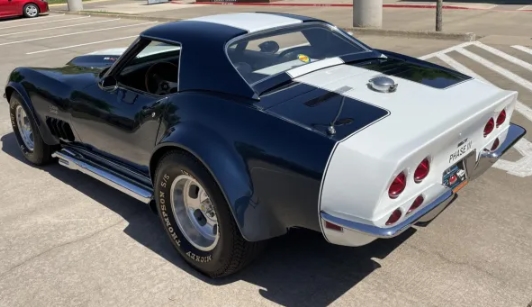
While Baldwin-Motion produced hundreds of modified cars across various Chevrolet models, Baldwin-Motion Corvettes were comparatively rare and extremely desirable — particularly the Phase III GT Corvettes built between 1969 and 1971.
1. Phase III SS-427 Corvette (1968–Early 1970s)
One of the earliest Baldwin-Motion Corvette variants was the Phase III SS-427, which leveraged high-performance big-block Chevrolet engines. These cars were enhanced primarily through Motion Performance’s tuning and custom hardware rather than completely radical bodywork. They retained much of the Corvette’s standard appearance apart from performance-oriented visual cues such as:
- Enlarged hood scoop (often reminiscent of 1967 Corvette “Stinger” style)
- Flared wheel arches to accommodate wider performance tires
- Aftermarket headers and exhaust systems
- Performance suspension upgrades
Phase III SS-427 Corvettes were built in limited numbers — so few that exact production figures are scarce — but they remain among the more frequently encountered Baldwin-Motion Corvettes today. One known example of a 1969 Phase III Corvette had just 8 units built for that model year, underscoring the rarity of these dealer-built machines.
Mechanically, these Corvettes featured powerful Chevrolet big-block V8 engines, with outputs frequently in excess of 500 hp and torque figures that made them formidable both on the drag strip and on the open road.
2. Phase III GT Corvette (1969–1971)
The most legendary Baldwin-Motion Corvette model was the Phase III GT, produced between 1969 and 1971. Only about 10 to 12 of these extraordinarily rare vehicles were ever built, making them some of the most sought-after American specialty cars for collectors today.
The Phase III GT was conceived as Baldwin-Motion’s answer to European grand tourers — combining brute power with enhanced comfort and utility:
- Engines: Available with big-block Chevrolet engines including aluminum-head L89 tri-power, L88 12:1 compression, and even the rare all-aluminum ZL-1 race engine as options.
- Power Output: Typically around 500 hp or more, depending on engine and specification.
- Body and Styling: Unlike typical Corvettes, Phase III GTs often featured a modified roofline and fastback rear window, providing additional cargo space and GT-like proportions — itself a radical departure from the standard Corvette coupe profile.
- Price: In 1969, a Phase III GT Corvette could cost over $10,500, a significant sum in the context of the era and well above the price of a standard Corvette.
The Phase III GT’s combination of high performance, striking custom design, and extreme rarity contributes to its significance and desirability among collectors.
3. Other Baldwin-Motion Corvette Variants
While the Phase III GT and SS-427 were the core Baldwin-Motion Corvette models, Joel Rosen also experimented with other unique Corvette builds that blurred the lines between performance cars and one-off custom creations:
- Motion Maco Corvettes: Featuring distinctive body modifications and cosmetic treatments blending custom design cues with Baldwin-Motion performance ethos.
- Motion Manta Ray Corvette: A rare variant offered in 1973 with dramatic bodywork including Z28-style rear spoilers and unique front and rear modifications; only a handful — perhaps three 333 — were made.
- Motion Moray Eel: Built on a 1972 Corvette, a one-off hybrid of Maco and Manta Ray features resulting in an extremely rare custom car.
Multiple iterations like these underscore Baldwin-Motion’s willingness to explore the Corvette platform beyond straightforward performance enhancements and into bespoke automotive art.
Production Timeline and Key Milestones
The Baldwin-Motion Corvette lineage does not follow a standardized annual lineup or well-documented “model years” in the way factory Corvettes do. Instead, these vehicles were largely built to order over several short production runs, with production tied to specific projects or customer commissions between roughly 1968 and 1974.
- 1968: Baldwin-Motion Phase III SS-427 Corvettes emerge in small numbers as part of early dealer-built performance offerings.
- 1969–1971: The Phase III GT Corvette is introduced and produced in extremely limited production — likely no more than a dozen cars total across these years.
- 1972–1973: Specialty custom Baldwin-Motion Corvette variants such as the Maco Shark and Manta Ray emerge in limited numbers, with bespoke styling and custom body modifications.
- 1974: The last official new Baldwin-Motion Corvette — a big-block Phase III model powered by a blueprinted 427 L88 — is built before the company’s performance car operations shifted due to regulatory pressures.
After 1974, Motion Performance continued to operate in limited capacity with customer-supplied donor vehicles, but the era of dealer-built Baldwin-Motion Corvettes was effectively over.
Engineering and Performance Characteristics
Baldwin-Motion Corvettes were not merely cosmetic special editions — they were engineered for substantial performance over factory specifications, often through:
- Engine Upgrades: Big-block Chevrolet V8 engines such as the L89, L88, and optional race-ready ZL-1 with aluminum cylinder heads.
- Performance Tuning: Motion Performance’s bespoke tuning, carburetion enhancements (e.g., Holley three-barrel carburetors), ignition upgrades, and performance intake manifolds.
- Suspension and Handling: Modified shocks, springs, traction bars, and other chassis enhancements designed to harness increased power for real-world performance.
- Aesthetics and Aerodynamics: Custom bodywork such as fastback rooflines, scooped hoods, flared wheel wells, and external trim unique to each model — especially the Phase III GT and other bespoke variants.
These modifications positioned Baldwin-Motion Corvettes as capable performers both on the street and at sanctioned drag strips, living up to their advertised performance guarantees.
Cultural Impact and Collectibility
Baldwin-Motion Corvettes occupy a rare and hallowed place in muscle-car lore. They are esteemed not only for their performance capabilities but also for their rarity, originality, and distinct aesthetic character. With sometimes only a handful of known examples for each variant (especially Phase III GT Corvettes), authenticity is paramount — and surviving cars often fetch extraordinary prices at auctions and private sales.
Collectors prize Baldwin-Motion Corvettes not just as vehicles but as artifacts of a unique era in American automotive performance — a time when dealer and speed-shop collaborations could yield one-of-a-kind supercars that prefigured the modern tuner and specialty factory variants.
Future Outlook and Legacy
The Baldwin-Motion Corvette story is rooted firmly in the context of a bygone age of performance — one marked by unrestricted horsepower, street-to-strip confidence, and bespoke mechanical engineering. Yet its legacy continues to reverberate:
- Historic Preservation: Enthusiasts and collectors continue to restore and preserve original Baldwin-Motion Corvettes, maintaining the authenticity of these rare vehicles for future generations.
- Cultural Recognition: Baldwin-Motion Corvettes are increasingly documented in automotive literature, museum exhibits, and high-end auction houses as examples of dealer-built performance ingenuity.
- Influence on Specialty Builds: Modern tuners and performance houses — from Callaway and Hennessey to COPO and beyond — stand on the shoulders of early innovators like Baldwin-Motion, who demonstrated the allure and market for bespoke, high-performance variants.
The Baldwin-Motion Corvette remains one of the most enigmatic and collectible chapters of American muscle car history. From the limited runs of Phase III SS-427 and GT models to one-off custom creations like the Manta Ray and Maco Sharks, these vehicles exemplify a rare intersection of dealer innovation, high performance, and artistic customization. Produced in extremely limited numbers between 1968 and 1974, each Baldwin-Motion Corvette carries not only enormous historical significance but also enduring performance credibility and collector appeal.
Whether admired for their exceptional rarity, unique styling, or sheer engineering ambition, Baldwin-Motion Corvettes occupy a distinctive niche in the landscape of muscle cars — a testament to an era when horsepower, creativity, and bold performance led the way.