Berger Chevrolet and the COPO Camaro: A Legacy of Performance and Rarity
For performance car enthusiasts, the name Berger Chevrolet evokes images of raw power, drag strip dominance, and one of the most intriguing chapters in American muscle car history. Although Berger Chevrolet itself did not manufacture the Chevrolet COPO Camaro, the dealership in Grand Rapids, Michigan played a pivotal role in the distribution, customization, and enthusiast legacy of some of the most sought‑after Camaros ever built. This article examines the evolution of Berger‑associated COPO Camaros, their historical context, the special models and trims linked to the dealership, and the future outlook for this unique niche in automotive culture.
A Brief History of Berger Chevrolet and Early COPO Camaros
Founded in 1925, Berger Chevrolet has long been synonymous with Chevrolet vehicles in West Michigan. Over the decades, the dealership earned a reputation not just for retail sales, but for embracing and promoting performance vehicles and race culture — especially during the muscle car heyday of the 1960s and early 1970s. Berger’s branch of the Chevrolet network became legendary for offering factory‑order performance cars that pushed the envelope of what was available off the showroom floor.
This performance focus made Berger one of the top dealers involved in the COPO (Central Office Production Order) Camaro phenomenon in 1969. COPO was originally a corporate ordering system used to configure special equipment not normally available to retail customers — and savvy dealers like Berger used it to order cars packed with high‑performance engines and components.
.

.
Understanding COPO: The Origin of a Legend
The COPO Camaro didn’t start as an official “model” like other Chevrolet trims (SS, Z/28, etc.); rather, it was a loophole‑driven strategy for delivering high‑performance equipment, particularly large‑displacement engines, that the standard Camaro lineup wouldn’t ordinarily offer. GM’s internal COPO system allowed dealers to specify options usually reserved for non‑standard use — fleet vehicles and special orders — and ingenious dealers exploited this to build performance cars.
In the 1969 model year, two COPO options transformed the Camaro from a potent street machine to a drag strip contender:
- COPO 9561 — Installed a cast‑iron L72 427 ci big‑block V8 (425 hp) into the Camaro body.
- COPO 9737 — The Sports Car Conversion Package, adding heavy‑duty suspension, 12‑bolt rear, big brakes, rally wheels, and other handling upgrades.
When a car was ordered with both codes (L72 + SCCP), it became known today as a Double‑COPO Camaro — combining powerful engine performance with enhanced driveability and race‑ready hardware.
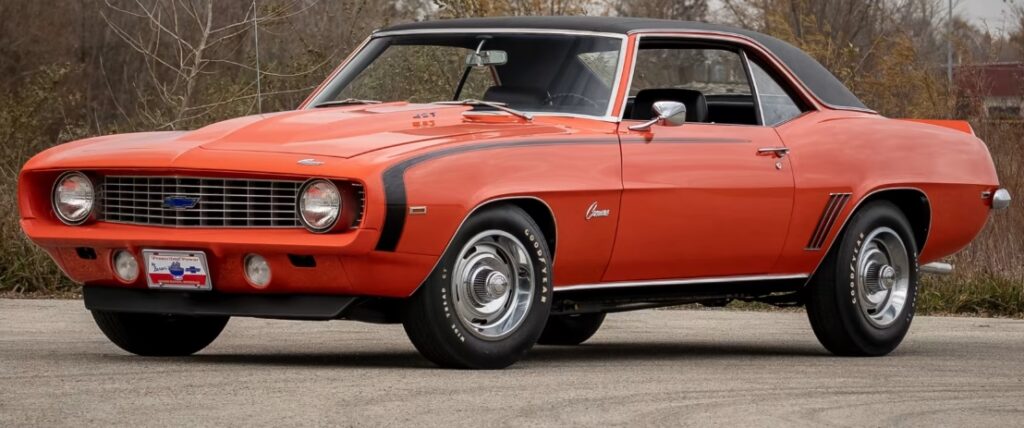
Berger Chevrolet ordered and sold a significant number of these special Camaros in 1969 — around 40 cars in an era when only a few dealers understood how to leverage COPO effectively. These cars often featured L72 427 engines, an automatic Turbo 400 or manual Muncie four‑speed transmission, and Rally Sport or SS packages on top of the COPO hardware.
1969: Berger’s COPO Camaro Era
The 1969 Camaro COPO story is the cornerstone of Berger’s performance legacy. That year, several Camaros were ordered through the COPO system by dealers like Berger to equip them with 427 ci big‑block engines that would legally undercut corporate restrictions against offering such engines in Camaros.
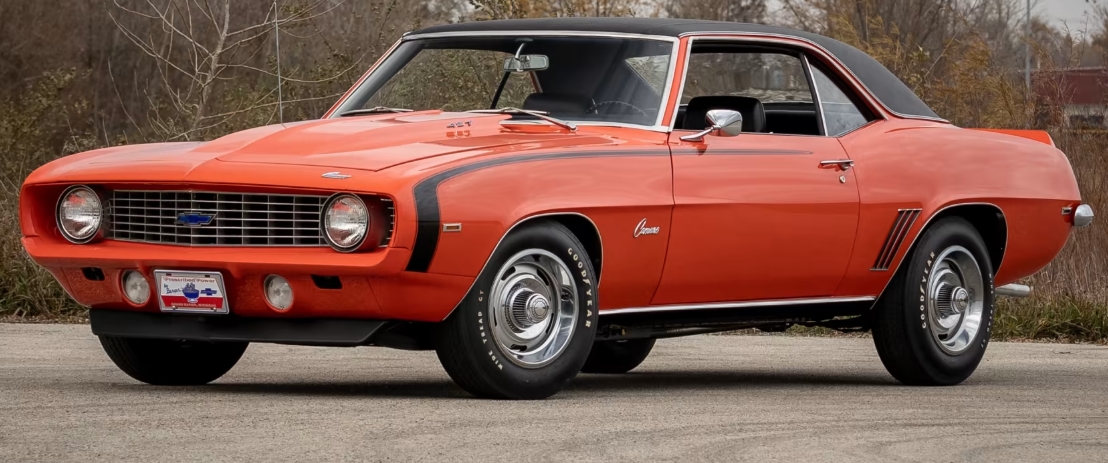
Berger’s COPO Camaros typically came in first‑generation Camaro bodies with base trims like RS (Rally Sport) or SS, but what made them stand out was their exceptional performance equipment. These cars were not factory‑branded “Berger” models — the COPO designation came from Chevrolet’s ordering system — but their association with Berger enhanced their appeal. Some were even ordered with a ZL‑2 cowl induction hood, Rally Sport trim, and more substantial suspension upgrades, making them rare collector standouts.
One particularly prized variant is the 1969 RS Double‑COPO Camaro equipped with both the 427 and the Sports Car Conversion Package — a combination that brought power and handling together in a rare and potent package. Around 58 of these cars were built with transmissions ranging from automatic to manual and finished in eye‑catching colors like Fathom Green — some retaining original Berger dealership provenance today.
These COPO cars have since become legendary — fetching high collector values and frequently appearing at auctions and in magazine features. They represent a unique confluence of factory horsepower and dealer‑driven enthusiasm unmatched by many contemporaries.
Berger’s Modern Interpretation: Limited‑Run Dealer Editions
The legacy of performance did not end in 1969. Berger Chevrolet revived its high‑performance ethos decades later during the fourth‑generation Camaro era (1998–2002), creating Berger‑affiliated Camaros that echoed the COPO spirit, albeit in a much later market context.
In anticipation of the Camaro’s discontinuation after 2002, Berger sought to honor its muscle car roots by commissioning a series of limited‑edition Camaros, colloquially referred to by enthusiasts as “dealer COPOs” for their rarity and performance upgrades — although these were not COPO cars in the traditional 1969 sense. Instead, they were performance‑enhanced road‑going specials created with tuning partner GMMG, Inc. and equipped with bespoke performance enhancements:
- 2000 Berger Camaro SS — A limited edition with a performance‑tuned LS1 engine outputting roughly 375 hp.
- 2001 Berger Camaro Dick Harrell Edition — Named after the legendary drag racer and introspective flame in Chevy performance lore; these featured wide‑body modifications and enhanced powertrains.
- 2002 Berger Camaro 427 Phase III — The culmination of the Berger series, fitted with significant power upgrades (427 Phase III package), manual transmissions, and upgraded suspensions, in a run of around 100 cars.
Total production across these three years reportedly exceeded 100 Berger‑specific limited‑edition Camaros, with various sub‑variants including Hot Rod Magazine Editions, ZL1 tribute cars, and the ever‑popular Dick Harrell heritage cars.
These later Berger Camaros often carried special badges, unique interior emblems, and performance enhancements that set them apart from standard SS trims — but their rarity and dealer affiliation were the primary factors making them collectible today.
Berger and COPO in Competition
Berger’s involvement with COPO cars did not end with sales alone. In the modern era, the dealership and its partners remained active in NHRA drag racing, fielding COPO Camaros in competition. Berger’s support and sponsorship helped racers like Jeff Strickland achieve national titles, including an NHRA Stock Eliminator championship in 2016 — the first for a COPO in NHRA competition — further cementing the dealership’s involvement in the world of high‑performance drag racing.
Trim Levels and Models Linked to Berger COPO Camaros
Since Berger did not produce COPO Camaros as a defined factory model range, the “trim levels” associated with Berger COPO or dealer‑linked Camaros are best understood by variant categories based on performance and enhancements:
1. 1969 COPO Camaros (Classic Era)
- L72 COPO 9561 Camaros — 427 ci big‑block muscle under Berger distribution.
- RS/Double COPO — Coupe versions with Rally Sport appearance and COPO handling packages.
- SS COPO Variants — Some built with SS trim alongside COPO options.
2. 2000–2002 Berger Edition Camaros (Legacy Era)
- 2000 Berger Camaro SS — ~375 hp LS1 tuned variant.
- 2001 Berger Camaro Dick Harrell Edition — Limited special with wide‑body and high performance.
- 2002 Berger Camaro 427 Phase III — The most potent street‑capable Berger Camaro of the era with upgraded powertrain, suspension, and exclusivity.
These models were produced in small numbers and are often identified today via collector registries, unique VIN markers, and enthusiast documentation.
Cultural Impact and Collector Appeal
Berger COPO Camaros — whether classic 1969 drag cars or limited‑edition road variants from the early 2000s — hold significant appeal among collectors and enthusiasts for several reasons:
- Provenance and Rarity: COPO cars ordered through Berger or modified under its nameplate often carry historical documentation and dealership ties that enhance value.
- Performance Legacy: These cars epitomize the performance aspirations of their eras — drag strip power in the classic age, and bespoke dealership enhancements in the modern era.
- Community and Enthusiast Recognition: Enthusiasts frequently showcase these cars at events like the Berger All‑GM Show, where rare examples become highlights for spectators and collectors alike.
Future Outlook
The era of COPO‑ordered classic Camaros highlights a treasured moment in American automotive history — one where the energy of competition and dealer ingenuity intersected. Today, the COPO Camaro name lives on through Chevrolet Performance’s official COPO program (producing modern drag race vehicles separate from Berger’s historical role), but the link to dealerships like Berger remains a cherished part of the lore that shaped the muscle car mythology.
As collector interest continues to grow, Berger COPO Camaros — both vintage and dealer‑enhanced modern editions — will likely continue appreciating in value. Their scarcity, performance pedigree, and dealership heritage resonate with a new generation of enthusiasts and restorers who appreciate cars beyond mass‑production norms.
The story of the Berger Chevrolet COPO Camaro is not one of a distinct production model line created by a dealership, but rather a narrative of dealer performance culture, fan devotion, and rare machine heritage. From the raw drag power of the 1969 COPO 427 Camaros ordered and sold through Berger, to the bespoke limited‑edition Camaros of the early 2000s, Berger’s influence on the Camaro world endures. These cars represent the intersection of grassroots performance passion and Chevrolet engineering, securing their place in automotive history and the hearts of collectors worldwide.