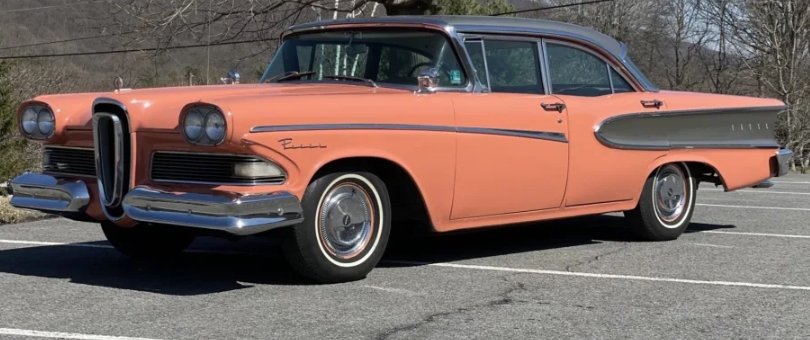
Edsel Pacer: The One-Year Wonder — A Unique American Classic
The Edsel Pacer occupies a distinctive place in American automotive history — not just as part of Ford Motor Company’s ill-fated Edsel division, but as one of the marque’s most popular and collectible models, despite being produced for only a single model year: 1958. While its lifespan was brief, the Pacer’s design, engineering, and its place within the broader Edsel story make it a fascinating subject for automotive enthusiasts, historians, and collectors alike. This article traces the evolution of the Edsel Pacer, describes all models and trim offerings, and explores its legacy and future outlook more than six decades after it left showrooms.
The Birth of Edsel and Where the Pacer Fits In
The Edsel brand was created by Ford Motor Company in the mid-1950s as a new division intended to bridge the gap between the mainstream Ford line and the more upscale Mercury vehicles. Named after Edsel Ford, son of company founder Henry Ford, the marque was marketed as a fresh, innovative competitor to General Motors and Chrysler’s full-line offerings. With substantial investment in marketing and product development, Ford launched Edsel with high expectations for the 1958 model year, touting advanced features and bold styling. Despite this effort, the brand became synonymous with commercial failure shortly after its debut.
Within this lineup, the Edsel Pacer was positioned as one of the mid-range passenger cars — a step up from the base-trim Edsel Ranger, but below the top-end Edsel Corsair and Edsel Citation in terms of luxury and standard features.
1958: The Only Year of the Pacer
Production and Market Context
The 1958 Edsel Pacer was built exclusively for the 1958 model year. While Edsel offered several nameplates — including Ranger, Corsair, Citation, and station wagons like the Villager, Bermuda, and Roundup — the Pacer stood out as a central part of the marque’s passenger car strategy.
That year, Edsel sold just over 63,000 vehicles across all models, a figure far below Ford’s expectations of around 200,000 units. Nonetheless, the Pacer, with 20,988 units produced, was one of the best-selling Edsel series for 1958, accounting for roughly a third of the brand’s total production.
.

.
Platform and Engineering
Mechanically, the Pacer shared the smaller Edsel platform, with a 118-inch wheelbase also used by the Ranger series. This platform was narrower and shorter than the larger Edsel Corsair and Citation models — which rode on Mercury-derived platforms — but it was still a full-size American automobile in its own right.
Under the hood, the Pacer was powered by Ford’s 361 cubic-inch FE V8 engine, which was rated at around 303 horsepower with a four-barrel carburetor and robust torque output. This powerplant was shared with most Edsels that year and provided competitive performance for the era.
Pacer Models and Trim Levels in 1958
Unlike many cars today with generations of varied styling and equipment, the Pacer’s entire production run occurred within a single model year, and all variations stemmed from that one design cycle. However, within 1958, buyers could choose from several body styles and trim configurations — giving the Pacer both breadth in appeal and depth in collector interest today.
Body Styles Offered
The 1958 Pacer was available in four main body styles:
- 4-Door Sedan – The highest-production version with conventional sedan styling.
- 4-Door Hardtop – A pillarless design with sleeker, sportier looks.
- 2-Door Hardtop Coupe – A stylish, performance-oriented variant with roofline flare.
- 2-Door Convertible – A fully open-top model, prized today for its rarity and classic appeal.
Each body style shared the same overall engineering package, but cosmetic details and equipment varied slightly to match the expectations of buyers in each segment. For example, the convertible often attracted buyers seeking a more expressive appearance and a perceived upgrade in standard equipment.
Production Totals by Body Style
According to production records:
- 4-Door Sedan: 7,141 units
- 2-Door Hardtop: 6,717 units
- 4-Door Hardtop: 5,254 units
- 2-Door Convertible: 1,876 units
These figures reflect a healthy mix of styles, with the convertible being the rarest of the Pacer body styles and highly collectible today.
Trim and Feature Highlights
The Pacer offered somewhat more standard trim and interior features than the base Ranger, aligning it more with buyers seeking a slightly more upscale experience without stepping up to Corsair or Citation pricing. Standard features included:
- Contoured seat upholstery and color-matched foot mats
- Stainless steel interior and exterior trim accents
- Edsel’s distinctive center-mounted “floating” speedometer (a rotating dome)
- Optional features such as air conditioning, power steering, power brakes, and radio were also available, although costlier.
One of the most talked-about features of many 1958 Edsels — not exclusive to the Pacer — was the Teletouch automatic transmission, which placed push-button gear selection in the center of the steering wheel. While innovative, the system proved to be problematic and unpopular, and it was discontinued partway through the year in some markets.
Why the Pacer Was a One-Year Model
Despite solid production and relative popularity within the Edsel lineup, the Pacer did not return for 1959 or 1960. Several strategic and market forces contributed to its abrupt end:
1. Edsel’s Struggles and Quick Retrenchment
Overall Edsel sales in 1958 were far below expectations. Market demand for the marque collapsed amid a late-1950s recession, design criticism, and ineffective marketing. As a result, Ford significantly cut back the Edsel lineup for 1959, eliminating several models, including the Pacer and the top-end Citation.
2. Simplification of the Brand
With fewer buyers and mounting losses, Ford streamlined Edsel to focus on fewer models. In 1959 and beyond, surviving Edsel offerings included the base Ranger and the Villager wagon, with styling updates to make the cars more conventional and less polarizing to buyers.
3. Redesign and Label Changes
Even though the Edsel brand continued into the 1959 and 1960 model years for a small lineup, the diminished role and simpler positioning meant there was less rationale to retain a mid-range label like Pacer. The remaining sedans were marketed under the Ranger nameplate in 1959, and by 1960 Edsel was drawing down to only passenger cars and one wagon before being discontinued altogether.
The Pacer in Retrospect: Legacy and Collector Value
Though it was built for just one year, the Edsel Pacer’s reputation has strengthened over time. Classic car enthusiasts appreciate it both for its unique place in automotive history and for its aesthetics that, while controversial in their day, now evoke the boldness of 1950s American design.
Collectibility and Market Interest
The Pacer’s limited production, multiple body styles, and convertible rarity make it an appealing find for collectors. Well-preserved examples — particularly the convertible and hardtop versions — often draw attention at car shows, auctions, and museum exhibits. Convertible models, with fewer than 2,000 produced, are particularly prized for their scarcity and visual appeal.
Cultural and Historical Significance
The Pacer serves as a reminder of an era when carmakers experimented boldly with styling and features in pursuit of market share. Its distinctive front fascia, engineering features like the floating speedometer, and place within the Edsel story give it enduring interest for historians and enthusiasts.
Future Outlook: The Pacer’s Enduring Presence
Realistically, there is no chance of a modern Edsel Pacer being revived by Ford or any other manufacturer. The Edsel marque itself was discontinued after the 1960 model year, and although the company later reused several Edsel names (e.g., Villager on Mercury wagons and minivans), the Pacer name has not reappeared in production vehicles in its original automotive role.
Instead, the Pacer’s legacy will continue among classic car collectors and automotive historians. Enthusiast clubs, restoration specialists, and collectors help preserve these vehicles and their stories, connecting new generations with the bold and sometimes ill-fated dreams of 1950s automotive design.
The Edsel Pacer is a quintessential example of automotive ambition. Produced for a solitary model year, it nonetheless stood out within the Edsel lineup as a well-equipped, visually distinctive full-size car that offered buyers a mid-range choice with several body styles and desirable features. Its relatively strong production numbers for 1958 contrast sharply with the truncated existence of nearly every other Edsel nameplate.
While its sales life was brief and the overall Edsel venture is often remembered as a failure, the Pacer’s story has grown in appreciation over time. Today, it occupies a special place in classic car culture — a rare and compelling reminder of an era when Detroit was willing to take big risks, even if only a few survived the test of time.