Evolution of The MG Hector: From British Heritage to a Digital Indian Sensation
The name MG (Morris Garages) has long been synonymous with British motoring heritage, evoking images of classic two-seater sports cars like the MGB. However, the 21st century saw a dramatic reinvention of the storied brand under the ownership of China’s SAIC Motor. Nowhere was this transformation more apparent, nor more successful, than in its monumental launch in the Indian automotive market: the MG Hector. Unveiled in 2019, the Hector was not just another SUV; it was a statement of intent, a “Smart Car” that aimed to redefine the very concept of connectivity and features in its segment. This article traces the evolution of the MG Hector, from its groundbreaking debut to its current status as a formidable player in the competitive Indian SUV landscape.
A Brand Reborn in a New Market
Before diving into the Hector itself, it’s crucial to understand the context of MG’s return. After a long hiatus from the Indian market, the brand was revived by SAIC Motor in 2017, which established MG Motor India. The strategy was clear: to re-enter the market not with a niche sports car, but with a high-volume, mass-market product that could capture the imagination of modern Indian consumers. They needed a product that was bold, feature-rich, and offered something genuinely new.
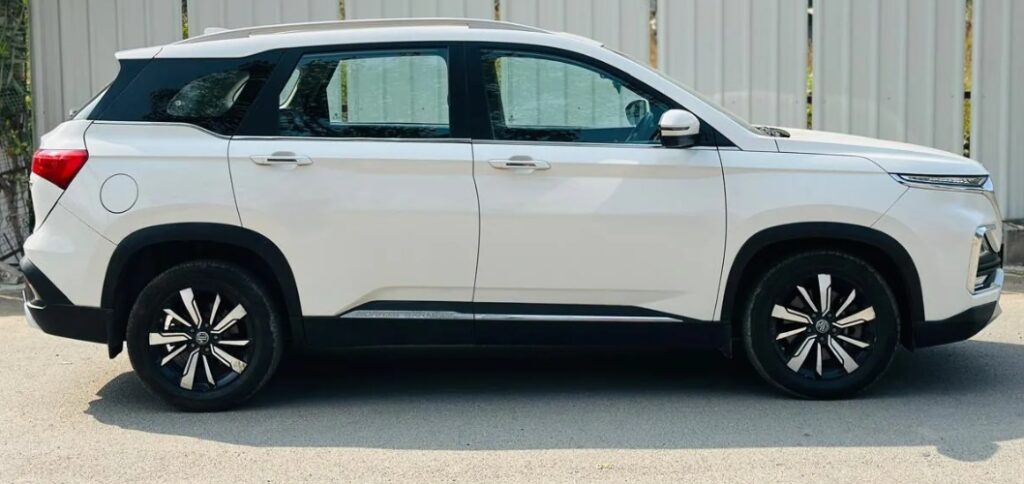
The result was the MG Hector, a mid-size SUV designed to compete directly with established benchmarks like the Hyundai Creta, Kia Seltos, and Harrier. Unveiled in May 2019 and launched in June 2019, the Hector was an immediate sensation, primarily due to its audacious design and its headline-grabbing “Internet Inside” philosophy.
.
THIS might be a great place to get your new car from!
Or for those who are into the “car flipping” business, here’s an excellent resource for you!

.
Phase 1: The Genesis (2019)
The first-generation MG Hector was built on the SAIC’s “Global Modular Platform,” which it shared with the Baojun 530. However, MG heavily re-engineered and redesigned it for Indian conditions and tastes. It was a large vehicle for its class, boasting a road presence that was immediately a key selling point.
Exterior and Interior Design: The Hector’s design was polarizing but undeniably distinctive. The front was dominated by a massive chrome-studded grille, which became the brand’s signature “Starmatrix” design. Flanking it were projector headlamps and distinctive daytime running lamps (DRLs). The silhouette was clean and upright, with minimal character lines, while the rear featured a chunky design with LED taillamps connected by a blacked-out panel bearing the “MG” logo.
Inside, the cabin was spacious and followed a minimalist design philosophy. The centerpiece, quite literally, was a massive 10.4-inch vertical touchscreen infotainment system that controlled almost every function, from air conditioning to the panoramic sunroof. This was the physical manifestation of the “Internet Inside” tagline. The quality of materials was competitive, and the rear seat offered ample legroom and a near-flat floor, making it comfortable for three passengers.
Powertrains: At launch, the Hector was offered with three engine options:
- 1.5L Turbocharged Petrol: A four-cylinder engine producing 143 PS and 250 Nm of torque. It was paired with either a 6-speed manual transmission or a 6-speed dual-clutch automatic (DCT).
- 2.0L Turbocharged Diesel: A Fiat-sourced four-cylinder engine (the Multijet II) that was a mainstay in many cars of this era. It produced 170 PS and 350 Nm of torque, paired exclusively with a 6-speed manual transmission.
- 48V Mild-Hybrid (Diesel): A unique offering in its class at the time, this variant paired the 2.0L diesel with a 48V lithium-ion battery and an integrated starter generator (ISG). This system provided torque assistance during acceleration and enabled start-stop functionality, promising slightly better fuel efficiency and smoother start-offs.
The “Internet Inside” USP: The Hector’s biggest draw was its suite of segment-first connected car features, powered by the i-Smart platform.
- Voice Commands: The car featured a dedicated voice command button on the steering wheel, allowing occupants to control a wide array of functions using natural language commands like “I feel cold” or “increase AC speed.”
- Panoramic Sunroof: At its launch, the Hector was the most affordable SUV in India to offer a panoramic sunroof, a feature that holds immense appeal for Indian buyers.
- Remote Operations: Through a smartphone app, owners could remotely lock/unlock the car, check its location, pre-set the AC temperature, and even open the sunroof.
- OTA Updates: The car was capable of receiving over-the-air (OTA) software updates to improve its features and functionality over time.
Initial Models and Trim Levels (2019): The Hector was launched in four primary trim levels, each offered with specific engine and transmission combinations:
- Style: The base model, available only with the 1.5L petrol manual. It was relatively barebones but included essentials like a 10.4-inch screen, dual airbags, and rear parking sensors.
- Super: The mid-spec trim that offered a significant step up. It was available with the 1.5L petrol (manual and DCT), 2.0L diesel (manual), and the 48V mild-hybrid diesel (manual). Key additions included a rear camera, 17-inch alloy wheels, automatic climate control, and the i-Smart connectivity suite.
- Sharp: The top-spec and most popular trim. It included all Super features plus key highlights like the panoramic sunroof, LED headlamps, power-folding ORVMs, and a power driver’s seat. It was offered with all powertrain options.
- Sharp (O): A limited-edition variant launched shortly after, building on the Sharp trim by adding safety features like the front parking sensors, a 360-degree camera, and a tyre pressure monitoring system (TPMS).
Phase 2: Mid-Life Refresh and Expansion (2021-2022)
By 2021, the competitive landscape had intensified, with rivals offering updated designs and features. MG responded with a strategic mid-life refresh and a new powertrain option, broadening the Hector’s appeal.
The Hector Facelift (Late 2021): In late 2021, MG launched the facelifted Hector. The updates were subtle but effective, focusing on premium touches.
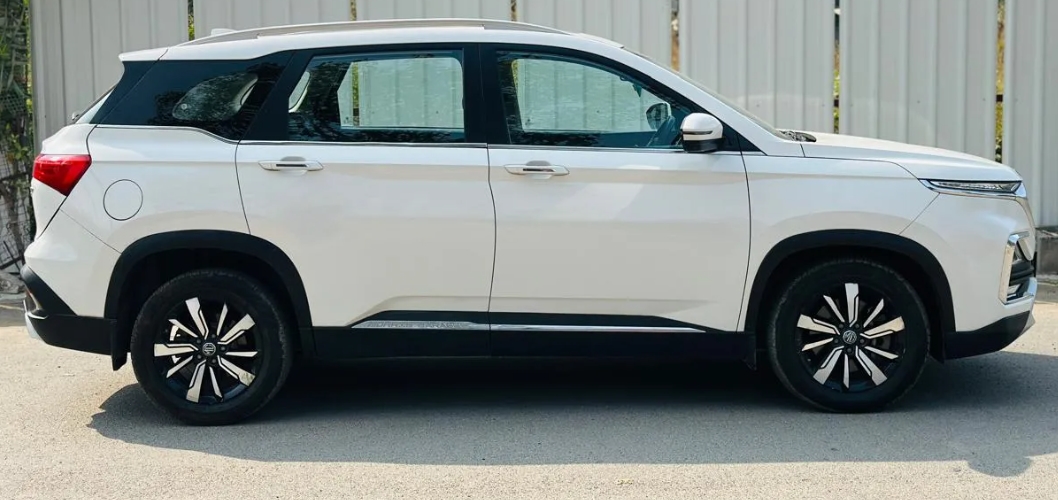
- Exterior Tweaks: The most noticeable change was the new front grille design, which replaced the chrome-studded look with a gloss black mesh pattern, giving it a more modern and sophisticated appearance. The MG logo on the front now opened to reveal the 360-degree camera. New dual-tone alloy wheels were also introduced.
- Interior Updates: The cabin received a significant upgrade with a new 7-inch fully digital instrument cluster, which replaced the analog dials with a customizable digital display. The steering wheel was redesigned to be more modern and ergonomic.
The Launch of the Hector Plus (2021): Alongside the facelift, MG introduced the Hector Plus, a six- and seven-seater version of the standard five-seater Hector. The name “Plus” referred to the extra seating capacity.
- Design: The Hector Plus featured minor cosmetic changes, most notably a revised front bumper and a different headlamp signature to differentiate it from the standard model.
- Layout: It was offered in two configurations: a six-seater with two separate captain seats in the middle row, and a seven-seater with a bench seat in the second row and jump seats in the third.
- Market Position: The Hector Plus was strategically placed to compete with larger three-row SUVs like the Hyundai Alcazar and Mahindra XUV700. The third row was best suited for children or for short journeys for adults. MG also offered a 6-seater diesel-automatic option, a combination not available on the standard Hector.
New Powertrain: The 2.0L Diesel-automatic (2022): A major criticism of the original Hector was the lack of an automatic transmission for the powerful diesel engine. In 2022, MG addressed this by introducing a 6-speed torque converter automatic transmission for the 2.0L diesel engine, available on the Super and Sharp trims of both the Hector and Hector Plus.
Updated Trim Levels (Post-2021): The trim structure for the Hector and Hector Plus range was also simplified and updated:
- Style: Remained the base model.
- Pro: Introduced as a new mid-spec trim, sitting below the Sharp.
- Sharp: Remained the top-spec trim, now with the updated design and digital cluster.
This “Plus” strategy created a sprawling lineup that catered to a wide audience, from a tech-savvy family of five wanting the latest features to a larger family needing the flexibility of three rows.
Phase 3: The Major Facelift – The New MG Hector (2023)
In January 2023, MG launched its most significant update yet, the New MG Hector. This was not just a refresh but a comprehensive overhaul of the SUV, aimed at keeping it ahead of the curve.
Design Overhaul: The New Hector adopted an even bolder design language.
- Exterior: The front was completely redesigned with a new, larger grille featuring a “Cosmic Triangle” design and a full-width chrome appliqué that connected the LED DRLs. The rear got new LED taillamps connected by a similar full-width light bar. The overall look was more futuristic and imposing.
- Interior: The cabin was revamped with a new dual-tone Ivory and Black theme, giving it a more premium feel. The door pads and armrests were softened with new materials.
Technological Leap: The biggest upgrade was in the infotainment and connected technology.
- Largest-in-Segment Screen: The vertical 10.4-inch screen was replaced by a massive 14-inch vertical HD touchscreen, arguably the largest in its class. The user interface was completely redesigned for a more smartphone-like experience.
- Advanced i-Smart 2.0: The connected car suite was upgraded with a more powerful chipset, enabling faster response times. A standout feature was the Wikipedia and JioSaavn integration, allowing users to access information and stream music directly through the car’s system without using a phone.
- Ventilated Seats: A highly requested feature was finally added to the front seats.
- Safety: It came equipped with Level 2 ADAS (Advanced Driver Assistance Systems), making it one of the few in its segment to offer this. Features included Adaptive Cruise Control, Lane Keep Assist, Forward Collision Warning, and Automatic Emergency Braking.
Powertrain Strategy: The 2023 update saw a strategic simplification of the powertrain lineup. MG discontinued the diesel engine options entirely, both the manual and the automatic. This move aligned with the industry’s shift towards petrol and electrification. The Hector was now offered only with the 1.5L turbo-petrol engine, with the same manual and DCT automatic choices.
Trim Levels of the New Hector (2023): The trim structure was again revised for the Hector and Hector Plus:
- Style: Base model.
- Pro: Mid-spec, available as a 5-seater Hector and a 6/7-seater Hector Plus.
- Sharp Pro: The new top-spec trim, available on both 5-seater and Plus models. This trim bundled all the top features, including the 14-inch screen, Level 2 ADAS, panoramic sunroof, and 360-degree camera.
This move streamlined the lineup and put the focus squarely on petrol power and advanced technology.
The Current Lineup (As of 2024)
Today, the MG Hector stands as a mature and feature-rich product. The lineup consists of the standard five-seater Hector and the six/seven-seater Hector Plus. Both are offered with the 1.5L turbo-petrol engine and are available in Style, Pro, and Sharp Pro trims. The ADAS suite and the 14-inch screen remain its key differentiators in a fiercely competitive market.
Competition: The Hector competes in the compact SUV segment against a host of strong rivals, including the Hyundai Creta, Kia Seltos, Maruti Suzuki Grand Vitara, Toyota Urban Hyryder, Volkswagen Taigun, Skoda Kushaq, and the Harrier/Safari from Tata.
Future Outlook
The MG Hector has been a pivotal product for MG in India, establishing the brand as a serious contender and a purveyor of technology. Its journey reflects a clear evolution: from a feature-first disruptor in 2019 to a technology-laden flagship in 2023. Its discontinuation of the diesel engine was a bold but necessary step for the future.
Looking ahead, MG is set to introduce its next big product: the MG Comet EV, a compact electric vehicle. The learnings from the Hector’s i-Smart platform and its focus on modern mobility solutions will likely influence the brand’s future direction. While the Hector may eventually be due for a full generational replacement, its legacy will be that of the vehicle that successfully introduced the “Internet Inside” philosophy to India and made a British name a household word in the modern Indian household. It was the car that dared to be different, and for a time, it was the smartest choice on the road.