Evolution of The Oldsmobile Cutlass Ciera
Of all the automotive nameplates that rose to prominence during the mid-20th century, few are as emblematic of their era as Oldsmobile. For decades, the brand occupied a comfortable, prestigious space in the General Motors hierarchy, known for its “Rocket” V8s and forward-thinking technology. But by the 1970s, the landscape was shifting. A new category of vehicle was emerging: the mid-size, front-wheel-drive sedan. This was a segment that Oldsmobile, once a pioneer, could not afford to ignore. The result was a car that would become one of the brand’s longest-running and most recognizable nameplates: the Oldsmobile Cutlass Ciera.
This is the story of its evolution, a tale that spans nearly two decades, reflecting the changing tastes, regulations, and fortunes of the American automotive industry.
A New Age for a Legendary Name: The Birth of the Cutlass Ciera (1982-1988)
By the early 1980s, the automotive world was in the throes of a revolution. The fuel crises of the 1970s had permanently altered consumer priorities, pushing efficiency and forward-thinking design to the forefront. The Oldsmobile Cutlass Supreme, the brand’s mid-size pillar, was still a rear-wheel-drive, V8-powered car from the late 1970s. It was time for something new.
For 1982, Oldsmobile introduced the Cutlass Ciera. The name itself was a departure, a sleek, modern-sounding moniker that helped distinguish it from its RWD sibling. It was part of GM’s ambitious “A-body” platform, a project that would underpin an entire generation of family cars for Buick, Oldsmobile, Pontiac, and Chevrolet.
Design and Powertrain: The first-generation Cutlass Ciera featured a classic, formal “three-box” design with squared-off lines, a upright grille, and a distinct, angular profile. While not revolutionary in its styling, it was clean, conservative, and perfectly aligned with the Oldsmobile brand identity of the time.
The real story, however, was what lay underneath. The Ciera was exclusively front-wheel drive, a significant change that offered better traction in inclement weather and more interior space due to the absence of a driveshaft tunnel. Power came from a new family of “4” engines. Base models were equipped with the reliable 2.5-liter “Tech IV” four-cylinder, an engine co-developed with Pontiac. For those wanting more pep, a 3.0-liter V6 was available.
Initial Models and Trims (1982-1985): The Ciera lineup was relatively simple at its launch:
- Base: The entry-level model, well-equipped by the standards of the day, featuring vinyl upholstery, basic AM/FM radio, and power steering.
- Brougham: The luxury-oriented trim. It added plush velour seating, carpeting, a more elaborate “waterfall” grille, and additional sound insulation. It was the quintessential Oldsmobile experience in a more compact package.
In 1984, the Ciera received a significant update that truly defined its look. The front end was restyled with a more aerodynamic, sloped grille and quad rectangular sealed-beam headlights, giving it a more modern and sophisticated appearance. This was the face most people remember. Later in the run, an S trim was introduced, which was essentially an appearance package that offered a sportier look without significant mechanical upgrades.
.
NO MORE dead batteries with this:

.
Refinement and the V6 Revolution: The Second Generation (1989-1996)
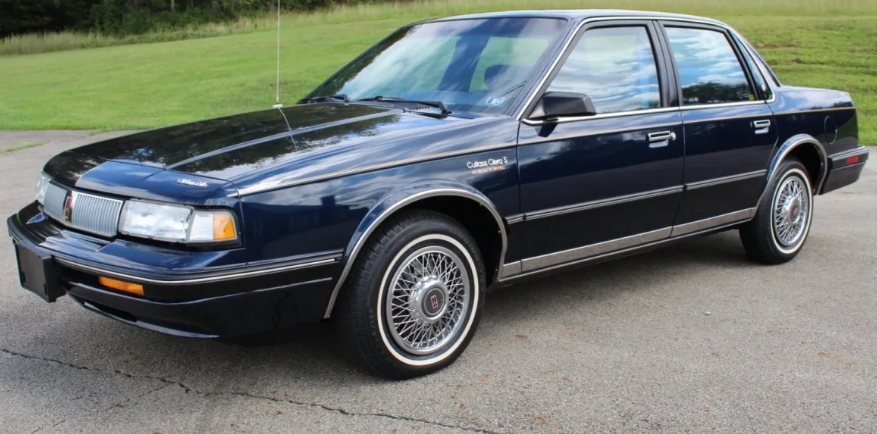
After nearly a decade on the market, the Cutlass Ciera was ready for a complete redesign. The second-generation model, launched for the 1989 model year, was a masterclass in evolutionary design. It retained the core concept but polished every aspect of it.
The new Ciera was lower, wider, and more rounded. Its “aero” styling was heavily influenced by the highly successful GM “H-body” Buick LeSabre/Pontiac Bonneville of the same era. The sloped hood, integrated bumper, and wraparound headlights gave it a flowing, contemporary look that stood in stark contrast to its boxy predecessor.
The Powertrain Leap: The most critical change under the hood was the availability of a new 3.8-liter V6 engine. While the 3.0-liter V6 carried over for a time, the 3800 Series I V6 was a game-changer. It was smoother, more powerful, and famously durable. Paired with a 4-speed automatic transmission, it gave the Ciera the effortless cruising ability that was expected in a premium Oldsmobile. The 2.5-liter four-cylinder remained the base engine, offering respectable fuel economy for budget-conscious buyers.
A Comprehensive Trim Hierarchy (1989-1996): The second generation saw the most diverse and well-defined trim levels in the Ciera’s history. The lineup was now structured to appeal to a wide spectrum of buyers:
- Base: Still the standard-bearer, offering everything you needed and nothing you didn’t. A/C, power steering, and an AM/FM stereo were standard.
- Ascendant: Introduced as a new mid-level trim, the Ascendant was a significant step up. It featured upgraded cloth upholstery, a tachometer, a premium sound system with front tweeters, courtesy lighting, and distinctive “Ascendant” badging. It was the “sweet spot” in the lineup for many, offering a touch of luxury without the Brougham’s price tag.
- Brougham: The flagship of the Ciera line. It built upon the Ascendant with even plusher “loose pillow” style velour seats, usually in a unique pattern, woodgrain trim on the dash and doors, and a more formal roofline with a vinyl top option—a throwback to a classic luxury feature. The Brougham was the car for those who wanted the most traditional Oldsmobile experience.
- S: The S trim was repositioned as the sporty variant. It typically included firmer suspension tuning (from the standard Touring Suspension), specific “S” alloy wheels, a leather-wrapped steering wheel, and often included the more powerful V6 engine as standard. It was a direct competitor to the Pontiac Grand Prix and Chevrolet Lumina Euro.
- International Series: This was a special, highly-optioned trim package that could be applied to the Ciera (and other Oldsmobiles). It usually included unique two-tone paint, special “International” badging, deluxe wheel covers or specific alloys, and a unique cloth interior. It was a visual and content upgrade meant to evoke a sense of global sophistication.
- Holiday: This was the designation for the sedan only with the “Euro” roofline (the formal “B” pillar with a vinyl or painted panel), creating a sleeker, hardtop-like appearance.
Other Body Styles: While the sedan was the volume leader, the Ciera was also offered in two other configurations:
- “Brougham” Holiday Coupe: A sleek, two-door model with a fast-roof styling, popular with buyers seeking a more stylish personal luxury car.
- “Custom Cruiser” Wagon: An incredibly popular and capable station wagon. It shared all the trim levels of the sedan (Base, Brougham, etc.) and was renowned for its durability and massive cargo area. It was the go-to choice for families and commercial users alike.
Throughout this generation, the Ciera was a model of consistency. Minor changes were made over the years, including the integration of airbags in the early ’90s and the eventual phasing out of the coupe and wagon body styles in 1992 and 1994 respectively, as market demands shifted back towards sedans and SUVs.
The Sunset: Final Years and Legacy (1997-2004)
For 1997, the Cutlass Ciera underwent one final, comprehensive redesign. It grew slightly in every dimension, riding on the refined “GM W-body” platform, which it shared with the Buick Century. Stylistically, it was a complete departure. The aerodynamic curves of the ’89 model were replaced by a softer, more rounded, “jellybean” shape with flush-fitting composite headlights and a lower drag coefficient.
This final generation was a car focused entirely on quiet comfort, reliability, and value. The interior was spacious and ergonomic, but the dashboard and door panels utilized harder plastics than before, a sign of cost-cutting as GM prepared to phase out many of its traditional car lines in favor of trucks and SUVs.
The trim levels were simplified for this last run:
- Base: The well-equipped foundation.
- GL: A new luxury trim that replaced the Brougham. It featured upgraded cloth, a better sound system, and more standard equipment.
- GTS: A new “sport” trim that replaced the S. It typically included a firmer suspension, specific alloy wheels, and a leather-wrapped interior. It was often paired with the most powerful engine available: the 3800 Series II V6, now with 200 horsepower.
This final Ciera was a dependable, comfortable, and efficient sedan. It was, however, competing against a new wave of mid-size cars from Honda, Toyota, and Nissan that were rapidly gaining a reputation for bulletproof reliability and higher resale value. The Oldsmobile brand itself was struggling to find a unique identity within GM, and sales of the Ciera, while steady, were no longer the force they once were.
The production of the Cutlass Ciera ended in the summer of 2004. It was one of the last cars to wear an Oldsmobile badge before the legendary 107-year-old brand was retired by General Motors at the end of the 2004 model year.
Future Outlook and Enduring Legacy
Today, the Oldsmobile Cutlass Ciera holds a special place in automotive history. It is not a collector’s muscle car or a rare exotic. Its legacy is built on something far more significant: it was a ubiquitous, dependable, and quintessentially American family car that perfectly bridged the gap between the analog past and the digital future of the automotive world.
For a generation of Americans, the Ciera was the family car. Its comfortable ride, spacious interior, and robust V6 engines made it a perfect highway cruiser. Fleet buyers loved them for the same reasons, and they became a common sight as rental cars, taxis, and police cruisers, racking up hundreds of thousands of miles with basic maintenance.
The Cutlass Ciera’s evolution is a microcosm of the Oldsmobile brand’s own journey: from an innovative pioneer of front-wheel drive technology in the ’82 model, to a refined and respected leader in the premium mid-size segment in the ’90s, to a value-oriented, volume-seller in its final years.
In the modern era, the Ciera has found a new following among enthusiasts of “sleeper” cars and DIY mechanics. Its parts-bin sharing with countless other GM vehicles means it’s easy and cheap to maintain, and the legendary 3800 V6 is a popular platform for modifications. Finding a clean, low-mileage example today is a treat, as they stand as a rolling testament to an era of American carmaking when comfort, space, and V6 power were the primary metrics of a successful family sedan. The Oldsmobile Cutlass Ciera may no longer be in production, but for millions, its silhouette remains an indelible part of the American roadside.