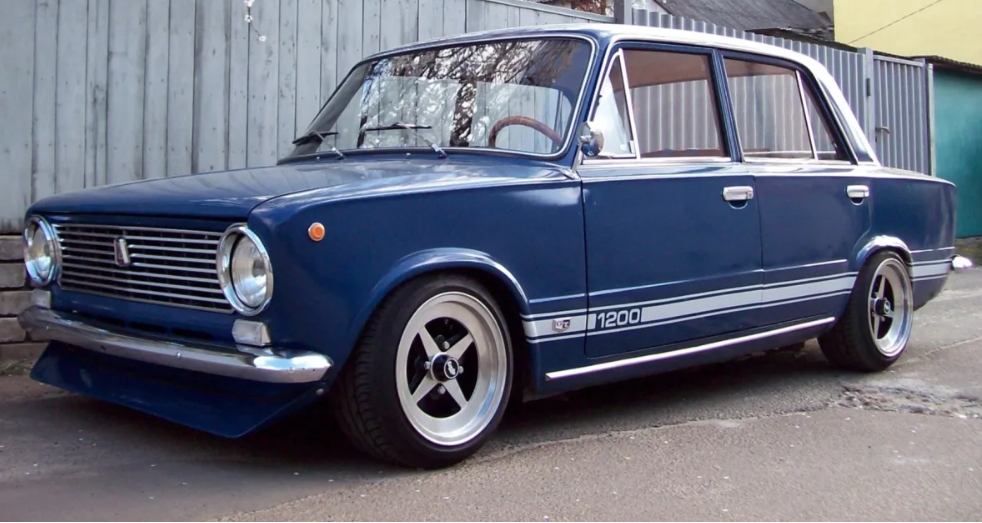
History and Evolution of the Lada 1200
In the annals of automotive history, few vehicles embody the spirit of the 20th century quite like the Lada. Born from the cold steel of Soviet industry and designed to democratize mobility for millions, the Lada was more than just a car; it was a statement of intent. While the Lada Niva conquered rugged terrain and the Lada Priora entered the modern era, it was the Lada 1200—and its progenitor, the VAZ-2101—that laid the foundation for the Soviet automotive identity.
The Lada 1200 (specifically the VAZ-21011 and its derivatives) represented a crucial evolutionary step: the transition from a licensed 1960s Italian design to a distinct, ruggedized vehicle tailored for the harsh realities of Soviet life. This article chronicles the lifespan, models, trim levels, and enduring legacy of the Lada 1200.
Part I: Origins – The Fiat Connection
To understand the 1200, one must look slightly backward to the VAZ-2101 (Lada 1200 “Zhiguli”). In 1966, the Soviet Union signed a landmark deal with Fiat to produce the Fiat 124. The goal was mass motorization. The resulting car, launched in 1970, was the VAZ-2101. It was a capable car, but it was strictly a 1960s design.
By the mid-1970s, the Fiat 124 was aging. While the Soviets were not yet ready to develop a wholly indigenous car (that would eventually become the Lada Samara), they needed a modernized version of the existing platform to stay competitive and address user complaints.
Thus, the VAZ-21011 was born. Introduced in 1974, this model was the direct predecessor to what most of the world recognized as the “Lada 1200.”
.
THIS might be a great place to get your new car from!
Or for those who are into the “car flipping” business, here’s an excellent resource for you!

.
Part II: The Birth of the Lada 1200 (VAZ-21011)
The VAZ-21011 was the definitive “standard” Lada of the 1970s. While it retained the body shell and overall silhouette of the 2101, the changes were significant enough to warrant a new identity.
Engine and Drivetrain: The most significant upgrade was under the hood. The 21011 moved from the 1.2-liter engine to a 1,294cc (1.3L) inline-four engine. This overhead valve (OHV) unit produced approximately 64-69 horsepower (depending on the carburetor spec), giving the car a much-needed boost in acceleration and top speed, allowing it to comfortably cruise at 90-100 km/h.
Exterior Styling: Visually, the 21011 distinguished itself from the “classic” 2101 with several key features:
- The Grille: Instead of the vertical headlights and prominent chrome grille of the 2101, the 21011 featured a flatter, horizontal grille with four round headlights (two high beam, two low beam). This gave the car a more modern, European look.
- Trim: Early models often featured rubber surrounds on the bumpers (black plastic bumpers became standard later), and the chrome trim was slightly revised.
- Badging: The trunk lid featured the “LADA” script in the new corporate font, along with the 1200 or 1300 badge.
Interior: The dashboard remained largely similar to the 2101 (the “bath tub” style), but the 21011 often featured slightly improved plastics and revised instrumentation. The rear seats were also redesigned for better comfort.
Part III: The “Universal” and Station Wagons
While the sedan was the bread-and-butter model, the Lada 1200 series expanded rapidly into utility and family transport. The Soviet Union had a massive demand for station wagons, as they doubled as family haulers and commercial vehicles.
VAZ-2102 (The “1200 Estate”): Although introduced in 1971 (based on the 2101), the wagon evolved alongside the sedan. Once the 21011 sedan was released, the wagon received the upgraded 1.3L engine. In export markets, this was often marketed simply as the Lada 1200 Estate. It featured a rear-hinged “suicide” rear door (a holdover from the Fiat 124) and a massive cargo area.
VAZ-21013: This was a later iteration (introduced circa 1977) of the 21011. It was essentially the same car but often available in different trim levels (lower and higher) for different markets. In the Soviet internal market, the 21013 was often a “luxury” version, featuring vinyl upholstery, better paint, and sometimes a radio as standard (whereas the base 21011 usually lacked a radio).
Part IV: The “Formal” Era and the 1200GA
As the 1970s progressed into the 1980s, the Lada 1200 underwent its final major evolution. The Soviet automotive industry began to consolidate under the Lada brand name, moving away from the “VAZ” nomenclature for marketing.
The Lada 1200 (Export Standard): By 1980, the domestic VAZ-21011 was often simply badged as “Lada 1200” for export to Western Europe, the UK, and Canada. The 1.3L engine remained the power plant.
The “Formal” Sedan (1982-1984): In 1982, a major update was released for the Soviet domestic market, known as the VAZ-21011 “Forma” (Formal).
- Exterior: This update finally removed the rubber bumpers in favor of black plastic bumpers that were integrated into the bodywork more cleanly. The side molding (rub strips) became more aerodynamic. The rear taillights were updated to a cleaner, rectangular design with a distinct black plastic surround.
- Interior: The interior saw the most dramatic change. The old “bath tub” dashboard was replaced by the modernized “simplified” dashboard (shared with the upcoming 2105/2107 series). This featured a flat, modern steering wheel, a new instrument cluster with a large speedometer, and square air vents.
- Mechanicals: The engine was updated to meet new noise and vibration standards, though the power output remained similar.
The Lada 1200GA: For the Soviet domestic market, the “GA” designation (Gubernatorial Automobile) denoted a higher trim level. A 1200GA would typically include:
- Vinyl or cloth-and-leatherette seat upholstery (checkered patterns were popular).
- Wood veneer dashboard trim.
- A radio (usually the “A-003” or similar).
- Fog lights.
- Better quality paint and chrome window surrounds.
Part V: The Lada 1200 in Export Markets
The Lada 1200 was a smash hit in several non-aligned and Western nations, particularly due to its low price and incredible durability.
United Kingdom: Introduced in the early 1970s, the Lada 1200 (and later the 1300) was marketed on ruggedness. It was sold through a network of dealers that were often affiliated with British Leyland or independent garages. It competed directly with the Morris Marina and Austin Allegro. It became a favorite of farmers and tradesmen because it was easier to fix than a Skoda and rusted less than a British car of the era.
Canada: Lada entered the Canadian market in the early 1980s. The Lada 1200/1500 series found a niche among buyers looking for a cheap, reliable winter beater. The rear-wheel-drive layout and simple mechanics made it easy to service.
West Germany: In Germany, the Lada 1200 was a hit with the “basic mobility” crowd. It was sold as the “Lada 1300” (21011) and was praised for its high ground clearance, which was excellent for navigating snow-covered Alpine roads.
Part VI: The End of the 1200 Series
The Lada 1200 (21011) and its derivatives were not replaced by a single car, but rather splintered into two distinct model lines that took over the market in the mid-1980s.
- The Lada 2105 (Vaz-2105): Introduced in 1979 (for testing, 1980 for sale), this was the utilitarian successor. It used the “Formal” dashboard and styling cues but retained the older 1.2L or 1.3L engine. It became the new standard “workhorse” sedan.
- The Lada 2107 (Vaz-2107): Introduced in 1982, this was the “luxury” successor to the 1200GA. It featured a more powerful 1.5L engine, vertical headlights (reminiscent of the classic look but modernized), and the highest level of trim.
Production of the VAZ-21011 (the primary 1200 model) wound down around 1983-1984 for the domestic market, and shortly after for export. However, the tooling and production lines continued to churn out cars based on this platform. The Lada 21013 (a 1980s update of the 21011) actually remained in production for the Cuban and Egyptian markets well into the 1990s.
Part VII: Legacy and Future Outlook
Durability and “Field Repairability”: The primary reason for the Lada 1200’s enduring legacy is its engineering philosophy. The engines used a timing gear chain rather than a belt (or cam), meaning they rarely suffered catastrophic failure. The solid axle rear suspension was built to withstand potholes and overloading. Most importantly, the car was designed to be repaired with a hammer, a wrench, and a screwdriver. There were no complex electronics or plastic clips to break.
Current Status: Today, the Lada 1200 is a rare sight on European roads due to the ravages of rust and scrappage schemes. However, in Eastern Europe and Russia, they remain in active use as daily drivers for the very poor, or as “dachnik” cars (summer cottage cars). They are also highly prized in Cuba, where the US embargo and lack of spare parts have made mechanics incredibly skilled at keeping these 1970s relics running using whatever parts are available.
The Future: There is no future production for the Lada 1200. However, the spirit of the 1200 lives on in the modern Lada Granta. The Granta, launched in 2011, is essentially a modern interpretation of the 1200 philosophy: a simple, rugged, affordable sedan with a high ground clearance and simple mechanics, stripped of unnecessary luxuries.
Conclusion
The Lada 1200 was not the fastest car, the most beautiful car, or the most advanced car of its time. Yet, it was one of the most successful. It bridged the gap between the licensed Fiat 124 and the fully independent Lada designs of the late 80s. It motorized the Soviet Union and provided affordable transport to the developing world.
For enthusiasts today, the 1200 represents a purity of automotive design—a time when a car was simply a metal box with an engine, designed to get you from A to B, no matter the weather or the road conditions. It remains a testament to the ingenuity of Soviet engineers who took a humble Italian design and turned it into a legendary survivor.