History of The Honda Acty: A Century of Reliability in Japan’s Kei Truck Market
The Honda Acty, a kei truck (small commercial vehicle) manufactured by Honda since 1979, has become a staple in Japan’s transportation landscape. Combining compact size, fuel efficiency, and practicality, the Acty has served as a vital workhorse for small businesses, entrepreneurs, and even families. Its enduring popularity lies in Honda’s ability to balance innovation with functionality, adapting to market needs while adhering to Japan’s strict kei truck regulations. This article explores the Acty’s history, its various generations and trim levels, and its potential future in an era of electrification and changing consumer demands.
A Brief History of the Honda Acty
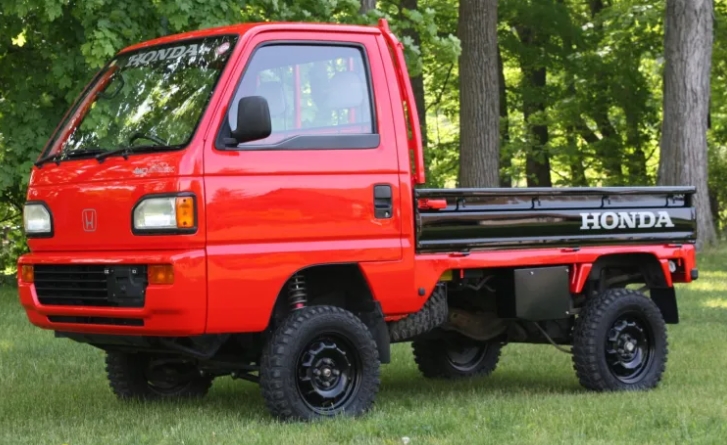
Japan’s kei truck industry began in the 1940s as small businesses sought affordable, efficient vehicles to transport goods. Government regulations categorized kei trucks based on dimensions and engine size (500cc or 660cc displacement and 1.5 meters in width) to ensure tax affordability. Honda entered this market in the 1970s, recognizing the demand for reliable commercial vehicles. The Acty, introduced in 1979 as the S120 series, marked Honda’s first foray into kei trucks. Its rugged design and versatile cargo space quickly made it a favorite among delivery services, food vendors, and local merchants. Over decades, the Acty evolved into a symbol of Japanese ingenuity, blending durability with subtle technological advancements.
.

.
Generations of the Honda Acty
Honda has refreshed the Acty five times since its debut, each generation introducing improvements in safety, comfort, and efficiency. Below is a breakdown of its evolutionary timeline:
1. First Generation (1979–1987): S120 Series
The original Acty (S120) featured a 360cc inline-four engine, producing 24 horsepower. Despite its modest power, the Acty’s lightweight frame and rear-wheel-drive configuration delivered impressive cargo capacity for its size. A 600cc diesel engine (22 horsepower) was also offered in some markets. The S120 came in two variants: the basic Work Van (cargo-focused) and the Pickup, a passenger-cab version with an upswept bed. Safety was minimal by modern standards, with no airbags or ABS, but its sturdy construction ensured longevity.
2. Second Generation (1987–1995): S130 Series
The S130 marked a significant redesign, refining the Acty’s interior and improving cargo accessibility. A new 660cc L-series gasoline engine (49 horsepower) became standard, while a more powerful 750cc diesel (40 horsepower) catered to heavy-duty tasks. Trims expanded to include the Work Van, Van Custom (upgraded seating and cargo partitions), and the G grade, which added features like a radio and reclining captain’s seats. The 1990 update added a 3-speed automatic transmission and enhanced lighting.
3. Third Generation (1995–2005): S140/S150 Series
The S140 and S150 generations prioritized driver comfort and cargo flexibility. The Acty received a 660cc K-series engine (52 horsepower) and optional 660cc diesel (44 horsepower), improving efficiency. Key updates included:
- Improved cab design: Ergonomic controls, better insulation, and optional AC.
- Van Custom trim: Added amenities like dual reclining seats, a reverse camera, and enhanced cargo hooks.
- 4-wheel-disc brakes for improved stopping power.
This era also saw the Acty adapted for niche markets, such as the Acty Special, a modified version for food vendors with built-in refrigerators.
4. Fourth Generation (2005–2013): HR-V Platform Influence
In 2005, Honda redesigned the Acty to align with its global strategy. The HR-V platform provided a more refined ride quality and a 660cc engine (55 horsepower). Trim levels now included:
- Work Van: Basic cargo variant.
- Van Custom: Mid-tier trim with power steering and a tilting/telescoping steering column.
- Van Custom GL: Top-tier trim with leather seats, a CD player, and satellite navigation.
Safety improvements like ABS, airbags, and rain-sensing wipers were introduced. The 2011 model added a 7-speed automatic transmission to enhance fuel economy.
5. Fifth Generation (2013–2021): Modernization and Versatility
The 2013 Acty shifted to a 2.6L diesel engine (75 horsepower) to meet growing demands for power and efficiency. The design became more angular, borrowing styling cues from the CR-V and Passport. Key features:
- LED lighting and a body-colored front bumper.
- Power tailgate with an automated lift function.
- Premium Van Custom trim: Optional roof rack, heated mirrors, and a sunroof.
This generation also introduced a 7-seater “Acty Crew” variant for passenger use, expanding its utility beyond purely commercial applications.
6. Sixth Generation (2021–Present): Electrification and Connectivity
The latest Acty, introduced in 2021, marks Honda’s commitment to sustainability and connectivity. It retains the 2.6L diesel engine but adds a hybrid system in some models, improving fuel efficiency by 20%. Notable upgrades:
- Digitized dashboards and Apple CarPlay/Android Auto integration.
- Advanced Driver-Assist Systems (ADAS): Includes lane-keep assist, adaptive cruise control, and automatic emergency braking.
- Optional 4-wheel-drive configuration for off-road access.
Trim levels now include Premium, Limited, and a special Acty Custom edition with lifestyle-focused features like a built-in cooler and foldable workbench.
Trim Levels and Variants
The Acty’s trim levels and configurations have evolved to meet diverse customer needs. Common trims include:
- Work Van: The base model with minimal interior, ideal for heavy cargo.
- Van Custom: Adds improved seating, cargo partitions, and basic tech.
- Van Custom GL/Premium: Top-tier trims with luxury features like heated seats, ambient lighting, and premium audio systems.
- Acty Custom: A lifestyle-oriented variant with a fold-down bench seat, foldable workbench, and enhanced storage.
- Acty Crew: A 7-seater focused on passenger transport.
- Special Editions: Models like the Acty Custom Hybrid or Acty Food Truck include built-in amenities for niche uses.
In recent years, Honda has offered optional 4-wheel-drive and roof rakes in premium trims, appealing to those needing extra capability.
Future Outlook: Electrification and Innovation
As the automotive industry embraces electrification, Honda faces a critical juncture with the Acty. The kei truck segment is expected to grow by 5% annually in Japan, driven by small business owners seeking eco-friendly vehicles. Honda has already introduced hybrid variants of the Acty, but full electrification poses challenges due to kei truck size regulations.
The next-generation Acty (beyond 2021) may adopt hydrogen fuel cell technology or battery-electric powertrains, aligning with Japan’s 2035 net-zero goals. Potential features could include:
- Solid-state battery packs for extended range.
- Solar panels on the roof to supplement energy.
- Autonomous driving capabilities for delivery services.
Honda has also hinted at expanding the Acty line into the global market, though regulatory differences (such as width and engine size limits outside Japan) may necessitate re-engineering. For now, the Acty remains a domestic icon, but its innovations could influence future commercial EVs worldwide.
Conclusion
Since 1979, the Honda Acty has embodied the spirit of Japanese industry—disciplined, reliable, and adaptive. From its humble beginnings as the S120 to the advanced 2021 model, the Acty has continuously evolved to meet the needs of small businesses and adventurers alike. With electrification on the horizon and a legacy of innovation, the Acty is poised to remain a keystone of Japan’s transportation ecosystem for decades to come. Whether hauling goods in Tokyo or navigating mountainous roads in Hokkaido, the Acty proves that small trucks can pack a powerful punch.