History of The Maruti Eeco: India’s Versatile Multi-Purpose Vehicle
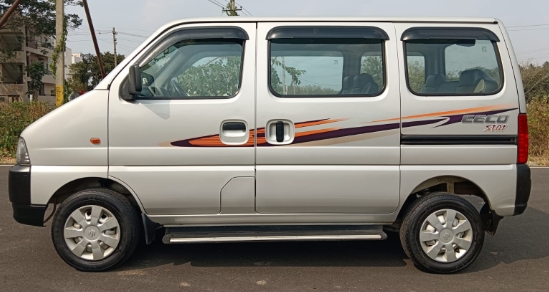
The Maruti Eeco is one of India’s most popular and affordable multi-purpose vehicles (MPVs), produced by Maruti Suzuki India Limited. Known for its spacious interior, practical design, and value-for-money proposition, the Eeco has catered to both personal and commercial needs since its launch in 2010. Over the years, it has become a go-to vehicle for families, small businesses, and fleet operators, offering multiple seating configurations, petrol and CNG variants, and a reputation for low maintenance costs.
Brief History
The Maruti Eeco was launched in January 2010 as a successor to the Maruti Versa, which was sold in India from 2001 to 2009. The Versa, despite its modern features for the time, struggled with high pricing compared to other Maruti models. The company decided to repackage the concept into a more affordable and practical offering — thus, the Eeco was born.
The Eeco was essentially an evolution of the Versa platform, with minimalistic features and a focus on cost-effectiveness. It retained the tall-boy van-like design, but with simplified interiors, fewer frills, and a new 1.2-litre petrol engine that met Bharat Stage IV (BS-IV) emission norms at the time.
Since its introduction, the Eeco has seen incremental updates rather than complete redesigns. Notably, in 2019, the Eeco was updated to comply with Bharat Stage VI (BS-VI) emissions norms, and in 2022, it received a new engine to meet BS6 Phase 2 standards.
Production Timeline
- 2010 – Present: The Maruti Eeco has been in continuous production at Maruti Suzuki’s manufacturing plants in India.
- Major Updates:
- 2010: Launch with 1.2L G12B petrol engine, BS-IV compliant.
- 2011 onwards: Introduction of factory-fitted CNG variants.
- 2016: Minor cosmetic changes and safety feature additions.
- 2019: BS-VI petrol engine upgrade.
- 2022–2023: New 1.2L K-Series Dual Jet VVT petrol engine, enhanced safety features, and compliance with BS6 Phase 2 norms.
Design and Layout
The Maruti Eeco is designed with utility in mind. It features a boxy silhouette to maximize cabin space, sliding rear doors for easy ingress and egress in tight spaces, and a high roofline for headroom. It is available in both 5-seater and 7-seater configurations, making it suitable for family use, school vans, cargo transport, and other commercial applications.
Dimensions (approximate for recent models):
- Length: 3,675 mm
- Width: 1,475 mm
- Height: 1,825 mm
- Wheelbase: 2,350 mm
- Ground clearance: 160 mm
The Eeco’s utilitarian approach extends to its interior, which is basic but functional. The dashboard is simple, with controls placed for easy reach. Over the years, safety features like seatbelt reminder, ABS with EBD, driver airbag, and reverse parking sensors have been added.
.
We LOVE cars & cruising around, but sometimes day trips to explore new cities are required (with family or friends) for a spice of variety in your life!
So GO explore!
Cruises & Day/Night City Tours to: Baltimore, Boston, Chicago, Marina Del Ray, New York, Niagara, Philadelphia, San Diego, San Francisco, Toronto, Washington DC, etc.:

.
Engine and Performance
Petrol Engine (2010–2019)
- Engine: 1.2L G12B inline-4, 1196 cc
- Power: ~73 PS @ 6,000 rpm
- Torque: ~101 Nm @ 3,000 rpm
- Transmission: 5-speed manual
- Mileage: Around 15–16 km/l (ARAI certified)
Petrol Engine (2019–2022, BS-VI)
- Engine: Updated G12B 1.2L to meet BS-VI norms
- Power: Similar output
- Improved emissions and fuel efficiency.
Petrol Engine (2022–Present)
- Engine: 1.2L K-Series Dual Jet, Dual VVT, BS6 Phase 2 compliant
- Power: ~80 PS @ 6,000 rpm
- Torque: ~104.4 Nm @ 3,000 rpm
- Transmission: 5-speed manual
- Mileage: Around 19.71 km/l (ARAI certified)
CNG Variants
The Eeco has been one of the most popular factory-fitted CNG vehicles in India.
- Engine: 1.2L G12B or later K-Series tuned for CNG
- Power: ~71 PS (petrol mode), ~63 PS (CNG mode)
- Torque: ~85–98 Nm depending on fuel mode
- Mileage: Around 26–27 km/kg (CNG mode, ARAI certified)
Models and Trim Levels
The Maruti Eeco is offered in multiple versions to cater to different needs. As of recent years, the primary categories are:
1. Eeco 5-Seater Standard (Petrol)
- Basic interior and exterior features
- Steel wheels, manual controls
- Ideal for budget-conscious buyers
2. Eeco 5-Seater AC (Petrol)
- Adds air-conditioning for passenger comfort
- Retains basic design but more suitable for personal/family use
3. Eeco 7-Seater Standard (Petrol)
- Bench seating in the rear for extra passengers
- Primarily aimed at taxi operators, tour services, and large families
4. Eeco Cargo (Petrol/CNG)
- Rear seats removed for a large cargo bay
- Used widely by small businesses, courier services, and e-commerce delivery
- Available in petrol and CNG options
5. Eeco Ambulance
- Factory-fitted ambulance conversion
- Equipped with stretcher, oxygen cylinder mount, and necessary medical fittings
- Complies with AIS-125 Part 1 norms for ambulances
6. Eeco CNG Variants
- Available in both 5-seater and Cargo configurations
- Lower running costs due to CNG fuel
- Especially popular in urban fleet operations
Safety Features
Initially, the Eeco was quite basic in terms of safety, but over the years, Maruti Suzuki has upgraded it to meet India’s evolving safety regulations.
- Driver airbag (standard in recent models)
- ABS with EBD
- Reverse parking sensors
- Seat belt reminder
- Side impact beams
- Collapsible steering column
- Child lock for sliding doors
Market Position and Appeal
The Maruti Eeco has carved out a unique niche in the Indian automotive market. It is one of the very few affordable van-type MPVs available, and its versatility appeals to a wide demographic:
- Families needing a spacious yet budget-friendly vehicle
- School and staff transportation services
- Ambulance and other specialized conversions
- Cargo and goods transportation for small businesses
- Ride-hailing and taxi operators in tier-2 and tier-3 cities
Its main competitors are few; the closest rivals are vehicles like the Tata Winger (costlier) or used models of larger MPVs. The Eeco’s advantage lies in its low initial price, easy maintenance, and extensive service network.
Sales Performance
The Eeco has consistently been a strong seller for Maruti Suzuki. It often ranks among the top 10 best-selling cars in India in monthly sales charts. In 2021, Maruti Suzuki celebrated cumulative sales of over 10 lakh (1 million) units of the Eeco in India, underscoring its popularity and utility.
Recent Updates (2022–2023)
The 2022 update brought the biggest mechanical change to the Eeco since its launch — the introduction of the 1.2L K-Series Dual Jet VVT engine. This engine offers:
- Better fuel efficiency
- Smoother performance
- Compliance with stricter BS6 Phase 2 norms
Maruti also added new digital instrument clusters, reclining front seats, new cabin colour schemes, and more safety features.
Future Outlook
Given the Eeco’s strong market demand and lack of direct competition, Maruti Suzuki is expected to continue producing and updating it in the foreseeable future. However, the future may bring:
- Further Emission Norm Compliance – As India moves toward Real Driving Emissions (RDE) standards and potential future electrification mandates, the Eeco will likely need more efficient or alternative-fuel powertrains.
- Electric Version Possibility – With electric commercial vehicles gaining traction, an electric Eeco could be viable for urban logistics.
- Enhanced Safety Standards – New government regulations may push for additional airbags, electronic stability control, and structural improvements.
- Design Refresh – While the Eeco’s design has remained largely unchanged, a facelift could help maintain consumer interest.
The Maruti Eeco stands as a testament to the importance of practicality and affordability in the Indian automotive market. Since its launch in 2010, it has served millions of customers in various roles — from family car to school van, from delivery vehicle to ambulance. Its simple engineering, low maintenance costs, and adaptability have made it a long-lasting success for Maruti Suzuki.
With over a decade of production and strong sales numbers, the Eeco is likely to remain a familiar sight on Indian roads for years to come. As the automotive industry evolves, the Eeco too will have to adapt — potentially embracing cleaner fuels, enhanced safety, and even electrification — while retaining the core values that have made it so popular.