History of The Tata Tigor: A Versatile Hatchback-MPV Hybrid
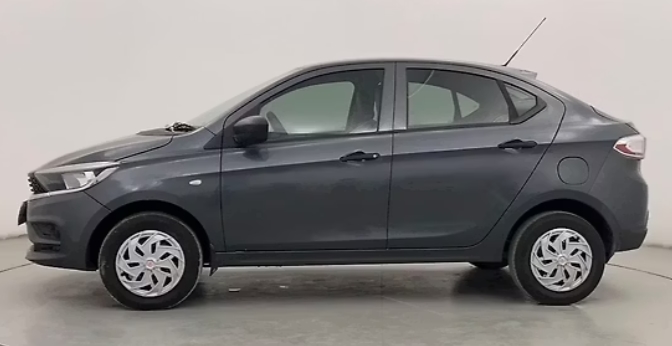
The Tata Tigor stands as a unique proposition in the global automotive landscape. Unveiled in 2018, this vehicle defies conventional classification, blending the characteristics of a hatchback with those of a compact multi-purpose vehicle (MPV). Marketed as a “Hatchback-Caravan,” the Tigor offers the nimbleness and driving dynamics of a hatchback paired with the spacious, flexible interior of an MPV. Developed by Tata Motors, the Tigor caters to urban and suburban drivers seeking practicality without sacrificing style. This article delves into the Tigor’s history, production timeline, models, trim levels, key features, and its future in an increasingly competitive car market.
A Brief History of the Tata Tigor
Tata Motors, India’s largest car manufacturer by volume, has long sought to innovate with cost-effective, family-friendly vehicles. The Tigor emerged as a response to the growing demand for hybrids of hatchbacks and MPVs—vehicles that could accommodate families with growing needs while maintaining the agility to maneuver through crowded city streets.
The Tigor’s development was rooted in Tata’s in-house ALFA (Advanced Light Frugal Assembly) platform, a modular architecture designed for hatchbacks and sedans. However, the Tigor’s design team reimagined ALFA to create a taller, more boxy silhouette, maximizing interior space. The result was a car that offered room for five adults, a 480-liter trunk, and a 50:50 split-folding rear seat—a stark contrast to the svelte proportions of standard hatchbacks.
Global Launch and Market Positioning
The Tata Tigor debuted in India in February 2018 under the Tigor name, though it was initially marketed in select international markets under the Tata Zest X and Hawk monikers. In the United States, it was sold as the Tata Tigor beginning in 2019 through Tata Motors North America. Priced competitively (ranging from around INR 5.5 lakh to 8.5 lakh in India), the Tigor aimed to bridge the gap between small sedans and entry-level SUVs.
Despite its innovative concept, the Tigor faced challenges in some markets, such as limited dealer networks and brand perception hurdles for Tata in Western countries. Nevertheless, the car found a niche in India, where Tata’s reputation for engineering efficiency and value-for-money resonated with buyers.
.

.
Production Timeline and Availability
The Tata Tigor has been in production since 2018 and is still being manufactured in India, though its availability in international markets like the U.S. was limited. As of 2023, certain variants of the Tigor remain in production, particularly in India and export markets in Southeast Asia and Africa.
Key milestones in the Tigor’s production:
- 2018: Launch in India with the XE and XM trims.
- 2019: Introduction in the U.S. and Europe.
- 2020: Introduction of the 1.5L diesel variant in India.
- 2021: Launch of the CNG-fueled version for Indian buyers.
- 2022: Trim updates, including the XZ+ Pro.
Models and Trim Levels
The Tata Tigor has been offered in six primary trim levels and two engine variants since its launch. Trim availability varies by region, with India’s market offering the most comprehensive lineup.
1. Engine Options
- 1.2L Krya S4 Petrol: A 1,197cc turbocharged engine producing 82 horsepower and 115 Nm of torque. Paired with a 5-speed manual or optional 6-speed automatic transmission.
- 1.5L mHAWK Diesel: A 1,493cc turbo-diesel engine generating 96 horsepower and 200 Nm of torque, available with a 5-speed manual. (Diesel variant was exclusive to India.)
- CNG Variant: A 1.2L petrol engine modified for compressed natural gas, appealing to eco-conscious buyers in India.
2. Trim Levels
XE (Base Trim)
- Targeted at budget-conscious buyers.
- Features: Steel wheels, fabric seats, basic analog instruments, manual windows, and a 2.5-inch monochrome infotainment screen.
- India only: Facelifts added a dual-tone interior and 6.5-inch touchscreen.
XM (Mid-Range Trim)
- A balance of affordability and comfort.
- Features: Alloy wheels, automatic climate control, keyless entry, and a 6.5-inch touchscreen with Bluetooth and USB connectivity.
- U.S. Market: Equipped with a 4G LTE hotspot and smartphone integration.
XZ (Premium Trim)
- Focused on features and aesthetics.
- Features: Dual-tone interiors, premium audio system, rear parking sensors, and 8.8-inch touchscreen (India).
- U.S. Market: Offered with a 12-month 4G service plan and advanced driver assistance tech (ADAS) as optional extras.
XZ+ (Top Trim in India)
- The highest specification available in India.
- Features: Leather seats, dual climate control, keyless ignition, a 9-inch touchscreen with navigation, and a 10-way adjustable driver’s seat.
XZ+ Pro (2022 Facelift)
- Launched in 2022 as an upgraded version of the XZ+.
- Features: Apple CarPlay, Android Auto, a 10-inch digital instrument cluster, and a Harman Kardon audio system.
International Trims (Tigor in the U.S.)
- Limited to XE, XM, and XZ variants.
- Focused on U.S. safety and tech standards, including lane departure warning and adaptive cruise control (optional).
Key Design and Feature Highlights
The Tata Tigor’s success lies in its versatile design and cost-effective engineering.
Space and Interior
- Cargo Capacity: Up to 480 liters in 5-seater mode, expanding to 1,460 liters when the rear seats are folded.
- Interior Design: A dual-tone cabin with a hatchback-like dashboard and MPV-like sliding rear door.
Fuel Efficiency
- Petrol: 21.4-24.2 km/kg (India).
- Diesel: 30.4 km/kg (India).
- CNG: Up to 26 km/kg in India.
Safety Features
- Dual front airbags (all trims).
- ABS with EBD (standard in higher trims).
- Rear parking sensors (XZ+ models).
- Future Outlook: Tata has not introduced additional safety tech beyond 2022 for the Tigor, focusing upgrades on newer models like the Altroz.
Future Outlook and Challenges
The Tata Tigor faces an uncertain future as market trends shift toward SUVs and electric vehicles (EVs). In India, its position as a hatchback-MPV hybrid is being challenged by crossover SUVs like the Tata Tiago NRG and Hyundai Creta, which offer enhanced driving dynamics.
Tata’s Strategic Shift
In 2023, Tata Motors announced a pivot toward its Altroz compact hatchback and Safari SUV for new market entrants. The Tigor, while still in production in India, is expected to be phased out in favor of models with better brand recognition and EV capabilities.
Global Market Challenges
The Tigor’s U.S. sales were discontinued in 2021 due to low demand and logistical challenges. Tata has since redirected efforts toward EVs and SUVs, which dominate the North American market.
Potential for CNG Markets
The CNG variant remains relevant in India, where fuel costs are a key purchasing factor. Tata may continue offering the Tigor in CNG form in regions with robust infrastructure, such as Delhi and Mumbai.
Conclusion
The Tata Tigor represents a bold experiment in automotive design—a car that sought to redefine utility without compromising style. While it may not have achieved global stardom, the Tigor’s innovative approach to space and affordability has left a mark on Tata’s portfolio. As the automotive industry transitions toward electrification and SUV-centric production, the Tigor serves as a reminder of the value of niche segmentation and engineering ingenuity. Whether in its prime as a family car or as a relic of Tata’s pre-electric era, the Tigor remains a curious and commendable chapter in the company’s storied history.