Kia Brisa: The Birth of Kia’s First Passenger Car and Its Evolution
The Kia Brisa occupies a special place in automotive history as Kia Motors’ first production passenger car and a foundational model in South Korea’s early automobile industry. Released in the mid‑1970s, the Brisa helped transition Kia from a supplier of bicycles, motorcycles, and commercial vehicles to a full‑fledged automaker building cars for the general public — a journey that would ultimately shape the global presence the brand enjoys today. This article traces the evolution of the Kia Brisa, its production years, models and variants, technical details, historical context, and broader legacy.
Origins: Kia’s First Passenger Car (1973–1974)
The Brisa emerged from Korea’s broader industrial goals in the early 1970s: to develop a homegrown passenger car that could meet domestic demand and lay the groundwork for a sustainable automotive industry. Kia Motors — then Korea’s oldest automobile maker, having started with bicycles and motorcycles — sought to enter the passenger vehicle market with a car that was affordable, fuel‑efficient, and suited to domestic roads.
Production of the Kia Brisa began in 1973 at the company’s first integrated assembly plant in Sohari (Gwangmyeong), initially in the form of the Brisa pickup truck (model B‑1000). This light utility vehicle (LUV) carried forward Kia’s expertise in commercial vehicles, but the company had bigger ambitions.
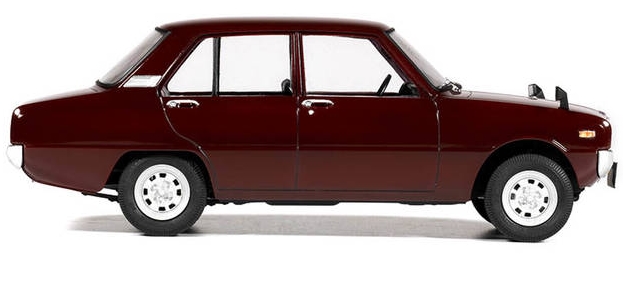
In 1974, Kia introduced the four‑door Brisa S‑1000 sedan — the first passenger car built by the company. Its name, derived from the Spanish (and Portuguese) word for breeze, signified a fresh and accessible approach to motoring in South Korea.
Production and Sales (1973–1981)
The Kia Brisa was produced from 1973 until 1981, making it one of the earliest domestic passenger cars in South Korean automotive history. Production included pickups and passenger cars, with combined totals reaching roughly 75,987 units (including pickups), of which over 31,000 were passenger‑car models.
Brisa also marked Kia’s first exports: in 1975, a shipment of 31 Brisa B‑1000 pickups was delivered to Qatar, representing Kia’s first venture into global markets. Over time, limited numbers were also exported to countries such as Colombia and Greece.
Production came to an end in 1981 due to South Korea’s Automotive Industry Rationalization Policy, a government‑led move that forced consolidation and shifted many companies — including Kia — toward light commercial vehicles rather than passenger cars at that time. Kia did not return to mass‑market cars until later in the 1980s.
.

.
Models and Variants
The Kia Brisa range was relatively simple compared with modern vehicles, but it did encompass several important variants that reflected both functional and evolutionary changes over its production run.
Brisa Pickup (1973–1981)
The Brisa pickup (initially known as the Brisa B‑1000 and in some export markets as Kia Master) was Kia’s first vehicle to go into global export. It was a rear‑wheel‑drive pickup with the compact dimensions and powertrain suited to light commercial and private use.
Key features:
- Body type: 2‑door pickup
- Drive type: Rear‑wheel drive
- Engine: 985 cc inline‑4 petrol
- Gearbox: 4‑speed manual
This model laid the business and technical foundation for Kia’s later passenger variants.
Brisa Sedan (1974–1981)
The Brisa sedan — also known as the Brisa S‑1000 — was Kia’s first passenger car and shared its core mechanical basis with Mazda’s second‑generation Mazda Familia under license. This license arrangement was crucial: it allowed Kia to build a passenger car using established, reliable technology at a time when indigenous vehicle development was still nascent in Korea.
Key specifications:
- Body type: 4‑door sedan
- Drive type: Rear‑wheel drive
- Transmission: 4‑speed manual
- Chassis: Based on Mazda Familia architecture
Brisa I and Brisa II / K303 (1975–1981)
Over its life, the Brisa benefited from incremental updates that aligned it more closely with evolving market expectations:
- Brisa I (1973–1981): This was the core early passenger model, initially powered by a 1.0 L Mazda engine producing around 62 PS (46 kW). It offered a modest but reliable power output suited for everyday commuting and taxi use.
- Brisa II / K303 (1975–1981): Launched shortly after the original, this upgraded variant featured a larger 1.3 L engine (1,272 cc) — typically rated between 65 PS and 72 PS — to compete more effectively with rivals such as the Hyundai Pony and offer a better balance of performance and economy. It also adopted slightly more modern styling cues and sometimes carried the internal designation K303.
The Brisa II also spawned a station wagon version in 1978, further broadening the body styles available to consumers, though details on exact production numbers for each variant are limited.
Technical Specifications and Performance
Like many cars of its era, the Brisa was mechanically straightforward, built for both ease of maintenance and reliability:
- Engine options: Mazda‑derived 1.0 L and 1.3 L inline‑4 petrol engines.
- Transmission: 4‑speed manual gearbox.
- Drive layout: Rear‑wheel drive — typical of the period and Mazda influence.
- Top speed: Around 140–150 km/h depending on engine and tuning, competitive for its class in the 1970s.
In 1977, for example, the Brisa S‑1000 was advertised with a 985 cc engine producing roughly 61 hp, a 4‑speed manual transmission, and a compact footprint, making it ideal for urban use and efficient driving.
Trim Levels and Market Positioning
It is important to note that the Brisa did not have official modern trim levels (such as Base, LX, EX) in the way we understand them today. Instead, its variants were defined by engine size, body style, and minor equipment differences:
- Base Brisa: Early 1.0‑liter sedan providing essential features.
- Brisa II (1.3 L) / K303: Higher‑displacement model marketed toward buyers seeking slightly more power and refinement.
- Brisa Station Wagon: Added practicality for families and business owners.
- Brisa Pickup / Master: Utility‑focused truck version that helped introduce Kia to the global market.
The relative simplicity of these variants reflected both the period and Kia’s emerging position in a market dominated by larger manufacturers with longer automotive experience. Yet the Brisa was effective in its primary mission: making passenger automobiles accessible and affordable.
Historical and Cultural Impact
The Kia Brisa holds a broader significance beyond its specifications:
Industrial Milestone
The Brisa symbolized Korea’s progress in automotive industrialization. Its development increased the local content of automotive parts significantly — from about 65 % in its early years to nearly 90 % by the mid‑1970s — as required by government policy aimed at building domestic automotive capability. This helped reduce reliance on imported parts and fostered a local supplier ecosystem.
Taxi Fleet Staple
During its heyday, the Brisa became popular as a compact, economical family car and taxi. It was affordable to operate and maintain — up to the point that in the mid‑1970s it accounted for a substantial portion of Seoul’s taxi fleet, embedding it into everyday Korean life.
Export Significance
The Brisa’s export to markets such as Qatar, Colombia, and Greece marked Kia’s first steps toward international sales — a critical development in the company’s eventual global expansion decades later.
End of Production and Transition
In 1981, production of the Brisa ceased under the South Korean government’s Automotive Industry Rationalization Policy, which required automakers to streamline production and specialize: Kia was directed to focus on light commercial vehicles and trucks, surrendering passenger car production for the time being.
Although passenger car manufacturing would resume later in the decade with models such as the Kia Pride (introduced in 1987) and, later, the Sephia in 1992, the Brisa’s discontinuation marked the end of the company’s first chapter in passenger cars.
Legacy and Future Outlook
Today, the Kia Brisa is remembered as a classic and historically important vehicle in the brand’s evolution. Restored examples are prized by collectors and exhibited in museums such as the Kia Heritage Exhibition, where they are celebrated for their role in the company’s journey from bicycles to world‑class automaker.
As Kia continues to innovate with electric vehicles, SUVs, and global design leadership, the Brisa serves as a reminder of how far the company has come — from a modest compact car with a breeze‑like name to a global brand with ambitious electrified visions.
The Kia Brisa (1973–1981) was Kia Motors’ first passenger car and a defining model in both its corporate history and the development of Korea’s automotive industry. Available as a rear‑wheel‑drive sedan, station wagon, and pickup, the Brisa was built under license from Mazda’s Familia platform, powered by 1.0 L and 1.3 L engines, and produced in multiple variants until government policy reshaped the domestic market. While it lacked contemporary trim‑level branding, its variants served diverse needs from family transport to commercial use. Today, the Brisa’s legacy is preserved by enthusiasts and historical exhibits as a milestone in Kia’s rise to global automotive prominence.