Kia Capital: Evolution of Kia’s Compact Sedan
The Kia Capital is a noteworthy but often overlooked chapter in the history of South Korean automaker Kia Motors. Produced in the late 1980s and throughout the 1990s, the Capital represented Kia’s efforts to compete in the compact and mid‑size sedan segment at home and in selected export markets. Though production volumes were modest compared with later Kia models, the Capital helped establish the company’s credibility in passenger cars and laid groundwork for successors like the Kia Sephia and Kia Credos. This article explores the evolution of the Kia Capital, including production years, models, trim levels, and other relevant information about this vehicle.
Origins: Kia Expands Its Lineup (Late 1980s)
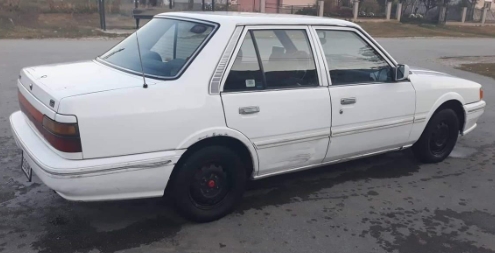
The Kia Capital was introduced in March 1989 as a lower‑cost, front‑wheel‑drive sedan positioned below the Kia Concord, a larger model that shared its roots with the Mazda Capella/626 platform. Although the Concord and Capital lines were closely related — both built on Mazda‑derived platforms — the Capital was geared toward buyers seeking an affordable, practical family sedan.
Kia’s adoption of Mazda technology was part of a broader partnership and licensing arrangement with Mazda and, in some periods, Ford. This enabled Kia to build vehicles with proven mechanicals at a time when the company was still establishing its engineering and manufacturing capabilities.
.

.
Production Period (1989–1996)
The Capital was produced from 1989 until December 1996. While the larger Concord model was discontinued earlier (around 1995), the Capital continued for another year as Kia transitioned toward newer platforms.
During its lifespan, the Capital received several updates and facelifts — although the core design and mechanical underpinnings remained rooted in the Mazda platform. Its production overlapped with both the Concord and later compact competitors such as the Kia Sephia, which debuted in 1992 and eventually helped replace the Capital in Kia’s lineup.
Design and Engineering
The Capital was a front‑wheel‑drive, four‑door sedan with a conventional three‑box body, aimed at buyers looking for utility and reliability rather than outright performance. It featured a transverse‑mounted four‑cylinder engine and shared its wheelbase and most structural components with the Concord/Capella lineage.
Dimensions (Typical)
- Length: ~4,430–4,480 mm (175–176 in)
- Width: ~1,705 mm (67.1 in)
- Height: ~1,405 mm (55.3 in)
- Wheelbase: 2,520 mm (99.2 in)
- Body Style: 4‑door sedan
This compact to mid‑size footprint made the Capital competitive with vehicles like the Hyundai Sonata and Daewoo Espero in the Korean market and in select exports.
Engine Options
The Kia Capital’s powertrain lineup evolved over its production life, with a range of gasoline‑powered four‑cylinder engines:
1.5‑L B5 Engine
- Early Years (1989 onward): A 1.5‑litre B5 SOHC inline‑4 engine with carburetor, making around 80 PS (~79–80 hp) at 6,000 rpm.
- MPFi Version: Later offered with multi‑point fuel injection producing approximately 95 PS, roughly equivalent to fuel‑injected 1.8‑litre GLX variants.
- Twin‑Cam Variant (1990): A 1.5‑litre B5 16‑valve twin‑cam engine producing around 115 PS, giving a significant performance boost and 0–100 km/h times near 10 seconds.
1.8‑L and Downgraded 1.8 Options
- Early 1990s Export: Some markets received a 1.8‑litre version shared with the Concord.
- Carbureted 1.8: Later in production, a simplified 82 PS carburetted 1.8 engine was offered mainly for taxi and fleet purposes due to tax and cost structures.
In export markets, engine outputs were often slightly detuned to meet local emissions and fuel economy standards, with versions producing as little as 73 PS being available.
Models and Trim Levels
Unlike many modern cars with clearly defined trim levels, the Kia Capital’s variations were primarily defined by engine choice and equipment tiers, which reflected both market and legislative influences.
Capital 1.5 GLX (Base/Mid)
- This was the most common version in many markets, especially in the early 1990s.
- Equipped with the 1.5‑litre engine — originally carbureted, later upgraded to fuel injection or twin‑cam variants.
- Typically featured basics such as cloth seats, manual windows (in early years), and simple comfort features.
Capital 1.8 (Higher Output)
- Offered in some years with the larger 1.8‑litre engine prior to market downsizing.
- Targeted buyers seeking a smoother, more powerful drive — though by the early 1990s this variant became less common as competition shifted.
New Capital (Post‑1994 Update)
- In June 1994, the Capital received a mid‑life facelift with more rounded headlights, a redesigned grille featuring a newer Kia logo, and updated interior appointments.
- The facelift was marketed as “New Capital” in some regions, even though the factory badging remained simply Capital.
- After this update, the most common powertrain was the 16‑valve 1.5 B5 engine paired with basic to mid‑range equipment levels such as GS (Grand Sedan) and LS (Luxury Sedan).
Equipment and Features
Trim levels generally reflected incremental equipment offerings:
- Basic: Manual windows, simple interior fabrics, and modest audio options.
- GLX / Mid‑Range: Added features like power steering, upgraded upholstery, and better audio systems.
- LS / Luxury: Top tier for the Capital, with extras like power windows, improved trim, and comfort‑oriented features aimed at private buyers rather than taxis or fleets.
Facelifts and Updates
Across its production run, the Kia Capital received a number of minor visual and mechanical updates:
1991 Facelift
- License plate location moved from between the taillights to the rear bumper.
- Exterior styling tweaks to front and rear lighting and grille.
- Engine lineup reshuffled with simplified 1.8 options mainly for commercial use.
1994 “New Capital”
- More rounded headlamps and an updated grille with the new Kia logo replaced the older chimney‑style design.
- Limited engine choices through the mid‑1990s, with the 1.5‑litre 16‑valve B5 engine being the primary offering.
- Trim offerings consolidated around better‑equipped versions (e.g., GS, LS).
These updates helped the Capital stay relevant against competitors like the Hyundai Elantra and Daewoo Espero during the early 1990s.
Market Position and Reception
The Capital was Kia’s attempt to offer a value‑oriented, mid‑size sedan during a period when the Korean domestic market and select export markets were demanding more practical, fuel‑efficient vehicles. It was less about premium aspirations and more about offering solid engineering, a comfortable interior, and engines suitable for everyday use.
While the Capital did not achieve international prominence (and was not widely sold in Western markets such as North America or Europe), it found traction in its home country and some Asian markets due to its relative affordability and reliability.
End of Production and Successors
Production of the Kia Capital ended in December 1996, after which Kia focused on newer compact and mid‑size sedans that were more globally competitive. The Kia Sephia — introduced in 1992 — had already begun replacing the Capital in many export markets, offering a more modern platform and broader dealer support.
Domestically, the Kia Credos — based on a Mazda GE platform — succeeded the Capital/Concord lineup in 1995–1996, providing a more up‑to‑date alternative in the mid‑size segment.
Legacy and Future Outlook
Though often forgotten today, the Kia Capital played a key role in Kia’s evolution from a primarily domestic automaker into a global competitor. It showcased Kia’s early willingness to adopt licensed technology and compete in segments beyond microcars and entry‑level compacts.
The Capital’s emphasis on practical design, easy‑to‑service mechanicals, and functional trims helped shape later models that would find broader success abroad. Vehicles like the Sephia, Spectra, and later the Forte and Optima/K5 continued the compact/mid‑size sedan lineage that the Capital helped begin.
Today, the Capital is of interest primarily to classic Kia enthusiasts and collectors who appreciate its role in the brand’s history. Its Mazda‑derived platform and period‑typical engineering make it a snapshot of late‑20th‑century Korean automotive design.
The Kia Capital was a compact/mid‑size family sedan produced from 1989 to 1996. Rooted in a Mazda‑based platform and offered primarily with 1.5‑litre and 1.8‑litre engines, the Capital evolved through minor facelifts and trim refinements over its production life. With basic, GLX, and later New Capital equipment levels aimed at utility and comfort, it helped Kia establish a presence in the sedan market. Though replaced by models like the Sephia and Credos, the Capital remains an important part of Kia’s automotive evolution.