Maruti Baleno – A Comprehensive Overview
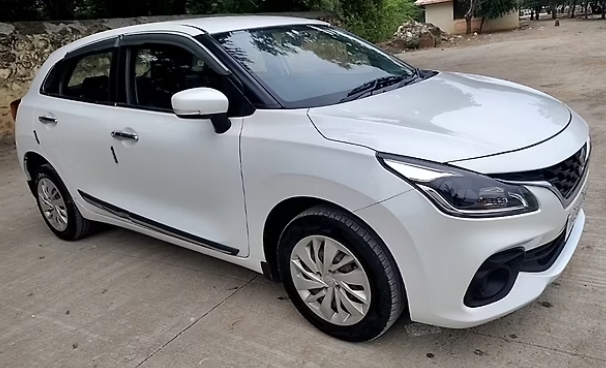
The Maruti Suzuki Baleno has been one of India’s most popular premium hatchbacks since its local debut in October 2015. Sold exclusively through Suzuki’s NEXA dealer network, the Baleno combines fuel efficiency, spacious packaging and modern styling to appeal to young families and urban professionals. Over its lifetime, it has won multiple awards, consistently ranked among the top-sellers in the country’s highly competitive hatchback segment, and served as a global model for Suzuki in many markets from Europe to Southeast Asia.
This article chronicles the Baleno’s lineage, production years, model iterations and trim levels, while examining its features, powertrain options, market reception and outlook for the future.
- Brief History and Lineage
• 1995–2002: First-generation Suzuki Baleno
– Launched globally in 1995 to sit above the popular Cultus/Swift in Suzuki’s line-up. Available in hatchback, sedan (“Baleno Next-G”) and wagon (“Baleno Estate”) forms in Europe and Asia. Powered by 1.3-1.8-liter petrol and 1.9-liter diesel engines.
– In India, Maruti Suzuki offered the sedan version as “Esteem” (1994–2002). The badge “Baleno” itself was not used in the domestic market at that time.
• 2002–2007: Second-generation global Baleno
– A mild redesign of the original, with updated interiors and emissions-compliant engines. Not officially offered in India.
• 2015–Present: Third-generation Maruti Suzuki Baleno (India)
– Based on Suzuki’s HEARTECT platform first seen on the 2014 Swift. Officially launched in October 2015 through the new NEXA premium channel. Built at Maruti Suzuki’s Manesar plant, the Indian Baleno also serves as the global “Suzuki Baleno” for Europe, Latin America and other markets under Suzuki’s brand.
- Production Years and Milestones
• October 2015: Indian launch of Baleno hatchback
• 2016: Receives “Car of the Year” awards from multiple publications
• April 2017: Introduction of 1.0-liter Boosterjet turbo-petrol variant for select international markets (later withdrawn from India feasibility)
• November 2018: Launch of the Baleno RS (1.0-liter turbo) in India at Auto Expo as a concept; not immediately brought to market
• January 2019: Major facelift with refreshed front styling, revised dashboard and new safety features
• 2020: Baleno reaches cumulative production milestone of 1 million units in India
• September 2022: Introduction of updated mild-hybrid “Smart Hybrid” SHVS powertrain on 1.2-litre engine
• Ongoing (2023–24): Continuous minor updates, special editions and new color options. - Models and Trim Levels (India)
Maruti Suzuki offers the Baleno in multiple trims to suit varying budgets and feature requirements. Across its lifecycle, the core trims have been named Sigma, Delta, Zeta and Alpha, with occasional sub-variants like Delta+ or Zeta+ when new features were added mid-cycle. Here is a consolidated list of trims from launch to the present:
Core Trims
• Sigma: Entry-level, manual transmission only, basic features (power steering, manual HVAC, 14-inch steel wheels)
• Delta: Mid-level adds body-colored bumpers, electric ORVMs, central locking, driver airbag (post-2019 facelift)
• Delta+: Mid-life addition introducing ABS, EBD, rear parking sensors and power windows all around
• Zeta: Upper-mid variant with touchscreen infotainment, front passenger seat fold-down, alloy wheels, front fog lamps
• Zeta+: Earlier special variant adding automatic climate control and rear AC vents
• Alpha: Top variant, includes keyless entry, push-button start/stop, LED projector headlamps, steering-mounted controls, dual airbags and optional CVT
Special Editions
• Baleno RS (concept): 1.0L Boosterjet turbo, sporty body kit, black roof; remained a concept in India but raced in global markets
• NEXA Red/Green Editions: Unique paint options, exclusive interior trims, limited production
• Winter Edition (2019): White leatherette seats, special floor mats and decals
Outside India
• GL: Base and mid variants for export markets (Philippines, Indonesia)
• GLX: Top-end for international markets, includes automatic transmission, ABS, airbags, touchscreen AVN
- Engine and Transmission Options
• 1.2-liter K12M DualJet Petrol
– Power: 83 PS (81 hp) @ 6,000 rpm
– Torque: 113 Nm @ 4,200 rpm
– Transmission: 5-speed manual (standard on Sigma, Delta, Zeta) and 4-speed automatic or 5-speed AMT (on Zeta+, Alpha)
– From 2022: Mild-hybrid SHVS (Smart Hybrid Vehicle by Suzuki) adds start/stop, torque assist and improved fuel economy
• 1.0-liter Boosterjet Turbo-Petrol (Global/Concept)
– Power: 111 PS (109 hp) @ 5,500 rpm
– Torque: 170 Nm @ 2,000–3,500 rpm
– Transmission: 6-speed automatic (7-speed DCT in Europe)
– Note: Though prototyped as the “Baleno RS” in India, this engine has seen limited release domestically. It remains available in select export markets.
• 1.3-liter Multijet Diesel (Legacy)
– Internationally offered early on, but discontinued in India due to emissions norms and shrinking diesel hatchback demand.
- Facelifts and Major Updates
• January 2019 Facelift
– Exterior: New projector headlights with LED DRLs, restyled grille, sharper bumper design, LED tail lamps (on higher trims)
– Interior: Larger touchscreen infotainment (7-inch), revised instrument cluster, more soft-touch surfaces, added rear AC vents on select trims
– Safety: Standard ABS with EBD and dual airbags across all trims; ISOFIX child-seat mounts; rear parking sensors standard
• 2022 Update
– Introduction of the mild-hybrid SHVS system on 1.2-liter engine
– Improved NVH insulation, Bluetooth telematics integration (SmartPlay Studio), cruise control on select trims
– Additional colour choices and seat fabric upgrades
- Features and Technology
Across its variants, the Baleno offers a blend of convenience, connectivity and comfort features:
• Infotainment: 7-inch touchscreen SmartPlay Studio with Apple CarPlay and Android Auto (on Zeta and Alpha)
• Safety: Dual front airbags, ABS with EBD, ISOFIX child anchorages, rear parking sensors, seatbelt reminders, speed alert system
• Comfort: Automatic climate control, rear AC vents, height-adjustable driver seat, reclining rear seats, electrically adjustable ORVMs
• Convenience: SmartKey with push-button start/stop, steering-mounted audio and phone controls, cruise control, auto-folding mirrors on top trim
• Others: Rain-sensing wipers, follow-me-home headlamps, electrically retractable ORVMs, LED projector lamps (Alpha) - Safety Ratings
The Maruti Baleno has undergone safety testing in various markets:
• Global NCAP (2019, India-spec): Scored 3 stars for adult occupant protection, 2 stars for child occupant protection.
• Euro NCAP (2016, Euro-spec): Achieved 3 stars, reflecting additional structural reinforcements and safety kit in export-spec models.
• Key Safety Upgrades: Front passenger airbag standard post-2019; Isofix anchors; pedestrian protection features in facelifted versions. - Sales Performance and Market Reception
Since launch, the Baleno has consistently featured among the top five bestselling hatchbacks in India. Key highlights:
• 2016–2017: Broke into top-10 passenger vehicles; crossed 50,000 units in monthly sales on multiple occasions.
• 2018: Became Maruti Suzuki’s second most popular NEXA model after S-Cross.
• 2019: Annual sales exceeded 200,000 units.
• 2020–2022: Maintained strong performance despite pandemic challenges, supported by festive and NEXA exclusive schemes.
• Awards: Indian Car of the Year (ICOTY) finalist; ET Best Car Awards; Overdrive Car of the Year; multiple design and technology citations. - Competition
In its segment, the Baleno competes with:
• Hyundai i20
• Tata Altroz
• Honda Jazz
• Volkswagen Polo
• Toyota Glanza (badge‐engineered Baleno in some markets)
The Baleno distinguishes itself with superior rear-seat space, fuel efficiency (up to 23.76 kmpl with mild-hybrid) and the extensive NEXA service network.
.
We LOVE cars & cruising around, but sometimes day trips to explore new cities are required (with family or friends) for a spice of variety in your life!
So GO explore!
Cruises & Day/Night City Tours to: Baltimore, Boston, Chicago, Marina Del Ray, New York, Niagara, Philadelphia, San Diego, San Francisco, Toronto, Washington DC, etc.:

.
- Future Outlook
• Next-Generation Baleno (2024-onwards)
– Platform: Rumoured to retain an evolved HEARTECT underpinnings with increased use of high-strength steel.
– Powertrains: Likely to receive more advanced mild-hybrid technology, possible introduction of a stronger 1.0L turbo with DHT (dual-hybrid transmission), or even a fully electrified variant given Suzuki’s global electrification push.
– Connectivity: Enhanced SmartPlay Studio with over-the-air updates, Suzuki Connect telematics, larger head-up display in top trims.
– Safety: Anticipated 4- or 5-star global NCAP rating with addition of side and curtain airbags, autonomous emergency braking (AEB), lane-keep assist.
• Market Positioning
– Maruti Suzuki is expected to retain the Baleno at the premium end of its hatchback portfolio, continuing the NEXA-only sales channel.
– Price adjustments will likely reflect new tech, but Maruti’s focus on value proposition and low cost of ownership should remain intact.
Over nearly three decades of global lineage and eight years on Indian soil, the Suzuki Baleno nameplate has evolved from an entry-level sedan/hatch in Europe to a premium, feature-packed hatchback in India and beyond. With its winning formula of spacious interiors, commendable fuel economy, competitive pricing and an ever-growing safety and connectivity toolkit, the Maruti Suzuki Baleno has firmly established itself among India’s hatchback elite. Looking ahead, continued electrification and an even stronger safety suite promise to keep the Baleno relevant and popular in the dynamic automotive landscape of the coming decade.