Mazda’s Electric Gambit: Decoding the All-New Mazda EZ-6
In the rapidly electrifying world of the modern automotive industry, Mazda has often been characterized as a cautious, almost reluctant, participant. While competitors launched wave after wave of battery-electric vehicles (BEVs), the Hiroshima-based automaker doubled down on perfecting the internal combustion engine with its Skyactiv technology and offered only the quirky, short-range MX-30 as its sole EV entry. This deliberate pace led many to wonder if Mazda was falling critically behind.
Then, in April 2024, at the Beijing Auto Show, the curtains were pulled back on a vehicle that signaled a dramatic and pragmatic shift in strategy: the Mazda EZ-6. A sleek, stylish electric sedan with a name that broke from Mazda’s numerical convention, the EZ-6 was not just a new car; it was a statement. However, the story behind this vehicle is far more complex and fascinating than a simple new model launch. It is a story of partnership, pragmatism, and a targeted strike at the world’s most competitive automotive market.
To properly understand the Mazda EZ-6, one must first address a common point of confusion. This is not a vehicle with a long production history. As of its reveal, it is a brand-new model, with production slated to begin in mid-2024. Therefore, an analysis of its “years produced” and “trim levels” is a forward-looking exercise based on official announcements and the vehicle’s underlying architecture, rather than a historical retrospective.
A History of Necessity: The Changan Mazda Partnership
The genesis of the Mazda EZ-6 is not found in the design studios of Hiroshima, but rather in the boardrooms of a crucial joint venture. For decades, foreign automakers wanting to build and sell cars in China were required to partner with a local manufacturer. Mazda’s long-standing partner is Changan Automobile, one of China’s “Big Four” state-owned automakers. This joint venture, known as Changan Mazda, has been responsible for producing models like the Mazda3 and CX-5 for the local market.
As China’s auto market aggressively pivoted to “New Energy Vehicles” (NEVs)—a category that includes BEVs and Plug-in Hybrids (PHEVs)—Mazda found itself without a competitive product. Developing a new electric platform from the ground up is a multi-billion dollar, multi-year endeavor. Facing immense pressure from a sea of domestic Chinese EV brands like BYD, Nio, and XPeng, Mazda and Changan made a strategic decision: to leverage existing technology from Changan’s own successful EV sub-brand, Deepal (or Shenlan in Chinese).
The Mazda EZ-6 is, at its core, a re-engineered and re-skinned version of the Changan Deepal SL03. This is not merely a case of “badge engineering.” Mazda was deeply involved in sculpting the EZ-6’s final form, infusing it with its own design philosophy and tuning its driving dynamics. Nonetheless, the foundational “skateboard” platform, electric motors, battery technology, and much of the interior software are derived directly from the Deepal SL03. This collaboration allowed Mazda to bring a sophisticated, market-ready EV to China in a fraction of the time and cost it would have taken to go it alone.
.
NO MORE dead batteries with this:

.
Models and Powertrains: A Two-Pronged Electric Strategy
The Mazda EZ-6 is set to launch not as a single model, but with two distinct powertrain variants designed to cater to different consumer needs and address concerns like range anxiety. Specific trim level names (such as Mazda’s traditional Sport, Touring, Grand Touring) have not yet been officially announced for the EZ-6, but the offerings will be structured around these two core versions.
1. The Battery Electric Vehicle (BEV)
The flagship all-electric version of the EZ-6 is aimed squarely at the heart of the EV market. It is built on a rear-wheel-drive architecture, a layout favored by driving enthusiasts and a hallmark of many premium electric sedans. This RWD setup aligns perfectly with Mazda’s “Jinba Ittai” (horse and rider as one) philosophy, which prioritizes a balanced and engaging driving experience.
- Performance: While final power figures are pending, the platform-sharing Deepal SL03 offers a benchmark. Its BEV version produces around 215-255 horsepower and delivers sprightly acceleration typical of electric motors. The EZ-6 is expected to have similar performance, with Mazda engineers likely fine-tuning the throttle response and power delivery to feel distinctly “Mazda.” The company has emphasized a 50:50 weight distribution, which should contribute to excellent handling dynamics.
- Range and Charging: Mazda has announced an estimated range of approximately 600 kilometers (about 373 miles) for the BEV model. It is crucial to note that this figure is based on the China Light-Duty Vehicle Test Cycle (CLTC). The CLTC is known for being more optimistic than the EPA standard used in the United States or the WLTP cycle in Europe. A real-world range would likely be closer to 280-320 miles, which is still highly competitive. Charging specifications have not been detailed, but fast-charging capability will be standard.
2. The Range-Extended Electric Vehicle (REEV / PHEV)
Perhaps the more intriguing version is the plug-in hybrid, which functions as a Range-Extended Electric Vehicle (REEV). Unlike a traditional PHEV where the gasoline engine can directly power the wheels, the REEV model in the EZ-6 uses its combustion engine solely as a generator to recharge the on-board battery. The wheels are always driven by the electric motor.
- How it Works: The driver experiences the smooth, instant torque of an EV at all times. For shorter trips and daily commuting, the car can be plugged in and run purely on battery power. For longer journeys, the 1.5-liter four-cylinder gasoline engine kicks in discreetly to generate electricity, eliminating range anxiety.
- Performance and Range: This model offers the best of both worlds. It provides a significant all-electric driving range before the generator is needed, estimated to be over 200 kilometers (124 miles) on the CLTC cycle. With a full battery and a full tank of gas, Mazda claims an astounding combined range of over 1,000 kilometers (about 621 miles). This makes it an ideal transition vehicle for consumers not yet ready to commit to a pure EV lifestyle.
Design and Technology: The Soul of Kodo
While the underpinnings are a joint effort, the exterior is pure, unadulterated Mazda. The design team has masterfully applied the brand’s “Kodo – Soul of Motion” design language to the electric sedan form.
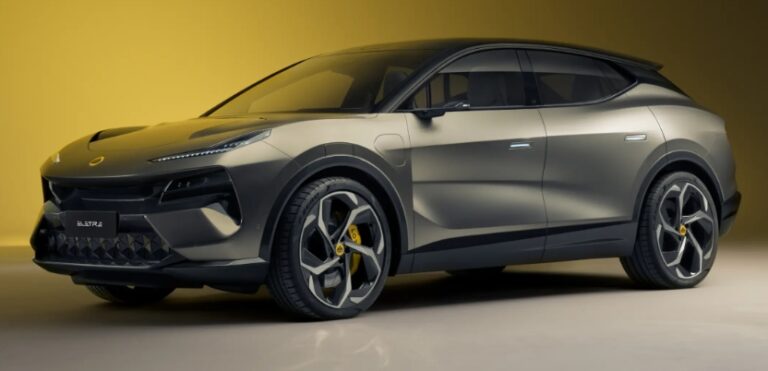
- Exterior: The EZ-6 features a sleek, flowing silhouette with a long hood and a fastback-style rear, reminiscent of the beloved (and now discontinued in many markets) Mazda6. The front fascia is dominated by a modern interpretation of Mazda’s signature wing grille, which is sealed off and illuminated for the EV application. The slim, aggressive LED headlights blend seamlessly into the bodywork, creating a “carved from a single block” aesthetic. Frameless windows and pop-out door handles add to its sophisticated, high-tech appearance.
- Interior: Inside, the EZ-6 represents a significant evolution for Mazda. The brand, long a proponent of physical controls and driver-centric, minimalist cockpits, has embraced the large central touchscreen. A prominent 14.6-inch infotainment screen serves as the hub for most vehicle functions, complemented by a slim 10.2-inch digital instrument cluster for the driver. While this move may alienate some brand purists who cherish Mazda’s command knob, it is a necessary step to compete in the tech-forward Chinese market. The cabin is spacious and airy, thanks in part to a large panoramic glass roof. Ambient lighting and high-quality materials ensure the interior feels premium and modern.
Future Outlook: A Global Contender or a China-Only Special?
The most pressing question surrounding the Mazda EZ-6 is its future beyond China. Officially, Mazda has stated that the EZ-6 is planned for the Chinese market, with sales expected to begin before the end of 2024. The company has remained non-committal about its availability in other regions like Europe, North America, or Australia.
However, there are compelling arguments for a global release.
- The Product Gap: Mazda desperately needs a competitive electric sedan in its global portfolio. The Mazda6 has been discontinued in key markets like the US and UK, leaving a gaping hole for a stylish, mid-size sedan. The EZ-6 fits this role perfectly.
- Universal Appeal: The Kodo design has worldwide appeal, and the vehicle’s specifications, particularly the REEV version, would be highly attractive to consumers in markets still developing their charging infrastructure.
- Brand Image: Launching a credible EV sedan would do wonders for Mazda’s brand image, proving it can compete and innovate in the electric era.
The challenges to a global launch are primarily logistical and regulatory. Homologating a vehicle built on a China-specific platform for different safety and emissions standards (like those in the US and Europe) can be complex and expensive. Furthermore, Mazda may be developing its own dedicated global EV platform for future models and may wish to keep the EZ-6 as a regionally-focused solution.
The most likely scenario is that Mazda will observe the EZ-6’s performance and reception in China. A successful launch could provide the business case needed to invest in adapting the car for global markets. For now, the world watches and waits.
Conclusion: A Pragmatic Step into a New Era
The Mazda EZ-6 is more than just an electric car; it is a symbol of a changing Mazda. It represents a pivot from a company defined by its singular, independent engineering spirit to one willing to embrace collaboration to survive and thrive in a hostile market. By leveraging the strengths of its partner, Changan, Mazda has managed to create a product that is both authentically Mazda in its design and spirit, yet technologically current and competitive in the world’s most demanding EV landscape.
While it has no production history to speak of yet, the EZ-6 is poised to be one of the most significant vehicles Mazda has launched in a decade. Whether it remains a China-market exclusive or becomes the global electric successor to the Mazda6, its arrival marks a new, more flexible, and pragmatic chapter for the beloved automaker from Hiroshima.