Power and Precision: The Evolution of the Callaway (Chevrolet) Corvette
For more than three decades, Callaway Cars Inc. has stood as one of the most respected independent performance specialists in the automotive world — particularly with its development and enhancement of the Chevrolet Corvette platform. From the revolutionary turbocharged C4 models of the 1980s to modern supercharged C7 and C8 conversions, the Callaway Corvette lineup has grown through innovation, engineering excellence, and a deep partnership with General Motors. This article chronicles the evolution of the Callaway Corvette: the models, key years, trim and package offerings, notable engineering milestones, and what the future may hold for this unique performance legend.
Origins: Callaway Cars and the Corvette Partnership (1986–1991)
The Birth of the Callaway Corvette
Callaway Cars Inc. was founded in 1977 by Reeves Callaway in Old Lyme, Connecticut, with an early focus on performance tuning. By 1986, Callaway had allied with Chevrolet to produce high-performance Corvette variants — a partnership that launched a legacy of powerful Callaway Corvettes.
Callaway Twin Turbo Corvette / RPO B2K (1987–1991)
The first production Callaway Corvette was the Callaway Twin Turbo Corvette, offered between 1987 and 1991 as dealer-installed RPO B2K packages. These came equipped with twin turbochargers, significantly increasing output over the base C4 Corvette and providing competitive performance in the late 1980s.
While exact production figures varied, approximately several hundred B2K Corvettes were built during this period, making them highly collectible today.
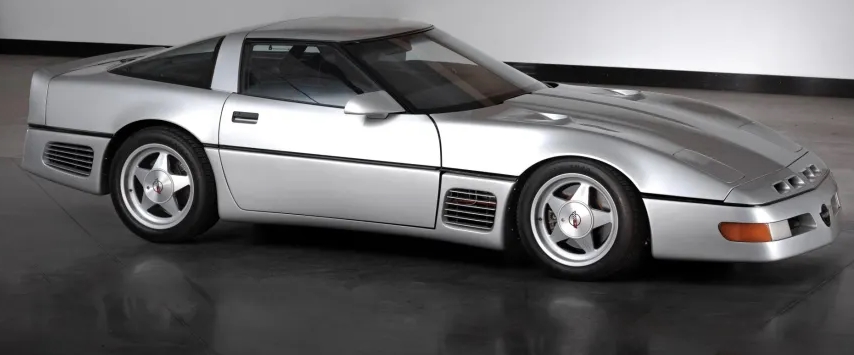
The Iconic Sledgehammer Corvette (1988)
In 1988, Callaway created its most famous C4 variant: the Sledgehammer Corvette — a highly modified version built for speed records. Powered by a twin-turbo 5.7-liter V8 producing upwards of 880 hp, it achieved a top speed of 254.76 mph, holding the (unofficial) production car speed record for nearly two decades.
This model was not a regular production Corvette but demonstrated Callaway’s engineering capability and firmly linked the Callaway name with extreme performance.
.

.
Diversification and SuperNatural Evolution (1992–1996)
SuperNatural and CR1 Corvettes
The early 1990s brought changes in Corvette engines — most notably the switch from L98 to the LT1 small-block V8. Callaway responded with its SuperNatural series (1992–1996), which enhanced power through a combination of increased displacement and finely tuned engine management rather than turbocharging. These included models such as the SuperNatural 400, 425, 435, 440, and up to 450 hp versions for LT1 and LT4 engines. On the high-end, Callaway produced rare CR1 variants based on the ZR-1’s LT5 engine with outputs around 475-490 hp.
Speedster Variants
During the same era, Callaway produced limited-run Speedster Corvettes built on high-performance platforms, often featuring bespoke wide-body kits and luxury interiors. These rare conversions — sometimes just a handful built — further broadened the Callaway Corvette family and added unique collectible models to the lineup.
Independent Builds: The Callaway C12 (1998–2001)
Callaway C12 Supercar
Between 1998 and 2001, Callaway took a leap beyond mere engine tuning with the introduction of the Callaway C12 — a fully coach-built sports car derived from the C5 Corvette but significantly different in design and purpose. With bodywork by Paul Deutschmann and lightweight composite panels, the C12 was positioned as a high-end performance coupe with much stronger performance and racing aspirations. Only about 20 units were produced, making it one of the rarest and most exclusive Callaway Corvettes ever built.
Although not a conventional Corvette variant, the C12 demonstrated Callaway’s capability to create bespoke high-performance vehicles from Corvette foundations.
C6 Generation Performance Enhancements (2005–2013)
Callaway C17 Corvette
As the Corvette transitioned into its sixth generation (C6) from 2005 to 2013, Callaway continued its Corvette engineering programs under the C17 project. This era saw a variety of Callaway Corvette performance levels, both naturally aspirated and supercharged, including:
- SuperNatural™ 450, 461, 490 hp (naturally aspirated)
- SC560, SC580, SC606 (roots-type or TVS supercharged packages)
- SC652 — a supercharged variant of the Z06 that eclipsed the power of the factory C6 ZR1 for much of its run
- Reeves Callaway Signature Editions (RCSE) — limited builds with bespoke features and exclusive production numbers
These packages were available through select Chevrolet dealers and delivered significantly higher performance while retaining Corvette reliability and drivability.
Special Editions and Commemoratives
In 2012, Callaway and Chevrolet collaborated to release a small run of approximately 25 Corvette Grand Sport Callaway 25th Anniversary Editions, featuring unique badges, performance enhancements, and collector appeal.
Modern Era: C7 and C8 Callaway Corvettes (2014–Present)
C7 Generation — SC627 and SC757 (2014–2019)
With the arrival of the seventh-generation Corvette (C7) in 2014, Callaway introduced supercharged packages that would elevate performance to new levels:
- SC627 — based on the C7 Stingray or Grand Sport, boosting output to around 627 hp with Callaway’s proprietary GenThree™ supercharger and TripleCooled™ intercooler system.
- SC757 — a Z06-based package producing roughly 757 hp and massive torque figures, making it one of the most powerful Corvette variants of the era.
Both packages came with Callaway badging, authenticity documentation, and a 3-year/36,000-mile limited warranty, elements that helped these cars stand apart from aftermarket conversions lacking official support.
In addition to the performance options, Callaway offered an AeroWagen™ shooting brake conversion for C7 Corvette coupes, giving owners a unique combination of performance and practicality.
C7 Special and Anniversary Models
Beyond SC627 and SC757, collectors might encounter special Callaway Corvette variants such as limited 25th Anniversary or Champion editions commemorating the company’s heritage.
Callaway C8 Corvette (2020–Present)
From 2020 onward, Callaway has continued its Corvette program into the C8 generation, offering supercharged performance enhancements — especially for drivers seeking to push beyond the already impressive factory performance of mid-engine Corvettes. These offerings may include updated supercharged packages with more efficient intercooling and tuning, as reflected in Callaway’s “Direct Conversion” program.
Trim Levels and Model Variants
Unlike standard factory trim levels defined by Chevrolet (e.g., Stingray, Grand Sport, Z06, ZR1), Callaway Corvette “trim levels” are actually performance packages or bespoke models applied to specific Corvette generations. Across the decades, these have included:
- Callaway Twin Turbo / RPO B2K (1987–1991) — turbocharged C4 Corvette enhancements.
- Sledgehammer Corvette (1988) — record-setting extreme prototype.
- SuperNatural Series (1992–1996) — naturally aspirated performance upgrades across LT1/LT4 platforms.
- CR1 Corvette (early 1990s) — higher-power ZR1-based package.
- C12 (1998–2001) — bespoke coach-built supercar.
- C17 C6 Performance Corvettes (2005–2013) — multiple supercharged and enhanced variants.
- SC627 and SC757 (2014–2019) — GenThree supercharged C7 variants.
- C8 Era Supercharged Corvettes (2020–present) — modern supercharged Callaway enhancements.
Additionally, unique coach-built models like the AeroWagen™ expanded the Corvette’s functional possibilities without detracting from high performance.
Cultural Impact and Enthusiast Appeal
Callaway Corvettes occupy a special niche in the performance car world. Their blend of engineering excellence, rarity, and official collaboration with Chevrolet makes them highly prized by collectors. Many early models — especially the Twin Turbo and rare C12 — rank among the most sought-after modified Corvettes in existence, with distinctive styling and performance that often rivals or exceeds factory supercars of their era.
Collectors and enthusiasts value not just the added horsepower, but the cohesive Callaway identity: authenticity plaques, warranty coverage, and engineering pedigree that reflect decades of performance refinement.
Future Outlook
The future for the Callaway Corvette program appears promising. As Chevrolet continues to advance the Corvette platform — including hybrid and electrified variants in the C8 and potential future generations — Callaway’s engineering expertise is well-positioned to adapt with new performance solutions.
Potential directions include:
- Advanced supercharging and hybrid support packages for electrified Corvette models.
- Limited-edition commemoratives celebrating milestones in Callaway history.
- Further bespoke conversions, possibly in collaboration with Chevrolet or racing programs, to maintain the brand’s relevance in modern performance segments.
As the Corvette evolves, the Callaway name is likely to remain a key performance partner — blending aftermarket innovation with Corvette heritage and global appeal.
From its turbocharged beginnings in the 1980s to modern supercharged C7 and C8 conversions, the Callaway Corvette represents a remarkable journey in performance engineering. The story of Callaway’s Corvette variants is one of continuous innovation — a pursuit of increased power, improved drivability, and sustained exclusivity that resonates with collectors and drivers alike. With a heritage deeply rooted in Corvette culture and a future shaped by evolving automotive technologies, the Callaway Corvette legacy continues to be as compelling as the cars themselves.