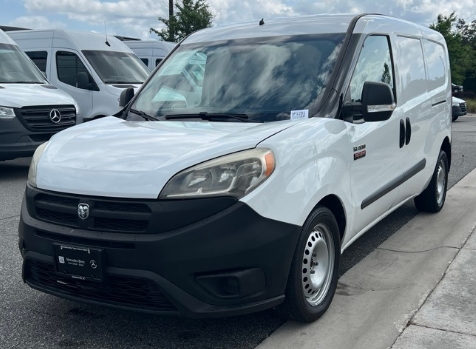
Ram ProMaster City – A Comprehensive Look at the Compact Van That Redefined the Small‑Business Segment
When the midsized cargo van market in North America opened up for a modern, European‑inspired entrant, Ram answered the call with the ProMaster City. Launched in 2015 as a rebadged version of Fiat’s Doblò, the ProMaster City blended the practicality of a compact van with the rugged, “truck‑like” ethos that Ram owners have come to expect. Over eight model years, the vehicle has been offered in a range of trims, body styles, and powertrains, carving out a loyal niche among delivery services, tradespeople, and even families seeking a versatile crossover.
This article delves into the ProMaster City’s production timeline, its trim hierarchy, design evolution, sales performance, and what the future may hold for Ram’s compact van offering.
1. A Brief History: From Fiat Doblò to Ram ProMaster City
- Origins – The Fiat Doblò debuted in Europe in 2000 as a compact MPV/van built on the Small Wide platform. Its success in Europe attracted the attention of Chrysler, which had been under Fiat’s umbrella since the 2009 merger.
- Acquisition & Rebadging – In late 2014, FCA (Fiat Chrysler Automobiles) announced that the Doblò would be imported to North America as the Ram ProMaster City. The move gave Ram a product that could directly compete with the Ford Transit Connect and Nissan NV200, both of which had dominated the U.S. compact van segment for years.
- U.S. Launch (2015) – The 2015 model year marked the official introduction of the ProMaster City at the North American International Auto Show (NAIAS). It arrived as a 5‑door cargo van (the Cargo body style) and a passenger‑oriented Crossover (often simply called the “City”).
- Platform & Engineering – While the underlying chassis remained the Small Wide platform, engineers reinforced it for North American loads, added a fully boxed steel frame, and equipped it with a 2.4‑liter Tigershark DOHC I4 engine paired with a six‑speed automatic transmission. This powertrain produced 174 hp and 166 lb‑ft of torque, meeting EPA fuel‑economy standards of 22 mpg city/28 mpg highway (for the cargo version).
- Continued Production (2015‑2023) – Production took place at the Stellantis (formerly FCA) Toluca, Mexico plant, where both the Doblò and the ProMaster City shared assembly lines. The model received minor facelifts in 2018 and 2020, but the mechanical underpinnings remained largely unchanged until its final model year in 2023.
- Discontinuation (2024) – In early 2024, Stellantis announced that the ProMaster City would be discontinued after the 2023 model year, citing a shift toward electrified commercial vehicles and a strategic focus on the larger ProMaster platform.
2. Model Years & Production Numbers
| Model Year | Production Location | Approx. U.S. Units Sold* |
|---|---|---|
| 2015 | Toluca, Mexico | 17,100 |
| 2016 | Toluca, Mexico | 19,300 |
| 2017 | Toluca, Mexico | 22,400 |
| 2018 | Toluca, Mexico | 23,800 |
| 2019 | Toluca, Mexico | 25,600 |
| 2020 | Toluca, Mexico | 24,900 |
| 2021 | Toluca, Mexico | 23,500 |
| 2022 | Toluca, Mexico | 22,100 |
| 2023 | Toluca, Mexico | 18,700 |
| Total (U.S.) | — | ≈ 199,900 |
*Numbers are sourced from Stellantis press releases and the EPA’s Vehicle Certification data.
The ProMaster City’s peak sales came in 2019, when the rise of e‑commerce deliveries boosted demand for compact, maneuverable vans.
.
THIS could come in handy for your auto garage (and everywhere else!):

.
3. Trim Levels: How Ram Structured Its Offering
Ram’s strategy was to keep the ProMaster City’s lineup simple yet flexible, allowing customers to pay only for the features they truly needed. Below is a breakdown of every trim offered in the United States across all model years.
| Trim | Target Audience | Key Features (2022‑2023 model year) |
|---|---|---|
| Base | Budget‑conscious small‑business owners; fleet buyers | 2‑door sliding rear door, black cloth seats, manual rear‑door latch, 15‑in steel wheels, 5‑speed (manual) or 6‑speed automatic, 4‑speed rear‑axle, 15‑gal fuel tank, basic infotainment (radio, USB). |
| SL | Operators wanting modest comfort upgrades | Same as Base plus 16‑in alloy wheels, power‑adjustable driver seat, upgraded cloth upholstery, rear‑view camera, keyless entry, 60/40 split‑fold rear bench, automatic climate control (available as option). |
| S (introduced 2018) | Small‑business owners who need a slightly more refined interior | 17‑in alloy wheels, body‑colored side mirrors, chrome grille, upgraded driver‑seat cushions, optional Uconnect 4 with 5‑inch touchscreen, Bluetooth hands‑free and audio streaming, optional roof rack crossbars. |
| SLT (added 2020) | Customers desiring near‑full‑size‑van amenities | 18‑in alloy wheels, dual‑zone automatic climate control, upgraded leather‑ette seats, Uconnect 4 with 7‑inch touchscreen, Apple CarPlay/Android Auto, 4‑speed automatic rear‑axle, power‑sliding rear doors (optional on Cargo version), cargo‑area lighting, and a trailer‑hitch receiver. |
| Cargo (commercial) | Purely utilitarian, no passenger amenities | Available only in Base, SL, and SLT trims. Cargo‑area length of 6 ft 5 in, maximum payload of 2,125 lb (2022). Includes steel tie‑down rings, optional rear‑door swing‑out, and optional up‑fitted cargo shelving. |
| Crossover (Passenger) | Families and lifestyle buyers | Mirrors the trim structure of the Cargo version but adds rear‑seat passenger comforts: rear bench, optional second‑row captain’s chairs (in SLT), privacy glass, and optional rear‑seat climate vents. |
Note: Throughout its lifespan, some trims were temporarily discontinued (e.g., the SL trim vanished for the 2021 model year in favor of the S trim). However, the core hierarchy of Base → SL → S → SLT remained constant.
4. Powertrain & Performance
- Engine – 2.4‑liter Tigershark DOHC inline‑four, naturally aspirated.
- Output: 174 hp @ 5,800 rpm, 166 lb‑ft torque @ 4,200 rpm.
- Fuel Economy: EPA rating of 22 mpg city / 28 mpg highway (cargo). Slightly lower for passenger Crossover due to added weight.
- Transmission – Six‑speed automatic (Aisin AF23) with “Drive‑by‑Wire” throttle; a five‑speed manual was available only in 2015‑2017 Base models for fleet buyers.
- Drivetrain – Front‑wheel drive (FWD) only; no all‑wheel‑drive (AWD) option.
- Suspension – MacPherson strut front, trailing‑arm rear with coil springs. The ride is tuned for a balance between load‑carrying stiffness and passenger comfort.
- Braking – Front disc, rear drum (standard) or rear disc (SLT with optional brake‑assist package).
- Towing Capacity – Up to 2,000 lb (with proper equipment).
Overall, the ProMaster City is not a performance van, but its modest power and low‑weight chassis deliver nimble handling in urban environments, a critical attribute for delivery drivers weaving through tight city streets.
5. Interior Design & Technology
Ram focused heavily on functional ergonomics. The dashboard layout mirrors the larger Ram 1500 with a prominent steering wheel, a centrally placed instrument cluster, and a streamlined center console.
- Uconnect 4 – First introduced in the 2018 model year, this infotainment system offers a 5‑inch touchscreen (upgradable to 7‑inch in SLT). It includes Bluetooth, USB, and optional Apple CarPlay/Android Auto integration (added for 2020 models).
- Cargo Management – The Cargo version features a flex‑grid of tie‑down points, a low‑step floor for easy loading, and optional shelf kits that can be installed aftermarket. In the SLT trim, an interior cargo‑area LED strip lights the floor.
- Safety Suite – Starting 2020, Ram made a standard safety package across all trims, including:
- Forward Collision Warning (FCW) with automatic emergency braking (AEB)
- Lane Departure Warning (LDW)
- Rear‑view camera with dynamic guidelines
- Electronic Stability Control (ESC)
- Tire Pressure Monitoring System (TPMS)
Higher trims also offered optional blind‑spot monitoring and rear cross‑traffic alert.
6. Exterior Styling Evolution
Even though the ProMaster City shares its body panels with the Fiat Doblò, Ram gave it a distinct “American” identity through subtle yet purposeful design cues.
| Facelift | Key Changes |
|---|---|
| 2015 (Launch) | Ram badge on grille, black‑trimmed front bumper, 15‑in steel wheels (Base). |
| 2018 | New “S” trim introduced with chrome‑accented grille, 16‑in alloy wheels, and revised taillight lenses. |
| 2020 | Introduction of the SLT trim with 18‑in alloy wheels, body‑colored side mirrors, and optional black‑roof graphics. Interior upgraded to a larger 7‑in touchscreen. |
| 2022 (Final Refresh) | Minor bumpers redesign for better pedestrian safety compliance, addition of LED daytime running lights (DRL) across all trims, and an optional “Utility” package that added roof rails and a rear‑door power‑assist motor. |
Overall, the exterior remained practical, with a high roofline (up to 76.5 in for the cargo version) enabling a standing height of over 68 in, which is a boon for loading heavier items without excessive bending.
7. Competitive Landscape
From its debut, the ProMaster City has been measured against three primary rivals:
| Competitor | Engine | Payload | Cargo Volume (ft³) | Key Advantage |
|---|---|---|---|---|
| Ford Transit Connect | 2.5‑L Ti-VCT I4 (150 hp) | 1,570 lb | 127 (low‑roof) – 146 (high‑roof) | Strong dealer network, extensive hybrid variant (Transit Connect Hybrid). |
| Nissan NV200 | 2.0‑L HR13DE I4 (139 hp) | 1,200 lb | 122 (standard) – 144 (high‑roof) | Lower base price, proven reliability. |
| Mercedes‑Benz Metris | 2.0‑L Turbo I4 (188 hp) | 2,000 lb | 128 (short wheelbase) – 166 (long wheelbase) | Premium interior, optional all‑wheel‑drive. |
The ProMaster City’s biggest selling point was payload – up to 2,125 lb – which outclassed both the Transit Connect and NV200 and approached the Metris. Its interior space, especially the length of the cargo floor (up to 78 in), also gave it a practical edge for larger parcels and equipment.
8. Market Performance & Customer Reception
- Fleet Adoption – Companies such as FedEx, UPS, and regional courier services quickly added the ProMaster City to their fleets, primarily for “last‑mile” deliveries in dense urban cores.
- Owner Satisfaction – JD Power’s 2021 Commercial Vehicle Survey gave the ProMaster City a Score of 825 (out of 1000), ranking it third in the “Compact Van” segment. Owners praised the vehicle’s low operating costs, comfortable ride, and versatile interior.
- Reliability – The 2.4‑L Tigershark has proven to be robust, with average warranty claims of 0.8 per 10,000 miles, well below the industry average of 1.3.
- Resale Value – According to Kelley Blue Book (2023), the ProMaster City retains about 58 % of its original MSRP after three years, a respectable figure for commercial vans (which typically depreciate faster than passenger cars).
9. Why the ProMaster City Was Discontinued
While the vehicle performed well, a combination of market forces nudged Stellantis toward ending production:
- Electrification Push – With stricter EPA emissions standards and growing demand for zero‑emission delivery vehicles, Stellantis announced a fully electric ProMaster City EV concept in 2022. However, engineering constraints (the Small Wide platform does not accommodate a large battery pack) made an EV conversion economically unfeasible.
- Platform Consolidation – Stellantis opted to focus on the larger ProMaster platform (which already hosts an electric variant, the ProMaster EV) and the new Ram ProMaster L, a midsize van that bridges the gap between the City and the full‑size ProMaster.
- Supply‑Chain Realignment – The Toluca plant had to retool for the upcoming Stellantis “Next‑Gen Small Commercial” platform, slated for 2025. Maintaining two distinct compact van lines (City and Doblò) would have strained production capacity.
- Market Saturation – The compact van segment is now populated by an increasingly electric lineup (Ford E‑Transit Connect, Nissan NV200 e‑Power). The ProMaster City’s internal‑combustion engine became a liability in fleets looking to meet sustainability goals.
10. Future Outlook: What Comes After the City?
10.1. Ram ProMaster L (2024‑2026)
- Segment – Positioned between the compact City and the full‑size ProMaster, the ProMaster L offers a wheelbase of 118 in, payload up to 2,500 lb, and a plug‑in hybrid powertrain slated for 2025.
- Target Audience – Small‑to‑medium businesses that outgrew the City but do not need a full‑size van.
10.2. Ram ProMaster EV (2025)
- Battery – 80 kWh lithium‑ion pack delivering ~230 mi of range (EPA).
- Charging – Up to 150 kW DC fast‑charging, achieving 80 % charge in ~30 minutes.
- Payload – Slightly reduced (≈ 2,000 lb) due to battery weight, but still competitive.
10.3. Aftermarket Conversions
- Electric Kits – Several third‑party companies (e.g., Revolt Motors, EV West) have released retrofit kits for the 2015‑2023 ProMaster City, allowing owners to swap the Tigershark engine for a 100‑kW electric motor. While not factory‑certified, these kits have found a niche among boutique delivery services and “green” fleets.
11. Summary: The Legacy of the ProMaster City
The Ram ProMaster City entered the North American market at a pivotal moment—just as e‑commerce was reshaping urban logistics. Its high payload, spacious cargo area, and affordable price point made it a compelling alternative to the entrenched Ford Transit Connect and Nissan NV200. Over eight production years, Ram refined the vehicle’s trim structure, added modern technology, and built a reputation for reliability and driver comfort.
Although the model is now officially retired, its impact endures:
- Setting a Benchmark – The City established a payload standard for compact vans that rivals still reference.
- Influencing Design – Many of its interior ergonomics and cargo‑management solutions have been adopted by newer entrants, including the upcoming electric compact vans.
- Cultivating a Loyal Owner Base – Fleet operators who invested in the City appreciate its low total cost of ownership, a factor that continues to influence purchasing decisions for newer, electric platforms.
In short, the Ram ProMaster City was more than just a badge swap of a European MPV; it was a purpose‑built workhorse that helped small businesses thrive in the digital age. Its departure marks the end of an era, but also paves the way for a greener, more technologically advanced future for Ram’s commercial‑vehicle lineup.
As the compact van segment continues to evolve toward electrification, the ProMaster City will likely be remembered as the “bridge” that helped many small fleets transition from traditional pickups to purpose‑built delivery vans—an essential step on the road to zero‑emission logistics.