The History of Royal Pontiac
The Dealership That Helped Ignite the Muscle Car Era
Royal Pontiac was not a traditional automobile manufacturer, but from the late 1950s through the 1970s it became one of the most influential performance dealerships in American automotive history. Based in Royal Oak, Michigan, Royal Pontiac built a national reputation by transforming standard production Pontiacs into high-performance street and drag-strip machines. Through bold marketing, racing involvement, and innovative performance packages, the dealership helped define the muscle car era and played a critical role in the rise of the Pontiac GTO.
Although Royal Pontiac never manufactured cars independently, its impact on American performance culture was substantial. Its story is closely tied to the fortunes of Pontiac and its parent company, General Motors (GM), and to the entrepreneurial drive of its dynamic leader, Ace Wilson.
Founding and Early Years (1950s)
Royal Pontiac was founded in the 1950s as a franchised Pontiac dealership in Royal Oak, Michigan, a Detroit suburb deeply rooted in America’s auto industry. The dealership came under the leadership of Ace Wilson, born Charles Wilson, who would become one of the most recognizable figures in performance retailing.
Ace Wilson had a background in automotive sales and promotion. Like many postwar entrepreneurs in Michigan, he saw opportunity in Detroit’s booming car culture. Wilson was not an engineer or factory executive; he was a salesman with a keen understanding of consumer psychology and the growing youth performance market.
By the late 1950s, Pontiac itself was undergoing a transformation. Once seen as a conservative, middle-aged brand, Pontiac was repositioned under GM leadership to appeal to younger buyers with performance-oriented styling and powerful V8 engines. Wilson quickly recognized that performance could be more than a factory offering—it could be a retail strategy.
The Birth of the “Bobcat” Era (Early 1960s)
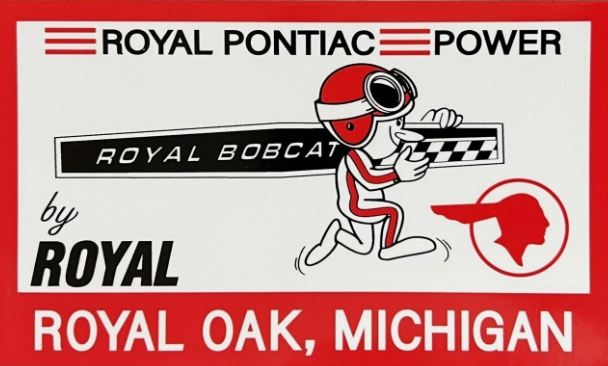
Royal Pontiac rose to prominence in the early 1960s through its performance modification program known as the “Bobcat” package. While the cars were factory-built Pontiacs, Royal Pontiac offered dealer-installed performance enhancements that significantly increased horsepower and track performance.
The Bobcat package included:
- Engine blueprinting
- Higher-performance camshafts
- Recalibrated carburetors
- Ignition modifications
- Performance tuning and optimization
These modifications often resulted in substantial horsepower gains over stock factory ratings. In an era when manufacturers understated horsepower ratings for insurance and corporate policy reasons, Royal Pontiac’s real-world performance often exceeded expectations.
The dealership prominently advertised its high-performance offerings, creating national demand. Buyers from across the United States ordered cars through Royal Pontiac specifically to receive the Bobcat treatment.
Role in the GTO Revolution (1964 and Beyond)
In 1964, Pontiac introduced the GTO, widely credited as the first true muscle car. While the GTO was a factory model, Royal Pontiac played a major role in promoting and legitimizing it within performance circles.
Royal Pontiac aggressively marketed the GTO and immediately offered Bobcat performance packages for it. The dealership’s heavily modified GTOs quickly gained reputations as some of the fastest street machines in America.
Royal Pontiac’s involvement in drag racing helped cement this reputation. Cars prepared by the dealership regularly appeared at Midwest drag strips and national events, often beating competitors from Ford and Chrysler.
Racing Programs and Competition Success
Royal Pontiac was deeply involved in drag racing throughout the 1960s. Though GM officially banned factory-backed racing in 1963, dealerships like Royal Pontiac operated in a gray area. While not directly funded by GM, their efforts effectively promoted Pontiac performance.
Royal Pontiac-sponsored cars competed in NHRA and other sanctioned drag racing events. These racing programs served as rolling advertisements.
One of Royal Pontiac’s marketing slogans was direct and confident, emphasizing that its cars were race-ready and street-proven. The strategy worked. Word-of-mouth and magazine coverage brought national attention.
Publications such as Motor Trend and other performance magazines featured high-performance Pontiacs during this period, amplifying Royal Pontiac’s influence.
Factory Operations and Modification Process
Royal Pontiac did not operate a manufacturing plant. Instead, it functioned as a traditional franchised dealership with expanded service and performance facilities.
The process typically worked as follows:
- A customer ordered a new Pontiac vehicle.
- The car arrived from a GM assembly plant.
- Royal Pontiac’s service technicians installed performance modifications.
- The vehicle was dyno-tested and tuned before delivery.
These modifications were dealer-installed, meaning the cars retained factory VIN numbers and manufacturer origins. This distinction is important: Royal Pontiac enhanced factory vehicles rather than manufacturing its own.
The dealership’s service department became known for precision engine tuning, careful parts selection, and race-level preparation.
Marketing and Branding Strategy
Royal Pontiac’s marketing was bold and direct. Unlike conservative dealership advertising of the era, Royal Pontiac leaned heavily into performance claims.
Key strategies included:
- Promoting quarter-mile times
- Publishing real-world performance results
- Leveraging racing wins
- Branding cars with “Bobcat” emblems and decals
This performance-first messaging differentiated Royal Pontiac from typical dealerships that focused on comfort and reliability.
The dealership effectively turned itself into a performance brand within a brand.
Hardships and Corporate Challenges (Late 1960s)
Despite its success, Royal Pontiac faced significant challenges.
1. GM Racing Ban (1963 Onward)
In 1963, General Motors officially withdrew from direct racing support. While dealerships could still promote performance, overt factory racing involvement became restricted.
Royal Pontiac adapted by continuing dealership-level performance work without formal factory sponsorship.
2. Insurance and Emissions Pressures (Late 1960s)
By the late 1960s:
- Insurance rates for high-performance cars skyrocketed.
- Federal emissions regulations tightened.
- Public scrutiny of high-horsepower vehicles increased.
Horsepower ratings dropped industry-wide beginning in the early 1970s. Royal Pontiac’s core appeal—maximum street performance—was becoming harder to sustain under new federal guidelines.
3. 1973–1974 Oil Crisis
The 1973 oil embargo dramatically changed consumer priorities. Gasoline shortages and rising fuel prices reduced demand for high-displacement V8 muscle cars.
Royal Pontiac, whose identity revolved around performance, was particularly vulnerable to this market shift.
Consumer Reception in the United States
During its peak in the mid-1960s, consumer reception was overwhelmingly positive among performance enthusiasts.
Buyers saw Royal Pontiac as:
- A source of higher-than-factory performance
- A trusted performance tuner
- A gateway to competitive drag racing
However, as fuel prices rose and regulations tightened, mainstream buyers shifted toward economy and efficiency. Performance dealerships lost momentum nationwide.
Three Notable Vehicles Associated with Royal Pontiac
Although Royal Pontiac did not independently produce vehicles, it became strongly associated with several Pontiac models:
1. Pontiac GTO (Most Popular and Successful)
The GTO was Royal Pontiac’s signature car. Nationally, Pontiac sold approximately 96,946 GTOs in 1966 alone in the United States, marking its peak sales year.
Over its production run (1964–1974), hundreds of thousands of GTOs were sold in the U.S., though the vast majority were domestic sales, as global exports were limited.
Royal Pontiac Bobcat GTO variants were among the quickest dealer-modified versions available.
The GTO became the most popular vehicle associated with Royal Pontiac because it combined:
- Mid-size practicality
- Large V8 power
- Affordable pricing
It appealed directly to young American buyers seeking maximum performance for reasonable cost.
2. Pontiac Catalina 2+2
Royal Pontiac also modified full-size cars like the Pontiac Catalina 2+2, equipping them with high-output 421 cubic-inch engines and performance packages.
These large cars, known as the Royal Pontiac Bobcat Catalina, were surprisingly quick in straight-line racing and showcased Royal Pontiac’s tuning capabilities.
3. Pontiac Firebird
After its introduction in 1967, the Pontiac Firebird became another model enhanced by Royal Pontiac. With its pony-car styling and available V8 engines, it fit perfectly within the dealership’s performance strategy.
The Royal Pontiac Firebird Trans Am was one of best bang for the buck vehicles on the road.
What Made Royal Pontiac Different
Royal Pontiac stood apart from traditional car manufacturers and dealerships in several ways:
- Dealer-Level Performance Engineering
Most dealerships simply sold factory vehicles. Royal Pontiac engineered enhanced race car versions. - Race-Driven Marketing
Performance claims were backed by real racing results. - Brand Within a Brand
The “Bobcat” identity functioned almost like a sub-brand under Pontiac. - Customer Accessibility
Buyers could walk into a showroom and order a near race-ready vehicle with warranty-backed factory origins.
Royal Pontiac effectively bridged the gap between Detroit production lines and grassroots racing culture.
Sales Impact
Royal Pontiac itself did not publish separate production totals for Bobcat conversions. However, at its height in the mid-1960s, it was among the highest-volume Pontiac dealerships in the Midwest.
Pontiac as a brand achieved major milestones during this era, including record-breaking GTO sales and strong performance reputation nationwide.
Royal Pontiac contributed materially to that success by building excitement and pushing performance credibility.
Decline and Closure (1970s)
By the mid-1970s, the muscle car era had faded. Several factors led to Royal Pontiac’s decline:
- Federal emissions standards
- Declining horsepower ratings
- Insurance surcharges
- Fuel economy concerns
- Shifting consumer tastes
As performance demand dropped, Royal Pontiac lost its unique market position. Without the high-horsepower halo that defined its brand, it became increasingly difficult to stand out from other dealerships.
Royal Pontiac ceased operations in the 1970s. It was not bought out in a high-profile merger; rather, it closed amid broader industry transformation and declining muscle car demand.
Pontiac itself continued operations for decades afterward but was ultimately discontinued by General Motors in 2010 during GM’s restructuring.
Legacy and Historical Importance
Though Royal Pontiac no longer exists, its legacy remains powerful among collectors and historians.
Today:
- Original Royal Pontiac Bobcat cars command premium prices.
- Documentation of dealer-installed performance packages significantly increases vehicle value.
- The dealership is remembered as a pioneer of performance retailing.
Royal Pontiac demonstrated that innovation does not always come from corporate headquarters. Sometimes it comes from entrepreneurial dealerships willing to push boundaries.
Overall Assessment
From an American perspective, Royal Pontiac embodied the optimism and horsepower-driven spirit of the 1960s. It thrived during a time when performance defined automotive identity and when Detroit dominated global car culture.
Years in operation: Primarily active and influential from the 1950s through the mid-1970s.
Founder/Leader: Ace Wilson, performance-oriented dealership executive.
Ownership: Independent franchised Pontiac dealership; not merged or formally acquired before closure.
Most Popular Vehicle Associated: Pontiac GTO
Peak U.S. sales year (1966): 96,946 units
Primary market: United States
Royal Pontiac did not manufacture cars in the traditional sense, but it transformed factory-built vehicles into legends. It was a dealership that became a performance institution, influencing the muscle car era in ways that far exceeded its size.
Though gone, Royal Pontiac remains a symbol of American ingenuity, entrepreneurial drive, and the golden age of V8 performance.