Shelby (Dodge) Dakota: The One-Year Performance Pickup That Started the Muscle-Truck Trend
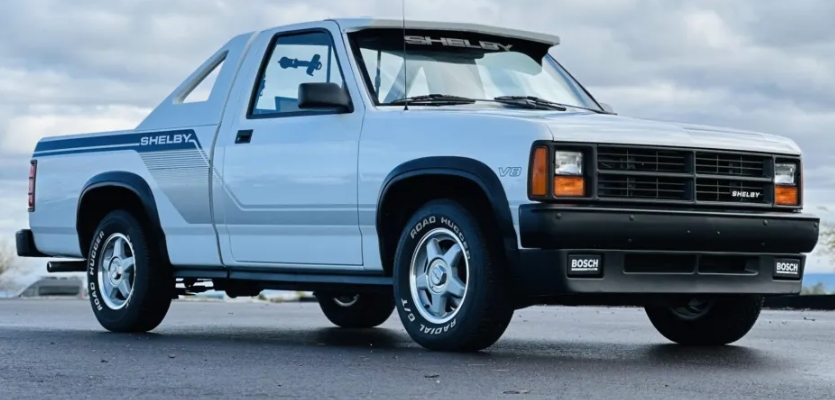
The Shelby Dakota stands out as a unique, bold experiment in Carroll Shelby’s storied career — a performance-oriented pickup truck that combined the practicality of a midsize pickup with the heart of a V8 muscle machine. Built for just one year, 1989, this rare Shelby-modified Dodge Dakota was ahead of its time and foreshadowed future performance trucks. Despite its singular model year and limited production, the Shelby Dakota has become something of a cult classic among collectors and truck enthusiasts alike.
A Brief History: Shelby Meets Dodge
Carroll Shelby is best known for high-performance sports cars and muscle cars — from the Shelby Cobra to the Mustang Shelby GT350 and GT500 — but his work in the 1980s expanded to performance versions of a variety of Chrysler products, including the Omni GLHS, Lancer, and ultimately the Dakota. In 1989, Shelby took on the challenge of transforming a Dodge Dakota pickup truck into a performance vehicle, creating what is widely considered the first “performance pickup.”
The Shelby Dakota represented Shelby’s first rear-wheel-drive vehicle in many years, as well as his first production pickup truck. While Shelby had previously tuned sporty hatchbacks and coupes, applying his performance expertise to a pickup truck was a significant shift and a bold statement in an era when performance trucks were nearly unheard of.
The 1989 Shelby Dakota — Only One Model Year
Unlike traditional automotive models that evolve over several years with multiple trim levels, the Shelby Dakota exists for only one model year — 1989. Its life was brief but impactful, and it remains a fascinating snapshot of late-1980s performance aspirations.
Production Volume and Availability
- Total Produced: Approximately 1,475–1,500 units were built.
- Color Options: Offered only in two colors — Bright Red (about 995 units) and Bright White (about 480–505 units).
- Single Model Year: 1989 — no subsequent years or later Shelby-modified Dakota trucks were produced under the Shelby name.
The truck was marketed under the Shelby name and sold through Dodge dealers, but the performance modifications were carried out by Shelby American at its Whittier, California facility.
.

.
Mechanical Transformation — Turning a Pickup Into a Performance Machine
The base for the Shelby Dakota was a short-wheelbase, short-bed, standard-cab Dodge Dakota Sport pickup. Shelby’s task was to take this modest truck and turn it into a performance pickup that could stand out from its peers.
Engine and Powertrain
One of the Shelby Dakota’s defining features was its engine upgrade:
- The stock Dakota’s 3.9 L V6 (about 125 hp) was replaced with a 5.2 L (318 ci) V8 featuring throttle-body fuel injection.
- This V8 produced 175 hp at 4000 rpm and 270 lb-ft of torque at 2000 rpm.
- Due to the tight engine bay, Shelby replaced the stock belt-driven fan with dual electric fans, freeing space and increasing V8 output slightly.
- The only transmission offered was a 4-speed automatic.
- A 3.90:1 limited-slip rear differential was fitted to improve traction and pull.
This configuration gave the Shelby Dakota respectable performance for the era — a time when most pickups were still inefficient workhorses rather than performance vehicles. Motor Trend tested the truck and clocked a 0-60 mph time around 8.5 seconds with a quarter-mile pass near 15.6 seconds.
Appearance and Styling Enhancements
Visually, the Shelby Dakota distinguished itself from the standard Dakota with a range of unique styling and aerodynamic features:
- Shelby Graphics: Bold Shelby decals and striping adorned the sides and tailgate.
- Front Air Dam with Fog Lamps: A molded front spoiler helped sharpen the look and improve airflow.
- Blacked-Out Trim: Bumpers, grille, and wheel arch extensions were finished in black for contrast.
- Sports Bar: A fiberglass light bar behind the cab was a distinctive 1980s touch.
- Shelby Wheels: Fitted with unique five-spoke Shelby aluminum wheels wrapped in performance-oriented tires.
These details, combined with the V8’s presence, signaled clearly that this was no ordinary Dakota.
Interior and Comfort Features
Inside, Shelby Dakota pickups went beyond the utilitarian feel of a base work truck with a number of performance and comfort upgrades:
- Shelby-Branded Steering Wheel: An easy-to-recognize touch tying the truck back to Shelby’s signature brand.
- Seat Inserts and Upholstery: Cloth and vinyl bench seats with Shelby branding.
- Individually Numbered Dash Plaque: Each truck’s dash plaque noted its place in the production run, a collectible hallmark.
- AM/FM Cassette Stereo: A standard audio system, which was typical of trucks of the era.
The interior’s sporty accents reminded owners that this was a performance variant, not simply a cosmetic package.
Shelby Dakota in Context: Then and Now
At the time of its release, the Shelby Dakota stood out for its unusual combination of performance and utility. In an era before factory performance trucks like the GMC Syclone (1991) and Ford F-150 Lightning (1999) existed, the Shelby Dakota was one of the first serious attempts to offer a game-ready pickup with a powerful V8 and sporty styling.
Influence on Performance Trucks
Although later performance pickup trucks like Dodge’s own Ram SRT-10 (with its Viper-derived V10) became more famous and powerful, the Shelby Dakota helped lay the groundwork in the late 1980s for the idea that trucks could be fun, quick, and worthy of enthusiast interest — not just utilitarian.
Collectors today see the Shelby Dakota as historically significant — not only because it represents a rare Shelby product, but because it represents a transitional moment in truck culture, where performance and practicality began to merge.
Models and Trim Levels — A Singular Offering
Unlike cars with evolving trim lines, packages, and multiple years, the Shelby Dakota was not offered in multiple trims or across multiple years. Its existence is confined to a single model year (1989) with one core performance version.
There were no official sub-models such as “base,” “Sport,” or “Premium” within the Shelby Dakota itself. The only differences among units were aesthetic: the two exterior colors — red and white — with all mechanical and performance components standardized for all Shelby Dakotas.
Production Numbers and Rarity
Because only about 1,475–1,500 Shelby Dakotas were built, finding one today is a challenge — and original, well-maintained examples are prized by collectors.
- Red Examples: Around 995 units.
- White Examples: Around 480–505 units.
Many surviving examples are documented with their serial number plaques, which adds to their collectible appeal and helps enthusiasts track provenance.
Performance and Driving Experience
Though its 175 hp V8 output might seem modest by today’s standards, the Shelby Dakota’s power was competitive in 1989 for a midsize pickup. Its performance eclipsed the stock V6 and provided a much more engaging driving experience than most trucks of that era.
Handling in a truck is always a balance between utility and agility, and the Dakota’s rear-wheel-drive layout combined with Shelby’s suspension tweaks gave it a sportier feel than typical pickups at the time — a notable achievement in an era when trucks were primarily cargo vehicles.
Future Outlook and Legacy
Since no future Shelby Dakota or direct successor was ever produced, the model remains a one-year wonder. Its legacy lives on as:
- A collectible classic prized for rarity and Shelby heritage.
- A historical precursor to later performance trucks.
- A reminder of the era when specialty vehicles and limited editions proliferated in the American market.
The broader Dodge Dakota nameplate itself lives on in automotive memory and may see revival under Stellantis (Ram), but any new performance truck would not be a direct Shelby Dakota descendant; rather it would be inspired by its spirit of combining utility with excitement.
Conclusion
The 1989 Shelby Dakota is a rare and fascinating chapter in the history of both Carroll Shelby and the pickup truck. Produced for just one model year and limited to roughly 1,500 examples, it remains unique in Shelby’s portfolio as his only rear-wheel-drive pickup project. Packed with a V8 engine, upgraded styling, and enthusiast appeal, the Shelby Dakota helped pioneer the performance-truck genre long before it became market mainstream. Its collectible status, limited numbers, and historical significance ensure it retains interest and appreciation from automotive enthusiasts and historians alike.