The American Experiment: History of the Renault Alliance
In the annals of automotive history, few collaborations have been as ambitious, fraught with geopolitical tension, and ultimately as fascinating as the partnership between the American Motors Corporation (AMC) and Renault. While the Jeep Cherokee (XJ) stands as the partnership’s enduring legacy, the vehicle that truly embodied the day-to-day reality of this transatlantic marriage was the Renault Alliance.
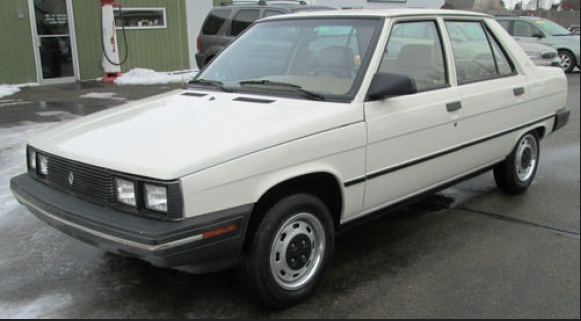
Introduced in 1983, the Alliance was not merely a rebadged European compact; it was a bold attempt to inject French engineering into the heart of the American sedan market. It arrived during a pivotal era of automotive history—a time when front-wheel drive was supplanting rear-wheel drive, and fuel efficiency was paramount. This article explores the evolution of the Renault Alliance, tracing its production years, model variations, and its eventual transition into the Eagle brand.
The Genesis: A Marriage of Necessity (1979–1982)
To understand the Alliance, one must understand the precarious position of American Motors Corporation in the late 1970s. Besieged by the oil crises and fierce competition from Japanese and domestic rivals, AMC was in dire need of a modern, fuel-efficient passenger car to replace its aging, rear-wheel-drive Hornet and Concord lines.
In 1979, AMC signed a partnership agreement with Renault, the French state-owned automaker. The deal involved Renault acquiring a 22.5% stake in AMC, with the ultimate goal of producing a Renault-designed vehicle on American soil. The chosen platform was the Renault 9 (known as the Renault 14 in some markets), a compact sedan that had debuted in Europe in 1972.
However, the car that emerged in 1983 was not a direct copy of its European counterpart. Dubbed the “Alliance,” the car underwent significant “Americanization” to suit U.S. tastes and regulations. This included a reinforced structure, a redesigned suspension to handle rougher American roads, and distinct styling cues. The Alliance was built at AMC’s Kenosha, Wisconsin, and Brampton, Ontario plants, marking a significant infusion of French technology into North American manufacturing.
.

.
1983: The Debut of the Alliance
The Renault Alliance launched for the 1983 model year as a two-door and four-door sedan. It was an immediate critical success, winning Motor Trend magazine’s “Car of the Year” award. The public embraced its crisp, aerodynamic styling, which stood in stark contrast to the boxy designs prevalent in the early 1980s.
Powertrain and Engineering: The Alliance was powered by a 1.4-liter (1397cc) inline-four engine, a derivative of the Renault “Cléon-Fonte” engine. While the European Renault 9 utilized a chain-driven camshaft, the American Alliance utilized a timing belt, a change that required careful maintenance to avoid catastrophic engine failure.
- Transmission: Initially offered with a 3-speed automatic (Borg-Warner 65) or a 5-speed manual (Renault UN1-04, a robust gearbox shared with the DeLorean DMC-12).
Trim Levels (1983):
- Base: The entry-level model, spartan but functional. It featured a vinyl bench seat, manual windows, and 13-inch steel wheels.
- L: The “Luxury” trim. This added cloth upholstery, a tachometer, woodgrain dash accents, and upgraded carpeting. It was the volume seller.
- GL: The top-tier sport model. The GL featured a firmer suspension, halogen headlights, sport wheels, and a rear spoiler. It was designed to compete with the Honda Accord and Volkswagen Jetta.
1984: Refinement and the Introduction of the GTA
For the second model year, changes were minimal but significant. The 1.4-liter engine received a hydraulic valve lash adjuster to reduce maintenance needs (eliminating the need for periodic valve adjustments, a common complaint with the 1983 models).
The Renault Alliance GTA: In late 1983, for the 1984 model year, AMC introduced the Alliance GTA (Grand Touring Américain). This was a significant departure from the standard Alliance.
- Engine: The GTA received a larger 2.0-liter (1995cc) “Douvrin” inline-four engine, bored out from the standard 1.4L. This engine produced 125 horsepower (with catalytic converter) or 135 horsepower (without), a substantial increase over the 64 hp of the base engine.
- Features: The GTA was easily identifiable by its unique 15-inch “Teledial” alloy wheels, quad rectangular headlights (replacing the standard round ones), a distinctive black rubberized front air dam, and a rear decklid spoiler. It also featured a sport-tuned suspension and a dashboard with a center gauge cluster.
1985: The Convertible and the Facelift
By 1985, the Alliance was five years into its lifecycle. To keep momentum, AMC launched the Alliance Convertible.
- The Convertible: Built by American Specialty Cars (ASC), the convertible was based on the two-door GTA platform. It featured a power-operated soft top and a reinforced chassis. It was marketed as a premium, entry-level luxury convertible, competing with the Chevrolet Cavalier and Ford Mustang convertible.
- The Facelift: The 1985 model year saw a significant exterior refresh. The rear taillights were enlarged, and the front grille received a new egg-crate design. The interior received an updated digital clock and revised seat fabrics.
1986–1987: The Peak and the Transition
In 1986, the Alliance lineup was streamlined. The “Base” and “L” trims were largely consolidated, leaving the standard sedan and the GTA as the primary distinct models.
The Renault Premier: A critical footnote in the Alliance’s history is the Renault Premier. Produced for the 1987 model year only, the Premier was a rebadged Alliance built on a slightly longer wheelbase. It was created to fill the gap left by the discontinuation of the AMC Concord. The Premier served as a bridge vehicle, sold through Renault dealerships, and was essentially a test run for the platform that would soon become the Eagle Medallion.
The End of the Renault Brand: The geopolitical landscape shifted dramatically in 1986. The French government, seeking to divest from Renault, sold a controlling interest in AMC to the Chrysler Corporation in 1987. This transaction effectively ended the Renault brand’s direct presence in the U.S. passenger car market.
1988–1989: The Eagle Medallion
Following Chrysler’s acquisition of AMC, the Renault Alliance underwent a final, significant transformation. For the 1988 model year, the car was rebranded under Chrysler’s new “Eagle” marque, becoming the Eagle Medallion.
While the Medallion looked nearly identical to the 1987 Alliance Premier, there were mechanical and cosmetic differences:
- Engine: The 2.0-liter engine was updated with electronic fuel injection (Renix system), increasing horsepower to 135 hp and improving drivability.
- Trim Levels: The Eagle Medallion was offered in two main configurations:
- Medallion LS: The base four-door sedan.
- Medallion LTS: The sportier four-door sedan (replacing the GTA designation).
- Medallion Coupe: A two-door version.
- Styling: The Eagle Medallion featured a new grille (a black rubberized egg-crate design), flush-mounted composite headlights, and the removal of the Renault diamond badge from the hood (replaced by the Eagle “beak” emblem).
Production of the Medallion continued through 1989. By this time, the platform was aging, and Chrysler was eager to introduce its own Concorde and Intrepid models (the “Cab-forward” designs). The Medallion was discontinued in late 1989, marking the end of the Renault 9/11 platform in North America.
Technical Specifications and Legacy
Engine Evolution:
- 1.4L “Cléon-Fonte”: (1983–1987) 64–70 hp. Reliable but underpowered by American standards.
- 2.0L “Douvrin”: (1984–1989) 110–135 hp. A robust, chain-driven engine that offered strong torque.
Suspension: The Alliance featured a MacPherson strut front suspension and a torsion beam rear suspension. While competent, the rear suspension was prone to “axle tramp” under hard acceleration, particularly in the lighter two-door models.
The “Renault Factor”: The Alliance’s reputation was complicated by the “Renault Factor.” While the chassis and body were generally well-assembled (often better than American contemporaries), the Renault-sourced electrical components—specifically the alternators and fuse boxes—developed a reputation for unreliability. Furthermore, the 1.4L engine’s timing belt required replacement every 60,000 miles; failure meant an interference collision between valves and pistons, destroying the engine.
Future Outlook and Collector Status
Today, the Renault Alliance and its Eagle Medallion successor are largely forgotten relics of a bygone era of automotive consolidation. However, their historical significance is immense. They represented the first successful integration of front-wheel-drive European engineering into the American mass market.
Current Status: Finding a pristine Alliance today is a challenge. The 1.4L models succumbed to rust (particularly in the rear wheel wells and rocker panels) and timing belt failures. The 2.0L GTA and Medallion models are slightly rarer and more desirable due to their performance potential.
Collector Potential: While not commanding high prices, clean examples of the Alliance GTA and the convertible are gaining interest from enthusiasts of 1980s “sleepers.” The Alliance Convertible, in particular, remains a quirky, stylish cruiser that offers a unique alternative to the ubiquitous Mustangs and Cavaliers of the era.
Conclusion
The Renault Alliance was a product of a specific moment in time—a bridge between the analog 1970s and the digital 1990s. It was a car that tried to be both French and American, succeeding in creating a unique identity that was neither fully one nor the other.
From its triumphant 1983 debut to its quiet disappearance as the Eagle Medallion, the Alliance proved that American cars could handle like Europeans, and that French cars could survive the rigors of American highways. Though the Renault diamond no longer graces American roads, the engineering lessons learned from the Alliance paved the way for the global platforms we see in today’s automotive landscape. It remains a testament to the audacity of AMC and the fleeting nature of international automotive partnerships.