The Audacious Egg: A Comprehensive History of the Toyota Previa
In the annals of automotive design, there are vehicles that follow trends, and then there are those that create them—or, in some rare cases, exist so far outside the trend that they become timeless legends. The Toyota Previa falls firmly into the latter category. It was a spaceship for the suburbs, an engineering marvel wrapped in a futuristic ovoid shell that challenged the very definition of a family vehicle. To understand the evolution of the Toyota Previa is to witness a journey from radical, unconventional engineering to refined, market-driven practicality, all while maintaining a spirit of innovation.
The First Generation (XR10/XR20): The Revolutionary Mid-Engine Marvel (1990-1999)
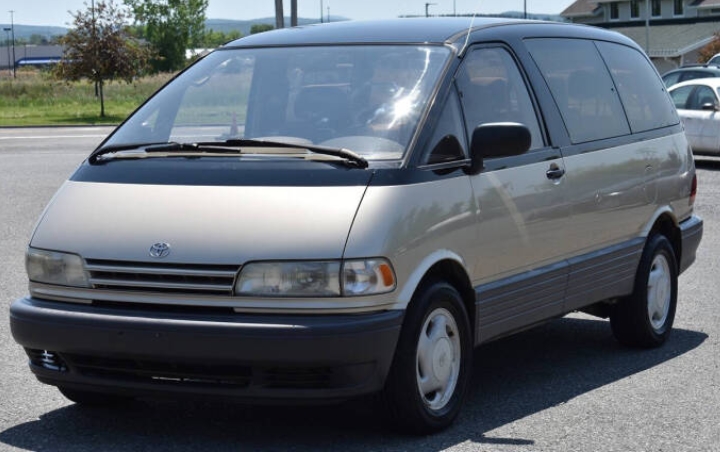
The story begins in the late 1980s. The minivan market in North America was utterly dominated by Chrysler’s K-car-based Dodge Caravan and Plymouth Voyager. They were practical, spacious, and unapologetically boxy. Toyota, having seen modest success with its forward-control Van (confusingly named the “Van”), knew it needed a dedicated, ground-up design to compete. Their solution, unveiled in 1990 for other markets and arriving in the U.S. for the 1991 model year, was nothing short of audacious.
The Previa’s most defining feature was its mid-engine, rear-wheel-drive layout. This wasn’t a “front-mid” engine placement like in a sports car; the engine was situated flat on its side, tilted at a 75-degree angle, directly beneath the front passenger and driver seats. This radical decision was driven by a desire to achieve a perfectly flat interior floor, optimal weight distribution (nearly 50/50), and the now-iconic, low-slung, aerodynamic “one-box” or “jellybean” design.
The engine itself was a 2.4-liter, 16-valve DOHC inline-four, codenamed the 2TZ-FE, producing a modest 138 horsepower. Because of its unique placement, all belt-driven accessories—the alternator, power steering pump, and air conditioning compressor—could not be attached directly to the engine block. Toyota’s ingenious solution was the Supplemental Accessory Drive System (SADS). This was essentially a driveshaft running from the engine to the front of the vehicle, where it powered these crucial components, which were accessible by simply opening the small front hood.
Models and Trim Levels (North America):
- Production Years (U.S. Market): 1991-1997
- DX (Deluxe): This was the base model. It typically came with seating for seven, with a second-row bench seat. Features were basic, including manual windows and locks in early years, though it still offered the core Previa experience of space and unique handling.
- LE (Luxury Edition): The more popular, up-market trim. The LE added a host of desirable features, such as power windows and locks, cruise control, a premium sound system, and often a roof rack. A key upgrade was the option of second-row captain’s chairs, which could swivel to face the rear, creating a lounge-like environment. Many LE models also featured a dual moonroof setup, with a large, fixed-glass panel over the rear passengers.
- All-Trac: Available on both DX and LE trims, the All-Trac system was a full-time all-wheel-drive system that gave the Previa a significant advantage over its front-wheel-drive-only American competitors, especially in snowy climates. This feature, combined with the balanced weight distribution, gave the van surprisingly capable and stable handling characteristics.
The Supercharged Evolution (1994-1997):
The primary critique of the early Previa was its lack of power. The 138-horsepower engine struggled to move the nearly 4,000-pound van with authority, especially when loaded with a family and their gear. For the 1994 model year, Toyota introduced a game-changing option: a factory-installed, Roots-type supercharger.
The new engine, the 2TZ-FZE, boosted output to a much healthier 161 horsepower and significantly increased torque. This transformed the Previa from a sluggish cruiser into a respectably brisk performer. Supercharged models, often designated with an “S/C” badge, became the most desirable versions. This update was paired with a minor facelift, revised taillights, and the standardization of dual front airbags. However, despite its brilliance, the Previa’s high production cost and unconventional nature meant it never unseated the American market leaders, and Toyota ceased its North American sales after the 1997 model year, paving the way for the more conventional Sienna.
.

.
The Second Generation (XR30/XR40): A Bow to Convention (2000-2005)
While North America received the Camry-based Sienna, the rest of the world—including Japan (where it was called the Estima), Europe, and Australia (where it was the Tarago)—received a brand-new Previa for the 2000 model year. This second generation represented a complete philosophical shift. The iconic mid-engine, rear-drive platform was gone, replaced by a conventional front-engine, front-wheel-drive architecture based on the Toyota Camry platform.
This move was driven by practicality and cost. A conventional layout allowed for a lower, truly flat floor in the cargo area (the first-gen had a slight hump), easier engine access for servicing, and shared components with other high-volume Toyota models, reducing manufacturing complexity.
The design, while still sleek and rounded, was less ovoid and more in line with contemporary minivan styling. It featured sharp, sweeping headlights and a more defined two-box silhouette. Power came from a choice of two well-regarded engines:
- A 2.4-liter 2AZ-FE inline-four (an evolution of the Camry’s engine).
- A powerful and smooth 3.0-liter 1MZ-FE V6.
A World First: The Hybrid Minivan
The most significant innovation of this generation arrived in 2001 with the launch of the Estima Hybrid in Japan. This groundbreaking vehicle was the world’s first-ever hybrid minivan. It utilized the Toyota Hybrid System (THS), pairing a 2.4-liter gasoline engine with electric motors to drive the front wheels and an additional electric motor to power the rear wheels, creating an intelligent all-wheel-drive system (E-Four). This pioneering effort established Toyota as a leader in hybrid technology beyond just small sedans.
Trim Levels (Varying by Market):
Trim levels were highly dependent on the region.
- In Japan (Estima), models included X, G, and the sporty Aeras, which featured aggressive body kits and larger wheels.
- In Europe and Australia (Previa/Tarago), trims often followed a familiar pattern like GLi (base), GLX (mid-range), and Ultima (luxury), offering varying levels of features like leather upholstery, GPS navigation, and advanced climate control.
The Third Generation (XR50): The Refined Final Form (2006-2019)
The third and final generation of the Previa/Estima was launched in 2006 and enjoyed an exceptionally long production run of 13 years, a testament to its successful design. This model evolved the aesthetic of its predecessor with a sharper, more dynamic “bullet train” inspired design. The lines were tauter, the front fascia more aggressive, and the overall presence was both futuristic and elegant.
Built on an updated version of the previous platform, it continued with a front-engine, front-wheel-drive layout, with all-wheel-drive remaining an option. This generation elevated the Previa into a more premium segment, offering luxurious interior appointments and advanced technology. One of its most celebrated features was the available second-row “ottoman” captain’s chairs, which offered extendable leg rests and extensive reclining, providing business-class levels of comfort.
Powertrain and Hybrid Advancement:
The engine lineup was significantly upgraded:
- The reliable 2.4-liter 2AZ-FE inline-four continued as the base engine.
- A new, immensely powerful 3.5-liter 2GR-FE V6 was introduced, producing upwards of 270 horsepower. This engine turned the Previa into a surprisingly fast “sleeper” minivan, capable of impressive acceleration.
The hybrid model also saw a major evolution with the second-generation Hybrid Synergy Drive (THS II). This system was more efficient, more powerful, and smoother than its predecessor, solidifying the Estima Hybrid’s reputation as a leader in fuel-efficient family transport.
Trim Levels (Primarily in the Japanese Market):
- X: The entry-level trim, offering standard features and practicality.
- G: A luxury-oriented trim with higher-quality interior materials, advanced comfort features, and more standard equipment.
- Aeras: The most popular trim line, which focused on a sporty aesthetic. It included unique front and rear bumpers, side skirts, larger alloy wheels, and often a sport-tuned suspension. It was the visual standout of the range.
Over its 13-year lifespan, the XR50 received several facelifts (notably in 2009, 2012, and a major one in 2016) that updated its exterior styling and interior technology to keep it fresh. However, by the late 2010s, the traditional minivan market in Japan was shifting towards taller, boxier, and more luxurious models like the Toyota Alphard and Vellfire. Toyota consolidated its lineup, and production of the venerable Estima finally ceased in October 2019.
The Enduring Legacy of the Previa
The Toyota Previa’s story is a fascinating arc of automotive evolution. It began as a bold, engineering-led statement—a mid-engine marvel that sacrificed some convention for brilliant packaging and design. It was a vehicle that proved Toyota was willing to take massive risks. As the market evolved, so did the Previa, transforming into a highly competent, feature-rich, and pioneering hybrid vehicle that served millions of families across the globe.
While the Previa nameplate no longer exists, its spirit lives on. The first generation remains a beloved cult classic, celebrated by enthusiasts for its unique character and daring design. Its successors pushed the envelope with hybrid technology, proving that family haulers could be both spacious and environmentally conscious. The Previa may have looked like an egg, but it was anything but fragile; it was a strong, innovative, and unforgettable pillar in the history of the modern minivan.