The Bricklin SV-1: Rise, Innovation, and Legacy of a 1970s Safety Sports Car
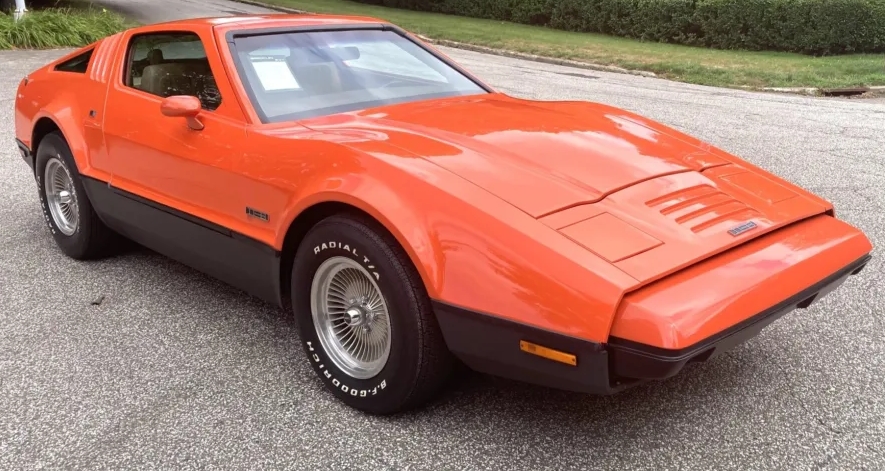
The Bricklin SV-1 is one of the most unusual and ambitious automobiles produced during the 1970s. Conceived by entrepreneur Malcolm Bricklin, the car was designed to combine sports-car performance with groundbreaking safety features. Although production lasted only a short time, the vehicle’s distinctive design, gull-wing doors, and innovative construction have made it a cult classic among collectors and automotive historians.
Despite being produced for only a few model years, the Bricklin represents an intriguing chapter in North American automotive history. Its story includes bold innovation, international cooperation, financial struggles, and a lasting legacy that continues to attract enthusiasts today.
Origins of the Bricklin Concept
The Bricklin story began in the early 1970s when Malcolm Bricklin sought to create a new type of sports car—one that prioritized occupant safety while still delivering the styling and excitement of a performance vehicle. At the time, most sports cars emphasized speed and styling rather than crash protection. Bricklin believed a “safety sports car” could appeal to American buyers concerned about rising accident rates.
The car was ultimately named SV-1, which stood for “Safety Vehicle One.”
To finance the project, Bricklin secured significant government support from the Canadian province of New Brunswick, which hoped the project would create jobs and stimulate the local economy. The government offered millions of dollars in funding, allowing Bricklin to establish production facilities in Saint John and Minto, New Brunswick.
Production officially began in 1974, and the car was intended primarily for the United States market.
.
NO MORE dead batteries with this:

.
Production Years and Overview
The Bricklin SV-1 was produced for three model years:
- 1974
- 1975
- 1976 (very limited completion cars)
Actual assembly occurred mainly from mid-1974 through late 1975, with the final cars completed after the company entered receivership.
Total production numbers vary slightly depending on the source, but most estimates place total output at approximately 2,800–2,900 vehicles.
Unlike most automakers, Bricklin produced only one model during its existence: the SV-1. However, the car evolved slightly during its brief production run through engine and transmission changes.
Models and Trim Levels
The Bricklin lineup was extremely simple. The company produced a single model and essentially a single trim level.
Bricklin SV-1 (1974–1976)
- Body style: 2-door sports coupe with gull-wing doors
- Layout: Front-engine, rear-wheel drive
- Assembly: Saint John, New Brunswick, Canada
- Class: Sports car / grand touring coupe
- Trim levels: One standard trim
Unlike many sports cars of the era, the SV-1 was not offered with multiple trim levels or extensive options. Buyers essentially received a fully equipped vehicle with only a few configuration choices.
Available variations included:
- Transmission:
- 4-speed manual
- 3-speed automatic (most common)
- Exterior colors:
- Safety Red
- Safety Orange
- Safety Green
- Safety White
- Safety Suntan
These bright colors were molded directly into the body panels rather than applied as paint.
1974 Bricklin SV-1
The 1974 model year represented the first production run and included several drivetrain options.
Key Specifications
- Engine: AMC 360 cubic-inch V8
- Power: Approximately 220 horsepower
- Transmission options:
- 4-speed manual
- 3-speed automatic
- Production: roughly 780 units
The engine and many mechanical components were sourced from American Motors Corporation (AMC), including suspension and drivetrain parts derived from the AMC Hornet.
These cars were the only Bricklins offered with a manual transmission, making them particularly desirable among collectors today.
1975 Bricklin SV-1
The 1975 model year saw the largest production volume for the company but also introduced significant changes.
Key Changes
- Engine switched to Ford 351 Windsor V8
- Power output reduced to approximately 175 horsepower
- Transmission changed to 3-speed automatic only
The engine change occurred primarily because AMC struggled to supply enough engines for the growing production demands.
Production
Approximately 2,062 units were produced during 1975, making it the most common version of the SV-1.
1976 Bricklin SV-1 (Completion Cars)
Although Bricklin production effectively ended in 1975, a small number of cars were finished later and assigned 1976 model year VIN numbers.
Only about a dozen 1976 cars were completed before the remaining inventory was sold to a distributor who finished and marketed them.
These vehicles are extremely rare today and are typically considered the final examples of the Bricklin SV-1.
Design and Engineering Innovations
The SV-1 stood out in several important ways.
1. Gull-Wing Doors
One of the most recognizable features of the Bricklin was its hydraulically powered gull-wing doors, which opened upward using an electric-hydraulic system.
This dramatic design gave the car a futuristic appearance comparable to later vehicles like the DeLorean DMC‑12.
2. Safety-Focused Construction
True to its name, the SV-1 emphasized safety features uncommon in sports cars of the era.
Key safety innovations included:
- Integrated roll cage
- Energy-absorbing bumpers
- Tubular steel perimeter frame
- Crash-resistant chassis design
These features were designed to exceed contemporary U.S. crash safety standards.
3. Composite Body Panels
Instead of traditional painted steel panels, the Bricklin used composite body panels made from acrylic resin bonded to fiberglass.
The body panels were produced in color-impregnated plastic, meaning the color ran throughout the material rather than being painted on the surface.
This concept eliminated the need for paint but introduced durability challenges.
Performance and Driving Characteristics
Although marketed as a sports car, the Bricklin SV-1 was heavier than many competitors due to its reinforced safety structure.
Typical performance figures included:
- 0–60 mph: around 8–9 seconds
- Top speed: approximately 120 mph
- Curb weight: roughly 3,400–3,500 pounds
Compared with contemporary sports cars like the Chevrolet Corvette C3, the Bricklin offered respectable performance but lacked the refinement and manufacturing quality of larger manufacturers.
Still, period testing suggested the car had the potential to compete with established sports cars if production quality had improved.
Problems and Financial Collapse
Despite its ambitious design, the Bricklin project faced serious challenges.
Major issues included:
- High production costs
- Limited manufacturing experience
- Supply shortages for parts
- Quality control problems
- Complex door hydraulic systems
The cost of the car rose dramatically during development. Early estimates suggested a price of $4,000, but by launch the car cost nearly $7,500, rising to almost $10,000 by 1975.
Sales never reached the levels needed to sustain the company. When government funding from New Brunswick ended in 1975, Bricklin Vehicle Corporation quickly collapsed and entered receivership.
Production Totals
Estimated production by year:
| Model Year | Units Produced |
|---|---|
| 1974 | ~780 |
| 1975 | ~2,062 |
| 1976 | ~12 |
| Total | ≈2,850–2,900 |
Today, roughly 1,500 examples are believed to survive, many restored by enthusiasts.
Legacy and Cultural Impact
Although the company failed quickly, the Bricklin SV-1 developed a dedicated following.
Its legacy includes:
- One of the few cars ever manufactured in Atlantic Canada
- A rare example of government-funded automobile production
- Early experimentation with composite body materials
- A distinctive gull-wing sports car design
The Bricklin is often compared to other ambitious but short-lived automotive startups such as the DeLorean DMC‑12, which followed a similar trajectory of bold design and financial difficulty.
Collectors now value the SV-1 for its rarity, distinctive styling, and unusual history.
Future Outlook for the Bricklin
No modern successor to the Bricklin SV-1 currently exists, and the original company ceased operations decades ago. However, the car’s reputation has improved significantly over time.
In recent years:
- Collector interest has grown steadily
- Restoration communities have expanded
- Replacement parts and knowledge networks have improved
Because fewer than 3,000 were produced, the Bricklin SV-1 has become an increasingly valuable collectible vehicle.
Classic car events, online communities, and dedicated clubs help preserve the remaining cars and celebrate their unusual place in automotive history.
The Bricklin SV-1 represents one of the most fascinating “what-if” stories in automotive history. Created by Malcolm Bricklin with the goal of producing the world’s safest sports car, the SV-1 introduced bold ideas including gull-wing doors, composite body panels, and reinforced crash structures.
Although the company lasted only a few years and produced fewer than 3,000 vehicles, the Bricklin left a lasting mark on automotive design. Its story demonstrates both the risks and rewards of innovation in the auto industry.
Today, the Bricklin SV-1 stands as a rare and distinctive collector’s car—a reminder of a time when entrepreneurial vision and government support briefly came together to create one of the most unusual sports cars of the 1970s.